Can Solar Power Run a Welding Machine in Nigeria? Inverter, Battery & Workshop Design Guide
Solar Power for Welding Machines in Nigeria: Inverter & Battery Guide
Can solar run a welding machine in Nigeria? Learn how to assess inverter capacity, battery discharge power, solar panels and workshop loads before installation.
Can Solar Power Run a Welding Machine in Nigeria? Inverter, Battery & Workshop Design Guide
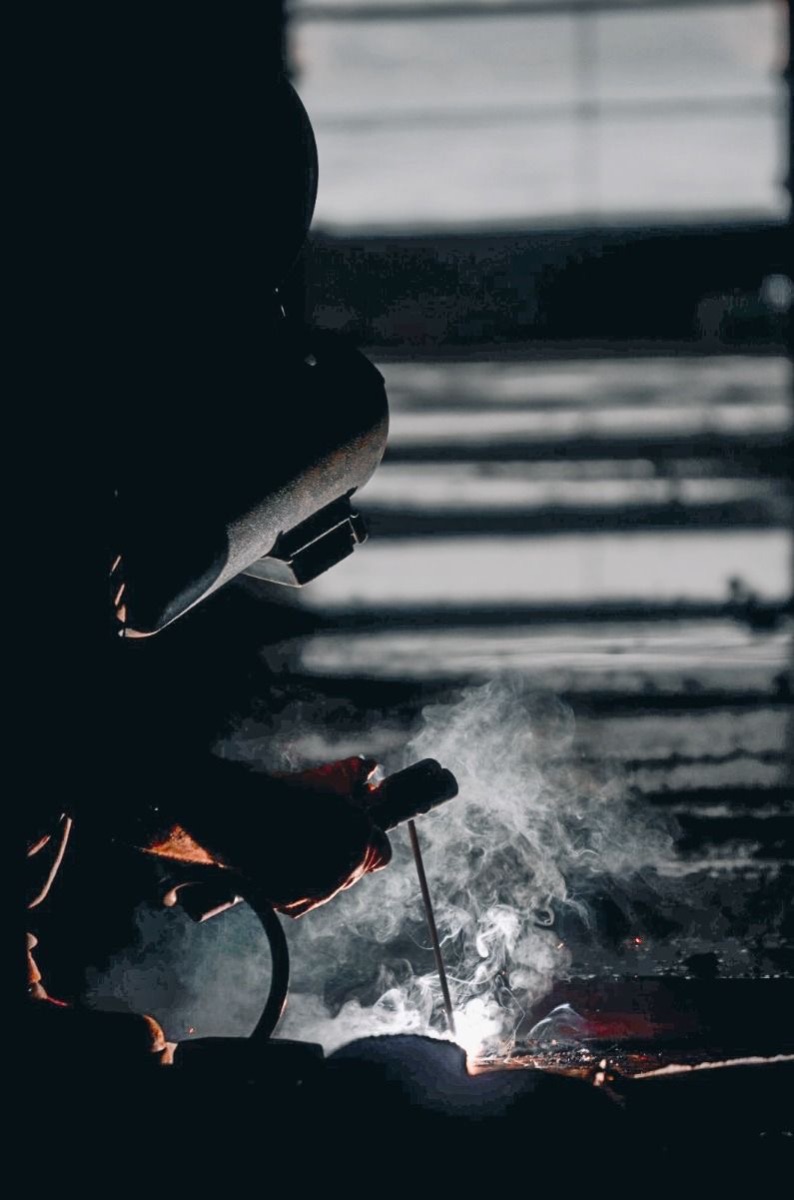
A welder in a Nigerian fabrication shop may need power for arc welding, an angle grinder, lighting, a drill and sometimes an air compressor. Choosing a solar system for that workshop is not as simple as adding up the wattage printed on the equipment.
Welding machines can draw substantial input power, and their demand changes with welding current, process, electrode size and the time spent actively welding. Some machines are single-phase; others require three-phase supply. A system that comfortably powers lights and fans may still shut down when a welding arc is struck.
So, can solar power run a welding machine? Yes, in some cases—but only when the welder, inverter, battery, solar array and working pattern are designed as one system. This guide explains what to check before investing in solar for a welding or metal-fabrication workshop in Nigeria.
Can a solar inverter run a welding machine?
Sometimes. The answer depends on the exact welding machine and the inverter's real operating limits.
A small, single-phase inverter welder used at a moderate current may be easier to support than a large industrial welder used near its maximum output. A three-phase welding machine may require a different electrical architecture entirely.
Before choosing equipment, confirm:
The welder's rated input voltage and whether it is single-phase or three-phase
Maximum and rated input current or input kVA
Recommended supply capacity from the manufacturer
The intended welding process and current setting
The inverter's continuous output rating, surge capability and power-factor limits
The battery's maximum continuous discharge power and current
Whether grinders, compressors or other tools may operate at the same time
Do not select an inverter from the welding machine's advertised welding-output amperage alone. Welding output current is not the same as AC input current.
Why welding loads can be difficult for solar systems
1. The load changes during use
The input demand of a welding machine varies with the welding process and selected current. The power drawn while striking an arc may differ from the average demand over an entire working session.
That changing load can expose weaknesses in an undersized inverter or battery even when other workshop appliances work normally.
2. Continuous power and surge capability are different
An inverter may advertise a high short-duration surge rating but have a much lower continuous rating. A brief overload allowance should not be treated as permission to operate a welder above the inverter's continuous capability throughout the day.
The design must account for the machine's input requirements and the manufacturer's inverter limits, including any restrictions on nonlinear or difficult loads.
3. Battery current can become substantial
A high-power AC load requires significant DC current from a low-voltage battery bank.
For example, a hypothetical 5,000 W AC load supplied by a 48 V battery system, assuming 90% inverter efficiency, would draw approximately:
5,000 W ÷ (48 V × 0.90) = 116 A
This is a simplified estimate; actual battery voltage changes during operation, and the welder's input power may fluctuate. The calculation shows why battery discharge-current limits, the BMS, protective devices and the inverter's DC input requirements must all be checked.
A battery may have enough stored energy in kilowatt-hours but still be unable to deliver the required instantaneous power safely.
Step 1: Read the welding machine's nameplate
Do not guess the input power from the machine's size or its welding-output rating.
Record the following from the nameplate and manual:
Input voltage
Number of phases
Rated input current or input kVA
Maximum input current, where stated
Recommended supply or generator capacity
Welding-current range
Duty-cycle ratings at relevant output currents
If the manual specifies a minimum supply capacity, treat it as an important design input. Do not assume a solar inverter is equivalent to a generator just because both are labelled with the same kVA rating.
If the nameplate is unclear, obtain the exact model's manual or have a qualified technician measure the input under the intended operating conditions.
Step 2: Calculate the workshop's actual energy use
Inverter capacity is about how much power the system must deliver at a moment. Battery capacity and daily solar production are about how much energy the workshop uses over time. They are related, but they are not interchangeable.
A practical energy estimate should separate active welding from the rest of the workshop.
Illustrative daily energy calculation
The following is a hypothetical example, not a measured Zookie Solar project.
Assume a small workshop has these estimated operating loads:
Equipment
Assumed average input
Daily use
Estimated energy
Welder while actively welding
3.2 kW
2 hours of actual arc time
6.4 kWh
Angle grinder
1.1 kW
1 hour
1.1 kWh
LED lighting
0.1 kW
8 hours
0.8 kWh
**Total before system losses**
**8.3 kWh/day**
These figures are illustrative only. The real welder input must be established from its specifications or measurement. Two hours of actual arc time is not the same as having the machine switched on for two hours.
The final design must allow for conversion losses, battery charging losses, solar production variation and any additional equipment. A measured load profile is more reliable than a guess.
Step 3: Size the inverter around the hardest operating condition
The inverter must be able to support the welder's required input and the other loads that may be running at the same time.
Consider these questions:
Can the inverter supply the welder's specified input power continuously at the intended setting?
Can it handle the welder's changing demand when an arc is struck?
Will a grinder or compressor start while welding is in progress?
Is the welder single-phase or three-phase?
Does the inverter manufacturer permit this type of load?
Is there sufficient output capacity at the workshop's actual operating temperature?
For a three-phase machine, do not assume that three single-phase inverter units can be combined in any arrangement. The equipment must explicitly support the required three-phase configuration, and the design must account for phase loading and the manufacturer's installation requirements.
Where a machine's requirements are close to the inverter's limit, choose a different equipment combination or reduce the planned simultaneous loads. Do not rely on repeated overload trips as a normal operating strategy.
Step 4: Size the battery for power as well as energy
Battery selection requires two separate checks.
Energy capacity
How much energy must the battery deliver when solar generation is insufficient?
If a workshop needs 4 kWh from the battery during a cloudy period or late-afternoon session, the nominal battery capacity must be higher than 4 kWh because usable depth of discharge and conversion losses affect the amount delivered to AC loads.
Discharge power
Can the battery and its battery-management system deliver the required current continuously and for short peaks?
For a 48 V system, a high-power welder can demand well over 100 A from the battery, depending on the actual AC input and inverter efficiency. Check the battery manufacturer's continuous discharge rating, BMS limits, approved parallel configuration and the inverter's DC requirements.
Do not connect batteries in an improvised arrangement to obtain more current. Battery configuration, protection and conductors must be engineered for the equipment.
Step 5: Decide how much work should happen during daylight
For many workshops, using solar while the sun is available can reduce the amount of energy that must be stored in batteries. But daylight alone does not guarantee that the system can support the welder's instantaneous demand.
A useful operating plan may include:
Scheduling heavier welding tasks during strong solar-production hours where practical
Avoiding simultaneous operation of the welder and other high-demand tools if the system is not designed for it
Keeping essential lighting and small electronics separate in the energy estimate
Defining which loads may run when the battery state of charge is low
Maintaining a suitable alternative supply for jobs that exceed the solar system's operating envelope, where the electrical design allows it
This is a load-management strategy, not a substitute for correctly sizing the inverter and battery.
Step 6: Estimate the solar array from daily energy use
Once the workshop's daily energy demand is estimated, the designer can calculate the PV capacity needed to replenish the energy used.
As a simple illustration, suppose the design target is to supply 8.3 kWh of workshop energy per day before system losses. The array must generate more than 8.3 kWh because energy is lost in conversion, charging and other system components, and actual solar yield varies with weather, shading, temperature and site conditions.
A useful first estimate is:
Required PV capacity (kW) ≈ daily energy target (kWh) ÷ effective peak-sun-hours ÷ overall system performance factor
For example, using an illustrative assumption of 4.5 effective peak-sun-hours and a 0.75 overall performance factor:
8.3 ÷ (4.5 × 0.75) ≈ 2.46 kW of PV
This is only a mathematical starting point, not a final recommendation. It does not prove that a 2.46 kW array can run the welder at full power whenever needed. The array may be producing less than the welder's instantaneous demand, so the inverter and battery still need to meet the power requirement. The final PV size should also account for recharge time, local solar resource, roof or ground area, seasonal conditions and the workshop's operating schedule.
Step 7: Check the other workshop machines
Welders rarely operate in isolation. Metal-fabrication shops may also use:
Angle grinders
Bench grinders
Drilling machines
Air compressors
Cutting machines
Fans and lighting
Small pumps or other workshop equipment
Record the input rating and expected operating time of each device. Identify which loads can operate simultaneously and which can be scheduled separately.
Motors and compressors may have starting-current requirements that need their own checks. Do not simply add their nameplate wattages and assume that calculation covers every starting condition.
An illustrative workshop design review
This is a hypothetical engineering scenario only. It is not a claim that Zookie Solar completed this installation.
A metal-fabrication workshop in Aba wants solar support for a single-phase inverter welder, two grinders, lighting and a drill. The owner initially requests a standard 5 kVA inverter because that size has been recommended for other small businesses.
A responsible design review would not approve the system based on the requested inverter size alone.
The installer would first obtain the exact welder model and input specifications. Next, the installer would record the other equipment ratings and the combinations likely to operate together. The battery would be checked for both usable energy and discharge current. The solar array would then be designed around the workshop's daily energy requirement and the hours in which welding is planned.
If the welder's input requirements exceed the proposed inverter's capability, the design would need to change. Options might include selecting a compatible higher-capacity inverter system, using a welder with lower input requirements where technically appropriate, limiting simultaneous loads, or designing solar to serve the workshop's lighter equipment while retaining a suitable alternative source for heavy welding.
The right choice depends on the actual machine, production needs, budget and available supply—not a generic package label.
Common mistakes when designing solar for a welding workshop
Confusing welding output amperage with AC input current
A machine advertised as a 200 A welder does not necessarily draw 200 A from the AC supply. Use the nameplate and manual.
Ignoring the battery's discharge limit
Stored energy is not the same as available power. Verify battery and BMS discharge capability.
Assuming a larger solar array fixes an undersized inverter
More panels can improve energy generation, but they do not automatically increase the inverter's AC output rating.
Ignoring three-phase requirements
Industrial welders may require three-phase supply. The inverter arrangement must support the machine's actual electrical requirements.
Using a short-duration surge rating as the normal rating
Surge capability is not a substitute for sufficient continuous capacity.
Guessing daily welding hours
Estimate actual arc time separately from the total time the machine is switched on.
What to give your solar installer before requesting a quotation
For a more accurate design and quotation, provide:
Welder make and exact model
A clear photo of its nameplate
Input voltage and phase requirement
Maximum or rated input current/kVA from the manual
Typical welding-current setting and welding process
Estimated hours of actual welding per day
List of grinders, compressors and other tools
Which machines may run simultaneously
Desired battery backup duration
Location of the workshop and available space for panels
Whether three-phase power is required now or planned for the future
This information helps the installer avoid recommending a system that powers the lights but fails when the main production equipment is switched on.
Final takeaway
Solar can support some welding workshops, but welding loads require more careful engineering than ordinary lighting and electronics. The critical checks are the welder's real input requirements, inverter continuous and transient capability, battery discharge power, daily energy demand, phase configuration and the workshop's operating schedule.
Do not purchase a solar package until the actual welding machine has been assessed. A correctly designed system should match the equipment and production process—not just the owner's preferred inverter size.
Zookie Solar provides solar system design, equipment supply, installation and maintenance for homes and businesses. If you operate a fabrication shop or workshop in Nigeria, share your welder's model, nameplate details and other equipment list so the system can be assessed against your real operating requirements.
Built on Power. Driven by Excellence.
How to Match a Lithium Battery to a Solar Inverter in Nigeria: BMS, Voltage, CAN & RS485 Guide