How to Choose the Right Solar System for a Nigerian Office Building: 2026 Guide
Office solar in Nigeria is not just about adding panels. This practical 2026 guide explains how to audit office loads, separate essential and non-essential circuits, size inverter and battery capacity, plan air-conditioning loads, and design reliable solar power that can grow with the business.
Introduction
An office building can look like an easy solar project: lights, computers, Wi-Fi, printers and air conditioners. In practice, office loads are highly variable. A quiet morning and a busy afternoon can have very different power demands, and several air conditioners or pumps starting together can create a short but important peak.
For Nigerian offices, the strongest solar design is not necessarily the one with the most panels or the biggest battery. It is the one that identifies which loads actually need backup, measures when they operate, and matches the inverter, battery and PV array to those patterns.
Current Nigerian C&I offerings increasingly start with an energy audit and load measurement rather than a generic package. Commercial providers are marketing solar-plus-storage for offices, campuses, hotels, factories and retail sites, while public Nigerian discussion shows office users valuing uninterrupted operation during grid outages.
Why Office Solar Should Start With an Energy Audit
Do not begin with: “How many kVA do we need?”
Begin with: “What is the building actually using, when, and which loads must remain on during an outage?”
A useful office energy audit records: main incoming supply and phase configuration; maximum demand where available; hourly load profile; air-conditioning loads; lighting; computers and monitors; printers/copiers; refrigeration; water pumps; servers/network equipment; security/CCTV; access control; lifts where applicable; and other specialist equipment.
The audit should also distinguish essential loads from loads that can be shed during an outage.
Essential vs Non-Essential Loads: The Most Important Design Decision
One of the best ways to control the cost of an office solar system is to avoid putting every possible appliance on the backup bus.
Essential loads might include servers and networking, CCTV and security, access control, lighting, selected sockets, reception/communication systems, critical workstations, and fire/safety systems where appropriate.
Non-essential or controllable loads might include large air conditioners, electric water heaters, kitchen appliances, non-critical pumps, high-power workshop equipment and decorative lighting.
This does not mean an office cannot run air conditioning on solar. It means the engineer should decide deliberately how much cooling capacity the backup system must support.
Illustrative Design Case Study: A 25-Employee Office
This is an illustrative design case study, not a claim that Zookie Solar completed this project.
Imagine a 25-person Nigerian office with 20 desktop/laptop workstations averaging 120W each while active; networking/server equipment averaging 500W; LED lighting averaging 800W; two office refrigerators averaging 300W combined; three 1.5HP inverter air conditioners with an illustrative combined running demand of 3.0kW; and printers/miscellaneous loads averaging 400W when active.
An illustrative active load could be: 20 × 120W = 2.4kW; networking/server = 0.5kW; lighting = 0.8kW; refrigeration = 0.3kW; air conditioning = 3.0kW; miscellaneous = 0.4kW.
Total ≈ 7.4kW.
This is not a final inverter recommendation. It demonstrates why an office load needs to be built from actual equipment and operating patterns.
If the business decides that only networking, lighting, selected workstations and one air conditioner must remain during outages, the required backup capacity could be much lower.
How to Size the Inverter for an Office
The inverter must satisfy the expected simultaneous AC load and any short-duration starting or surge demand.
Suppose the critical office circuits are expected to peak around 5.5kW, with a reasonable design margin. A designer might investigate an inverter class above that load rather than selecting exactly 5.5kW.
kVA/kW selection must also consider power factor, motor loads, compressor loads, future expansion and the inverter's surge specification.
An office with several inverter air conditioners can behave differently from an office with mostly computers and LED lighting, even when their average energy consumption is similar.
Battery Sizing: Runtime Matters More Than Office Floor Area
Battery capacity should be based on the energy required during the intended backup period—not the size of the building.
Suppose the critical office load averages 4kW and the owner wants four hours of battery autonomy: 4kW × 4h = 16kWh of AC energy.
If an illustrative design allows 80% usable battery depth and 90% inverter efficiency: 16 ÷ (0.80 × 0.90) ≈ 22.2kWh.
That suggests roughly 22–25kWh nominal battery capacity as an initial illustrative range, before reserve policy, battery ageing and manufacturer limits.
This is a completely different calculation from simply saying “we need a 20kWh battery because it is an office.”
Solar PV Sizing for Daytime Office Loads
Solar panels should be sized against the building's daytime energy requirement, not only its inverter rating.
Assume an illustrative critical load consumes 28kWh/day. Using 4.5 peak-sun-hour equivalent and a 75% overall system factor: 28 ÷ (4.5 × 0.75) ≈ 8.3kWp.
An initial design might therefore examine an approximately 8–10kWp PV array, subject to roof area, shading, orientation, equipment limits and desired battery-recovery rate.
Actual engineering design should use site-specific solar data and measured load consumption.
Why Air Conditioners Change the Office Solar Design
Air conditioners are often one of the largest office loads, but inverter ACs and fixed-speed ACs can behave differently.
Inverter ACs generally modulate compressor speed rather than repeatedly switching between full load and off, which can improve energy efficiency. Actual consumption still depends on room size, insulation, outdoor temperature, thermostat setting, occupancy and equipment condition.
The right question is not simply “How many ACs are in the office?” It is “What is their measured or specified electrical demand, and how many need to operate simultaneously during backup?”
Where cooling is critical, the solar design should explicitly include the required cooling load rather than quietly assuming air conditioners will always be switched off.
Three-Phase Offices Need Three-Phase Thinking
Larger offices and commercial buildings may have three-phase supplies. In those buildings, phase balance becomes important.
An engineer should examine how significant loads are distributed across phases and whether the selected inverter architecture supports the required three-phase operation.
Simply adding a large single-phase inverter to a three-phase facility can create an unsuitable or limited backup arrangement depending on the electrical architecture.
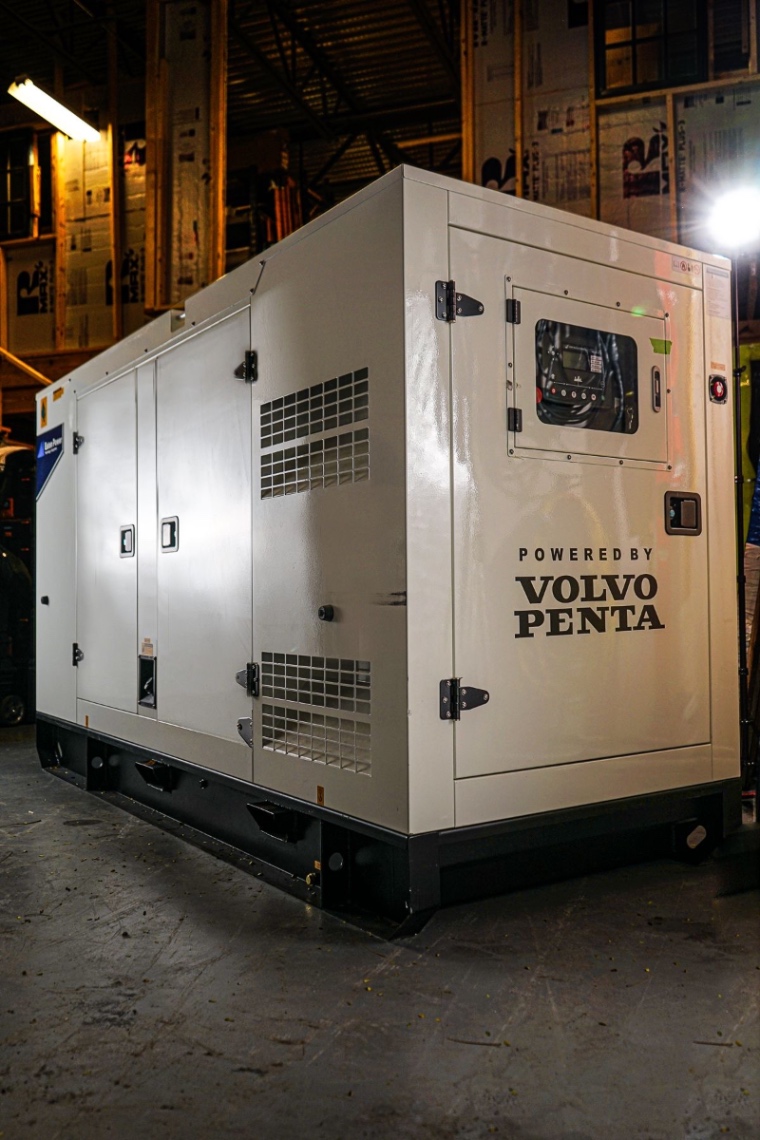
For larger buildings, the distribution board, changeover/bypass arrangement, protection, earthing and generator/grid integration should all be included in the design.
Where Should the Battery and Inverter Be Installed?
Office equipment rooms are not automatically good battery rooms.
The installation location should consider ventilation and temperature, manufacturer clearances, accessibility for maintenance, protection from water ingress, fire-safety requirements, cable routing, security, noise, weight/structural loading and indoor/outdoor equipment ratings.
For commercial systems, the battery installation should be treated as an engineered electrical installation rather than simply finding an empty corner.
What Happens If You Oversize or Undersize the System?
An undersized system may produce inverter overloads, frequent battery depletion, uncomfortable office conditions during outages, generator dependence, reduced productivity and unexpected equipment shutdowns.
An unnecessarily oversized system can also be wasteful. You may pay for battery and inverter capacity that rarely gets used.
The objective is not maximum capacity. It is the right capacity for the building's actual operating profile, reliability target and future growth.
A Practical 7-Day Office Energy Audit
Before approving a commercial office solar project, a useful audit can include at least seven days of measurements where practical.
Track: total daily kWh; maximum demand; morning peak; afternoon peak; evening load; air-conditioning runtime; generator runtime; grid outage periods; critical loads; and non-critical loads.
Combining measured data with equipment nameplates gives the designer a much stronger basis for the system than relying on appliance estimates alone.
How Much Does Solar for an Office Cost in Nigeria?
There is no single office-solar price because a small 10-person office and a multi-floor commercial building can have completely different energy requirements.
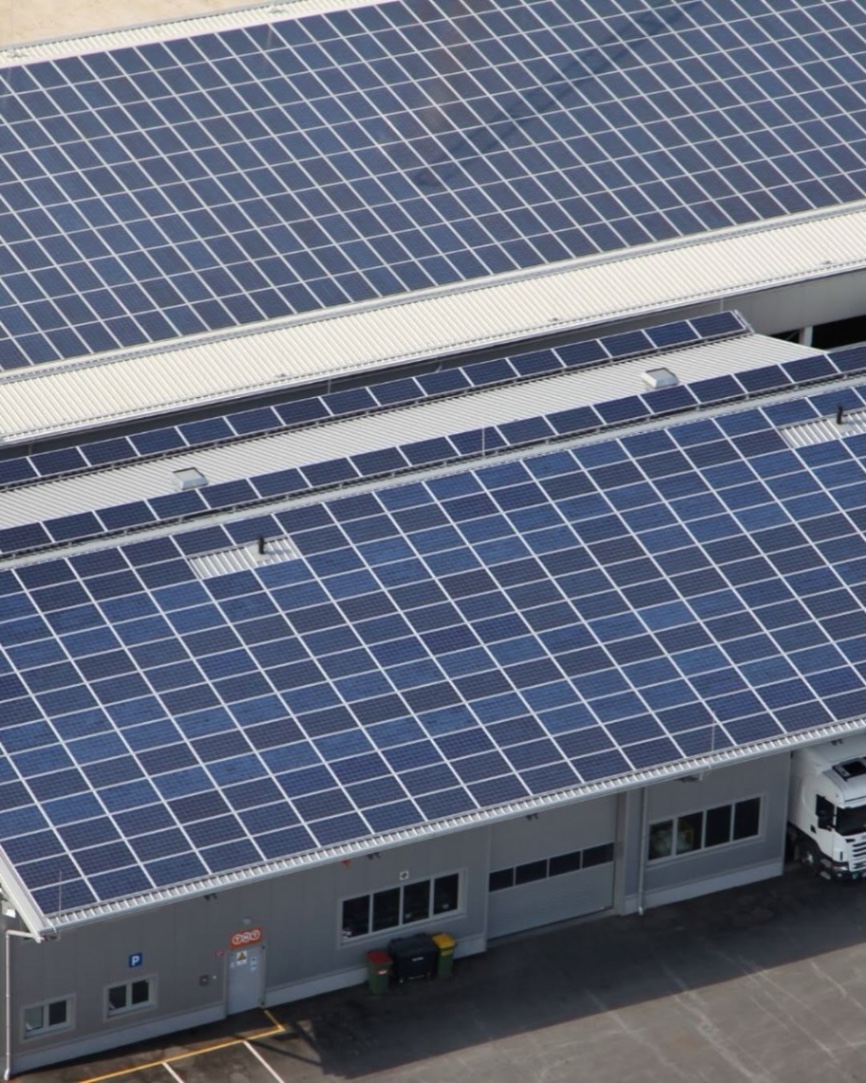
Current Nigerian C&I providers increasingly offer systems ranging from tens of kilowatts upward, with battery storage and energy-management systems designed for offices, factories, hotels and other commercial facilities.
A professional quotation should identify PV capacity; inverter capacity and topology; battery nominal and usable capacity; essential-load capacity; backup duration; mounting structure; DC/AC protection; cabling; monitoring; installation and commissioning; generator/grid integration; and maintenance and warranty.
Comparing quotations only by inverter kVA or total price can hide major differences in what the system will actually power.
A Smart Office Solar Upgrade Strategy
If the budget does not support a complete installation immediately, an office can be designed in stages.
Stage 1: Put critical IT, security, lighting and communication loads on a reliable inverter/battery backup.
Stage 2: Add sufficient PV to recharge the battery and cover daytime critical loads.
Stage 3: Expand battery storage or inverter capacity as the business grows.
Stage 4: Add selected cooling and larger loads after verifying the electrical and thermal requirements.
Modular commercial storage systems are increasingly marketed around this pay-as-you-grow concept in Nigeria.
Final Takeaway
The best solar system for a Nigerian office is not chosen from the building size or number of employees alone.
It starts with an energy audit.
Measure what the office uses, separate essential from non-essential loads, understand air-conditioning demand, determine required backup duration, and then size the inverter, battery and PV array around those facts.
For a small office, the right answer may be a modest hybrid system. For a larger commercial building, the design may involve three-phase hybrid inverters, substantial lithium storage, rooftop PV, monitoring and carefully integrated grid/generator backup.
At Zookie Solar, we can assess your office's actual load profile and design a solar-plus-storage system around your business's operating hours, critical loads and growth plans.
Planning solar for an office, commercial building, school, clinic or business facility? Contact Zookie Solar for an engineering-based energy assessment and quotation.
Built on Power. Driven by Excellence.
Editorial / Research Note
The office case study and calculations are illustrative and are not presented as a completed Zookie Solar project. Final design should use measured load data, equipment nameplates, site conditions, manufacturer specifications and a professional electrical assessment.