Should Nigerian Businesses Keep Their Generator After Installing Solar? A 2026 Hybrid Power Guide
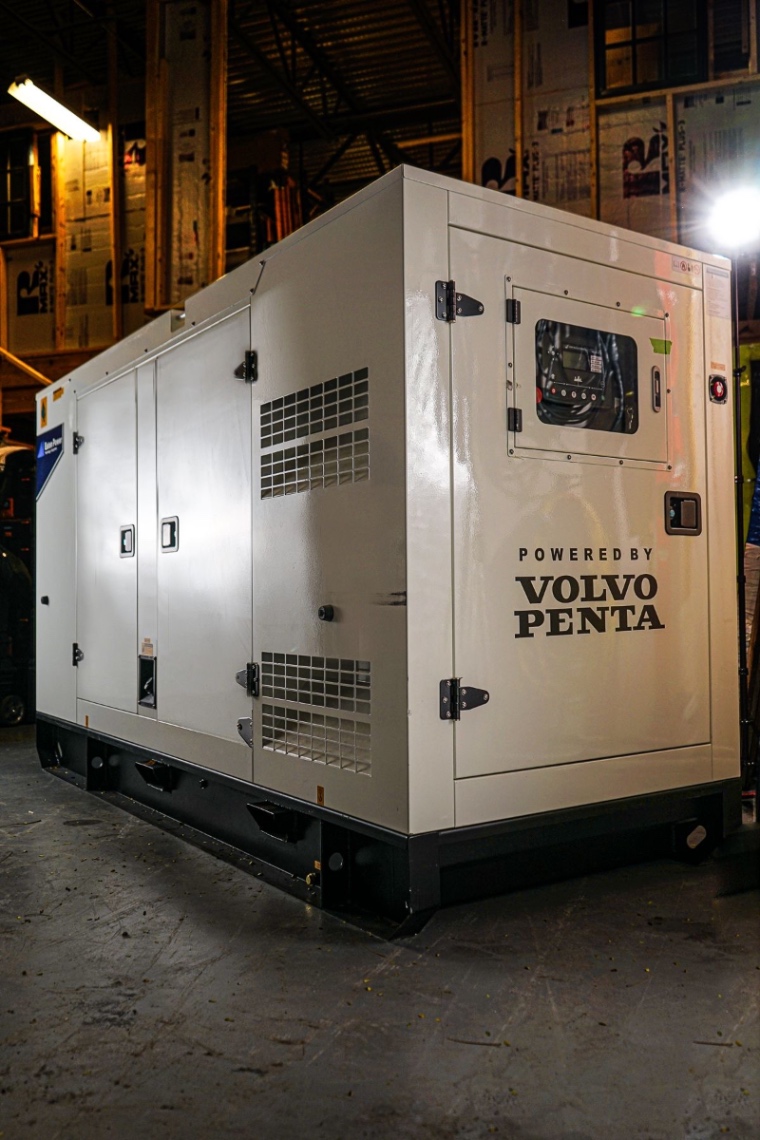
For many Nigerian businesses, going solar does not mean throwing away the generator. A properly designed solar-battery-generator hybrid can reduce generator runtime and fuel costs while keeping the generator available for heavy loads and prolonged outages.
Introduction
For many Nigerian businesses, the choice is not really solar OR generator. The more practical question is: how much of the generator's work can solar and batteries take over without sacrificing reliability?
A well-designed hybrid power system can allow solar to handle a large share of daytime demand, batteries to cover short grid outages and peak periods, and the generator to step in when loads are unusually high or an outage lasts longer than the battery reserve.
Current 2026 commercial-solar coverage is increasingly focused on diesel displacement, while public discussion from Nigerian solar users shows strong interest in scalable battery-backed systems
Why You Shouldn't Automatically Remove the Generator
A generator is still useful for certain operating conditions. A factory may have welding machines, compressors, large motors or other equipment that creates short-duration peaks. A business may also experience prolonged outages or several days of poor solar production.
Trying to make solar and batteries carry every possible load can make the system unnecessarily expensive.
A better design can divide the electrical load into essential loads, priority business loads, heavy/intermittent loads and flexible loads. The objective is to eliminate the expensive generator hours that solar and storage can reliably replace.
What a Solar + Battery + Generator System Actually Does
During strong sunlight, solar PV supplies the business and charges the battery. When the grid fails, the inverter can transfer selected loads to battery power. When battery state of charge reaches a defined threshold, the generator can start automatically if the system supports generator integration. When solar returns or the battery is sufficiently charged, generator operation can stop.
This turns the generator from the business's primary source of electricity into a backup resource.
Illustrative Case Study: A Nigerian Small Business
This is an illustrative design case study, not a claim that Zookie Solar completed this installation.
Imagine a business with an average daytime load of 12kW and an evening essential load of 5kW. It currently uses a 25kVA diesel generator for about 8 hours per day.
Suppose it installs an illustrative 15kWp solar array, a 15kW-class hybrid inverter architecture and 30kWh nominal lithium storage. Solar handles daytime compatible loads; battery handles essential evening loads and short outages; the generator remains available for heavy machinery and extended outages.
If the hybrid system removes just 5 generator hours per day, and measured generator fuel consumption is 8 litres/hour at ₦1,300/litre, avoided fuel is 5 × 8 × ₦1,300 = ₦52,000/day. Over 26 operating days, that is approximately ₦1.35 million/month in avoided fuel alone.
This is illustrative. Actual savings must use the business's measured fuel consumption, operating hours, load profile and current fuel price.
The Most Important Measurement: Your Load Profile
Before buying a hybrid inverter, panels or batteries, measure when the business actually uses electricity.
A 7-day load study can reveal average kW demand, peak kW demand, night-time consumption, generator runtime, heavy-equipment start-up events, grid availability, solar opportunity and loads that can be shifted to daylight.
This is much more useful than saying, “We have a 25kVA generator, so we need a 25kVA solar system.” A generator's nameplate capacity is not the same thing as actual electrical demand.
How Much Solar Should Replace the Generator?
The target should normally be based on energy and operating economics, not simply generator size.
Suppose a business consumes 90kWh during a typical working day and wants solar to cover 60% of that energy. Target solar energy = 90 × 0.60 = 54kWh/day.
Using an illustrative 4.5 peak-sun-hour equivalent and 75% overall system factor: PV size ≈ 54 ÷ (4.5 × 0.75) ≈ 16kWp.
That gives an initial design direction of roughly 16kWp of PV. The final engineering design must use the site's solar resource, roof area, shading, module characteristics, inverter limits, seasonal performance and reliability requirement.
How Much Battery Storage Should a Business Buy?
Battery capacity should be based on the loads you actually want to protect during non-solar hours.
Suppose essential evening loads consume 20kWh. If the design assumes 80% usable battery depth and 90% inverter efficiency: 20 ÷ (0.80 × 0.90) ≈ 27.8kWh.
A roughly 30kWh nominal battery bank could therefore be an illustrative starting point. But battery power capability matters too. A 30kWh battery that cannot deliver the required instantaneous current may still be unsuitable for a business with large motors.
Commercial design must consider both kWh and kW.
Which Loads Should Stay on the Generator?
Not every load needs to be moved to battery-backed solar.
Depending on the business, generator priority may remain appropriate for large welding machines, high-power compressors, large electric motors, industrial heating equipment and loads with extreme starting current.
Solar and batteries can often prioritize lighting, computers, POS systems, networking, CCTV, offices, refrigeration where properly designed, moderate air-conditioning and security systems.
Load segregation can dramatically reduce the size and cost of the battery-backed inverter system.
Why Generator Integration Must Be Engineered Properly
A generator should not simply be connected to a hybrid inverter because both produce electricity.
The system needs correct electrical architecture, including suitable changeover or ATS arrangements, generator input compatibility, protection, earthing, phase configuration and control logic.
For larger commercial systems, the single-line diagram should clearly show how grid, generator, inverter, battery, PV and loads interact. The generator must also operate within the inverter manufacturer's permitted voltage and frequency ranges.
The Business Case: Think Diesel Displacement, Not Just Solar Installation
The strongest commercial solar projects often start with a fuel-cost question.
Measure litres of diesel used per day, generator operating hours, fuel price, generator maintenance, average electrical load, grid availability and cost of downtime.
Then calculate how many generator hours solar and storage can realistically eliminate.
Current Nigerian commercial-solar analysis is increasingly built around diesel displacement, with 2026 market sources describing commercial and industrial customers as a major growth segment.
The exact payback should be calculated from the individual business's measured data rather than a generic industry claim.
Common Mistakes Businesses Make
### Mistake 1: Matching solar capacity to generator kVA — A 100kVA generator does not mean the business needs a 100kVA solar inverter.
### Mistake 2: Buying batteries before measuring night loads — Battery capacity should follow protected load and required autonomy.
### Mistake 3: Trying to power every machine from battery — Heavy intermittent loads can make battery systems unnecessarily expensive.
### Mistake 4: Ignoring actual fuel consumption — Fuel data is one of the strongest inputs for commercial solar ROI.
### Mistake 5: Treating generator integration as an afterthought — Hybrid systems need proper protection, control and commissioning.
What a Professional Commercial Hybrid Solar Assessment Should Include
Before approving a project, request: load inventory; 7-day load profile where practical; generator fuel and runtime history; peak demand measurement; PV site survey; structural assessment; inverter architecture; battery capacity and discharge specification; generator integration design; single-line diagram; protection and earthing design; monitoring plan; maintenance plan; warranty terms; and expected generator-hour reduction.
This gives the business measurable criteria against its existing energy costs.
Final Takeaway
Nigerian businesses do not always have to choose between keeping a generator and going solar.
In many cases, the smarter strategy is to make the generator smaller in its role. Solar handles predictable daytime energy. Batteries protect essential loads and short outages. The generator remains available for heavy equipment, prolonged outages and unusual demand.
That can reduce fuel consumption without forcing the business to sacrifice reliability.
At Zookie Solar, we can assess your business load, generator usage, site conditions and operating priorities to design a solar-plus-battery system that works alongside your existing power infrastructure.
Want to know how many generator hours your business could realistically eliminate? Contact Zookie Solar for an engineering-based energy assessment and hybrid solar proposal.
Built on Power. Driven by Excellence.
Editorial / Research Note
The case study and calculations are illustrative and are not presented as a completed Zookie Solar project. Actual commercial hybrid design must use measured load data, generator fuel records, site conditions, equipment datasheets, protection requirements and applicable electrical standards.
Why Does My Solar Inverter Keep Tripping in Nigeria? 9 Causes and Fixes