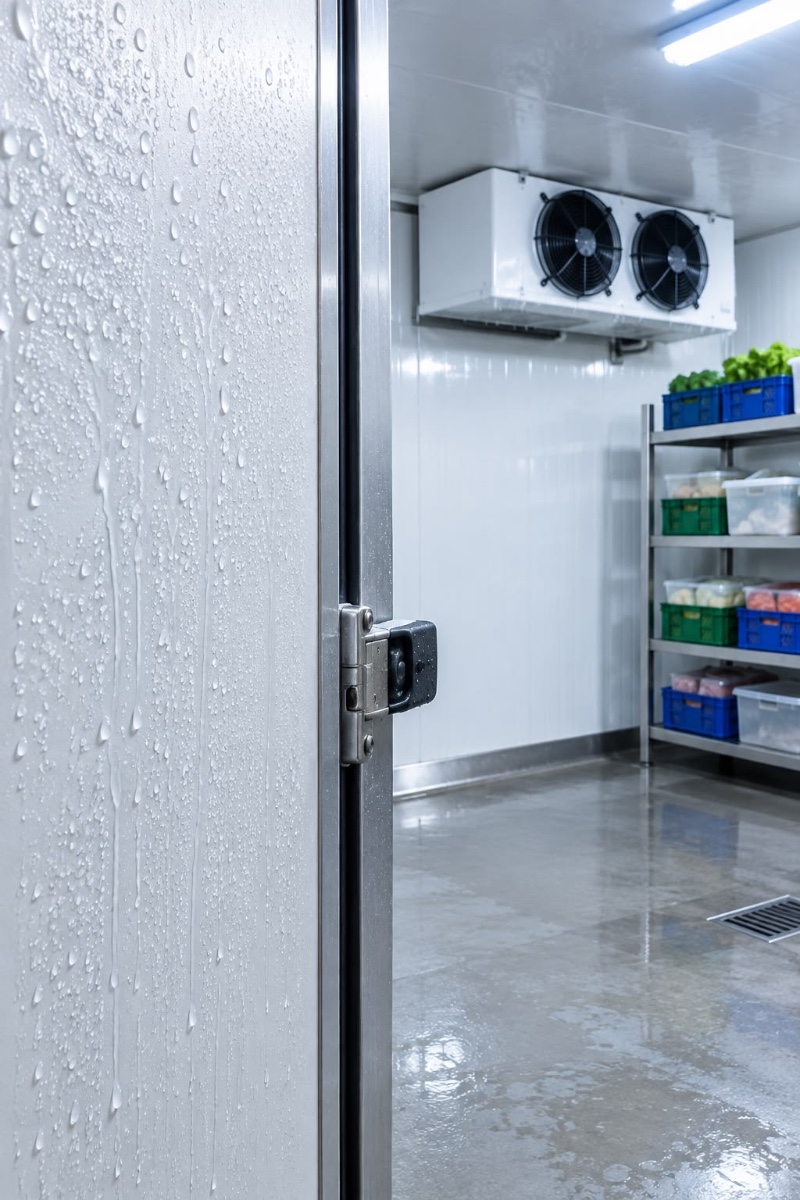
How to Design a Solar System for a Cold Room in Nigeria: 2026 Sizing & Installation Guide
Cold rooms are not ordinary solar loads. Their compressors can create high starting demand and they may need reliable power around the clock to protect valuable stock. This Nigeria-focused guide explains how to size the inverter, solar array, battery and protections for a cold-room installation.
For a business selling frozen foods, fish, meat, drinks or other temperature-sensitive products, electricity is not simply a convenience. It protects inventory. That makes a cold room a very different solar project from an ordinary home installation. A commercial cold room can combine a large compressor, fans, controls, lighting and long operating hours.
Current Nigerian market activity shows growing interest in solar-powered refrigeration and cold storage. Nigerian suppliers are marketing solar freezer systems for traders, restaurants, supermarkets and pharmacies, while current technical guides are specifically addressing cold-room solar sizing because compressor startup and continuous cooling requirements create unusual design challenges.
Why a Cold Room Needs a Different Solar Design
The first mistake is to size a cold room from the compressor's running wattage alone. A proper design has to consider:
Starting power — what the compressor needs when it starts.
Running power — what the refrigeration system consumes while operating.
Daily energy — how many kWh the cold room consumes over 24 hours.
Reliability — how much backup is required if grid or solar production is poor.
Compressors are motor loads. Depending on equipment and starting method, startup current can be several times normal running current. Some current Nigerian cold-room guidance highlights approximately 3–6× starting-current behaviour for certain compressor configurations. The actual value must come from the compressor or motor data and starting method.
The Three Numbers You Must Know Before Buying Equipment
1. Compressor and refrigeration load. Record compressor rated power, voltage, phase, current and starting characteristics. Do not rely on horsepower alone.
2. Daily energy consumption. Estimate or measure how many kWh the refrigeration system uses over a full operating day.
3. Required temperature and product load. A chiller around 0°C to +8°C is not the same electrical job as a freezer around -18°C to -25°C. Door openings, insulation, product temperature and pull-down requirements affect energy demand.
Illustrative Case Study: A Small Commercial Cold Room
This is an illustrative design case study, not a claim that Zookie Solar completed this project.
Imagine a frozen-food business with:
3HP refrigeration compressor
Average refrigeration demand of about 2.5kW while actively cooling
12 equivalent compressor operating hours across the day after cycling
Auxiliary fans, controls and lighting averaging 300W during operating periods
Overnight temperature protection requirement
For illustration, suppose measured refrigeration energy is 30kWh/day and auxiliary loads add another 3kWh/day.
Total estimated daily energy = 30 + 3 = 33kWh/day.
That 33kWh figure is an energy requirement. It does not tell us the inverter size needed to start the compressor. That is a separate power-and-surge calculation. If the compressor requires, for example, 7.5kW of short-duration starting power while other loads are already running, the inverter must tolerate the actual startup event, not merely the average 2.5kW running load.
How to Size the Solar Panels for a Cold Room
Assume the illustrative cold room needs 33kWh/day. Using an illustrative 4.5 peak-sun-hour equivalent and a 75% overall system factor:
Required PV ≈ 33 ÷ (4.5 × 0.75) ≈ 9.8kWp.
That suggests roughly a 10kWp PV array as an initial design point for the illustrative energy requirement. This is not a final design recommendation. Real design should use the site's solar resource, roof orientation, shading, temperature, module characteristics, inverter efficiency, seasonal conditions and desired energy security.
How Much Battery Storage Does a Cold Room Need?
Battery sizing depends on how much cold-room energy must be supplied after sunset or during grid outages. Suppose the illustrative system needs 33kWh/day and measured overnight energy demand is 15kWh. If the design targets 80% usable depth of discharge and about 90% inverter efficiency:
15kWh ÷ (0.80 × 0.90) ≈ 20.8kWh.
That points toward roughly 20–25kWh nominal battery capacity for the illustrative overnight requirement, subject to the battery specification and reserve requirement. The battery must also be able to supply the inverter's instantaneous current during compressor startup. Battery kWh and battery discharge power are both important.
Why Compressor Starting Current Changes the Inverter Size
A cold room can consume modest average power but still require a much larger inverter than the average load suggests. For example, imagine an operating load of 3kW with a compressor that can momentarily require 7kW during startup. If another 1kW of load is running, the inverter could see a short-duration demand approaching 8kW.
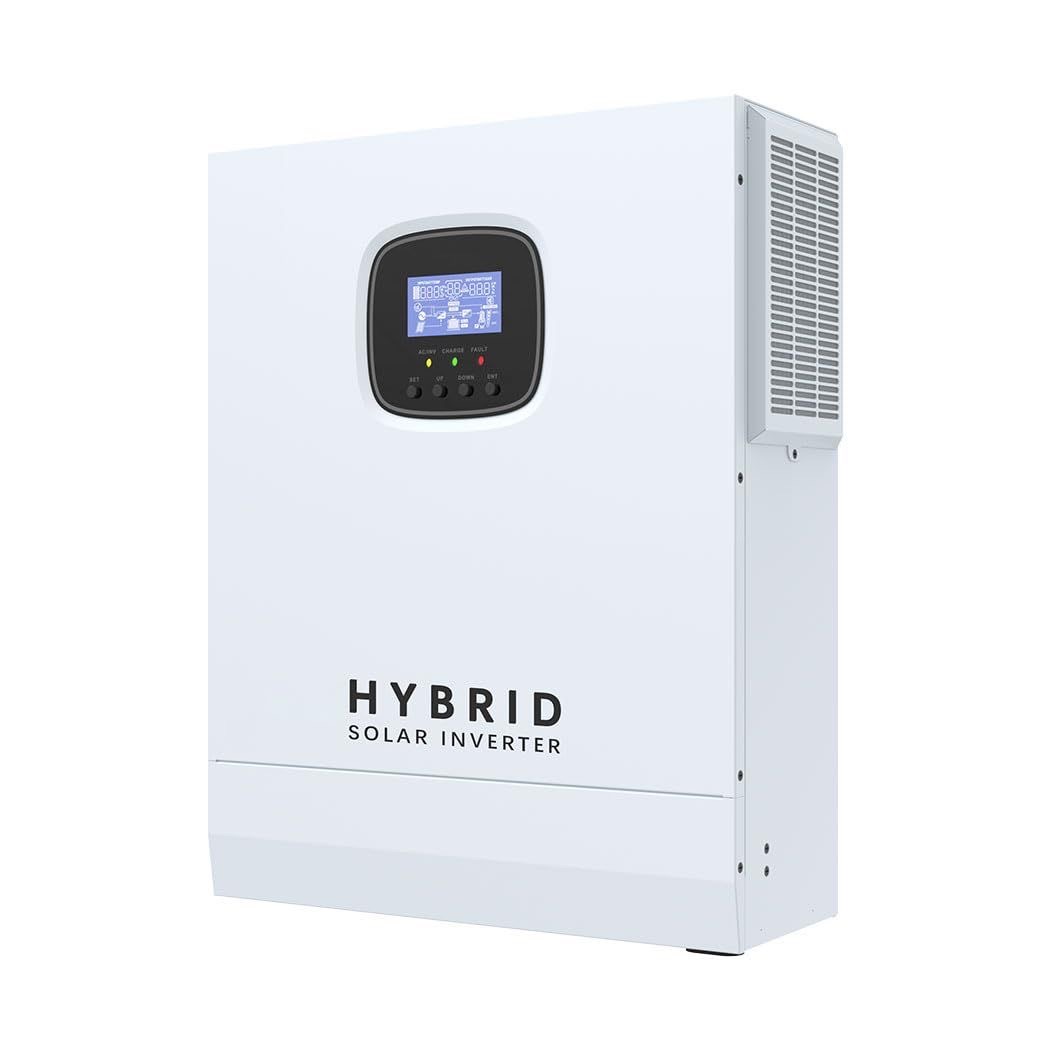
An inverter selected only because it is rated around 4–5kW may trip during startup even though average load appears small. Soft starters, inverter-duty compressors and variable-frequency drives can reduce starting stress. For some commercial installations, selecting refrigeration equipment with an appropriate starting method can be more economical than massively oversizing the power plant.
Chiller vs Freezer: Why Temperature Matters
A chilled room around 0°C to +8°C and a freezer around -18°C or lower do not have the same energy profile. Lower target temperatures generally increase refrigeration demand. Frequent door openings or loading warm products can also increase compressor workload. Current Nigerian market guidance distinguishes chiller and freezer applications and recommends different solar, inverter and battery ranges as storage size and temperature requirements increase.
Insulation Can Be More Important Than Adding More Solar Panels
A poorly insulated cold room can turn an expensive solar installation into an unnecessarily large power plant. Before increasing inverter or battery size, check:
Insulation thickness and condition
Door seals
Door-opening frequency
Air leakage
Product loading temperature
Evaporator and condenser condition
Condenser airflow
Ambient temperature
Refrigeration-system condition
Improving thermal performance can reduce compressor runtime and therefore reduce required solar and battery capacity.
What Happens If the Cold Room Is Connected to an Undersized Solar System?
Common symptoms include:
Compressor struggles to start
Inverter trips on overload
Battery voltage drops sharply
Compressor repeatedly starts and stops
Cold-room temperature rises during outages
Generator takes over frequently
Battery reaches low state of charge before morning
Solar production looks healthy but the battery never fully recovers
These symptoms do not all mean the same thing. A professional diagnosis should separate starting-power problems from daily-energy problems. A system can have enough kWh but insufficient instantaneous power. It can also have a powerful inverter but insufficient PV and battery energy for the full operating cycle.
Should a Cold Room Use Solar, Grid and Generator Together?
For many Nigerian businesses, a hybrid architecture can be more practical than trying to make solar and batteries carry every condition alone. A possible hierarchy is:
Solar PV supplies the cold room and charges the battery when available.
Battery supplies the load during grid interruptions and scheduled backup periods.
Grid supports the system when solar production is insufficient.
Generator provides additional backup during prolonged low-solar or high-demand periods if required.
This lets the system be designed around reliability and operating economics.
A Better Way to Think About Cold-Room Solar ROI
Cold-room owners should not evaluate solar only by asking, "How much will the panels cost?" The better question is: "How much does unreliable power currently cost my business?"
That may include:
Diesel or petrol
Generator maintenance
Compressor wear
Spoiled products
Lost sales
Labour downtime
Emergency fuel
Temperature excursions
Business interruption
Solar can create value by reducing both energy cost and operational risk. Current Nigerian commercial solar demand is increasingly tied to reliable power and diesel displacement.
How Much Does a Solar Cold-Room System Cost in Nigeria?
There is no single price because cold-room systems vary enormously. A small commercial freezer can use a compact solar package, while a large cold room can require multi-kilowatt PV, high-capacity lithium storage and a larger hybrid inverter.
A professional quotation should separate:
Refrigeration equipment
Solar PV modules
Hybrid inverter or dedicated refrigeration controller
Battery storage
Mounting structure
DC and AC protection
Cabling
Earthing and surge protection
Installation and commissioning
Monitoring
Civil and insulation modifications
Transportation
Do not compare two quotations by price alone. Compare compressor specification, PV capacity, usable battery energy, inverter surge capability, protections, warranties and installation scope.
Cold-Room Solar Installation Checklist
Before approving a project, document:
Cold-room dimensions and insulation specification
Target temperature
Compressor make and model
Compressor rated power and current
Starting method and starting current where available
Phase and voltage
Measured daily energy consumption where possible
Door-opening and operating pattern
Required backup duration
Solar resource and site conditions
PV array design
Inverter model and surge capability
Battery nominal and usable capacity
Battery maximum discharge current
DC and AC cable sizing
Surge protection and earthing
Monitoring and alarms
Generator and grid integration strategy
Final Takeaway
A cold room can absolutely be powered by solar in Nigeria, but it should not be designed like an ordinary residential solar installation. The engineer has to account for compressor startup power, daily refrigeration energy, temperature requirements, insulation, battery discharge capability, solar production, backup duration and the operating strategy of the business.
For a small freezer business, the right solution may be a compact solar freezer system. For a larger commercial cold room, the solution may require an engineered hybrid plant with substantial PV, lithium storage and a motor-capable inverter or controlled compressor architecture.
The goal is not simply to put solar panels on the roof. The goal is to keep the cold room at the required temperature while reducing fuel dependence and protecting the business's inventory.
At Zookie Solar, we can assess your cold-room load, operating pattern and site conditions and develop a solar-plus-storage solution around the actual refrigeration requirement. Book a free assessment and we will design the system around your real refrigeration load, not a generic package.
Planning a cold room, frozen-food business, fish storage facility, supermarket or commercial refrigeration project? Contact Zookie Solar for an engineering-based assessment and quotation.
Built on Power. Driven by Excellence.
The case study and calculations are illustrative and are not presented as a completed Zookie Solar project. Final cold-room design must use actual refrigeration equipment data, measured or validated energy consumption, site solar conditions, manufacturer specifications, thermal requirements and a professional electrical assessment.
Can a Solar Inverter Run a Borehole Water Pump in Nigeria? 2026 Sizing Guide