How to Match a Lithium Battery to a Solar Inverter in Nigeria: BMS, Voltage, CAN & RS485 Guide
Introduction
Buying a lithium battery and a hybrid inverter separately can look simple: check the battery capacity, check the inverter power, connect the two and start using the system.
In practice, compatibility is more than matching a 48V battery with a 48V inverter.
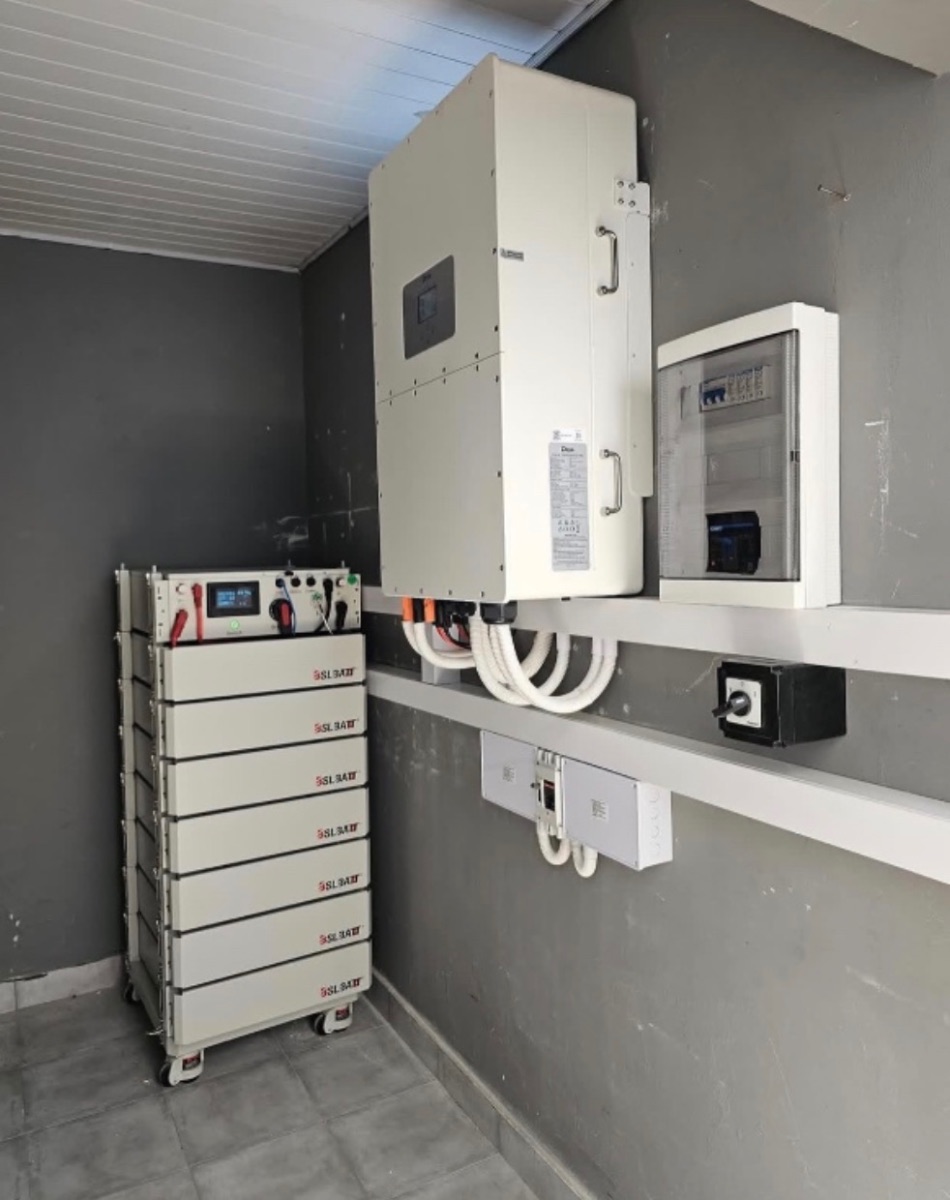
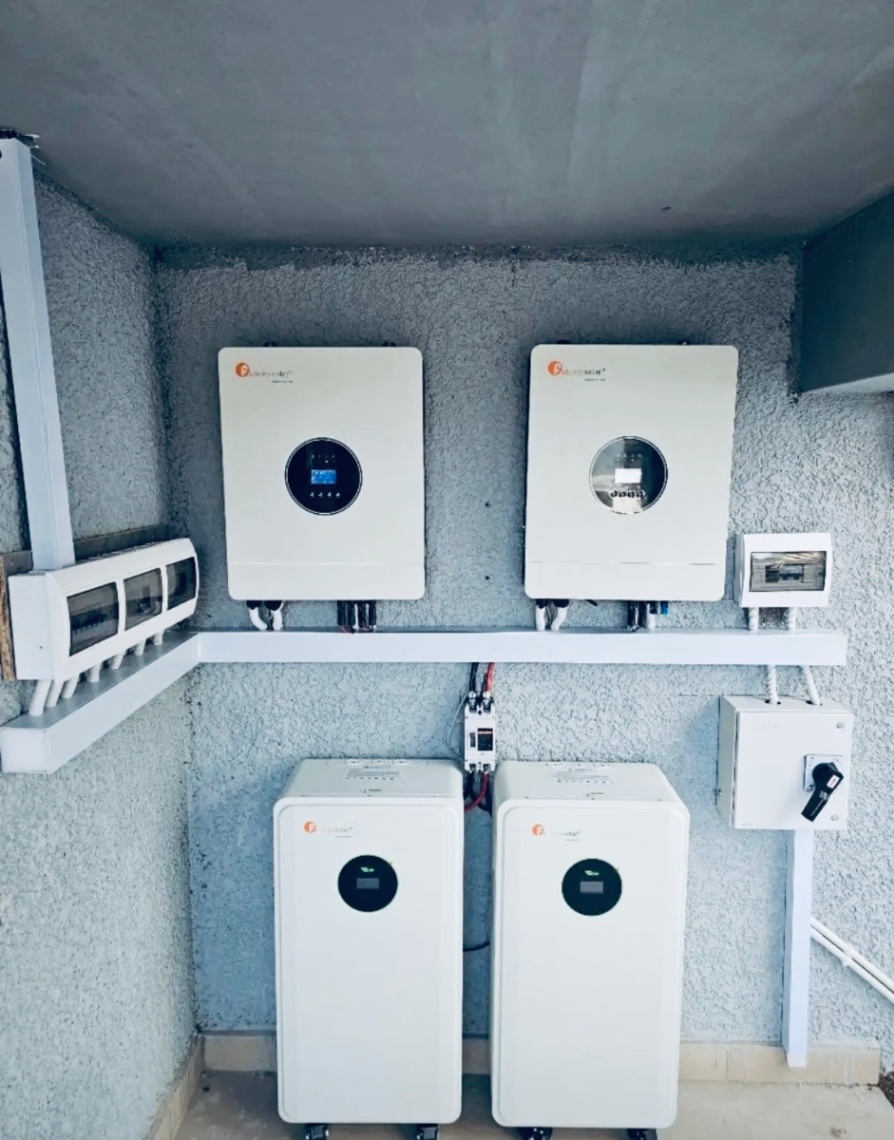
The battery and inverter may need to agree on voltage limits, charging current, discharge current, State of Charge (SoC), temperature information and protection commands. Depending on the equipment, that communication may happen through CAN bus or RS485.
This is becoming an increasingly important question in Nigeria as larger lithium storage systems become more common. Nigerian suppliers now market batteries with CAN/RS485 communication and publish specific compatible-inverter lists, while buyers increasingly ask why apparently compatible batteries still fail to communicate with their inverters.
The result is an important buying rule: do not buy a lithium battery because its voltage and kWh look right. Confirm the complete battery-inverter compatibility.
What Does “Battery-Inverter Compatibility” Actually Mean?
Compatibility has several layers.
1. Voltage compatibility
The battery's nominal voltage must match the inverter's battery architecture.
2. Current compatibility
The battery's continuous charge and discharge limits must be suitable for the inverter and the expected load.
3. Communication compatibility
If the battery is intended to operate in closed-loop BMS mode, the inverter must understand the battery's communication protocol.
4. Physical and connection compatibility
The battery terminals, communication ports, connectors and cable requirements must be correct.
5. Configuration compatibility
The inverter must have the appropriate battery profile, protocol selection or manually configured parameters.
A system can pass one of these checks and fail another.
Why 48V Does Not Automatically Mean Compatible
Suppose you have a 51.2V lithium battery and a hybrid inverter described as a 48V system.
That may be normal because many LiFePO4 batteries marketed for 48V-class systems have a nominal voltage of 51.2V.
But voltage class is only the first check.
The battery may use a particular CAN or RS485 protocol that the inverter does not recognise. It may also have maximum charge/discharge limits that differ from the inverter's settings.
Current Nigerian product documentation illustrates this clearly: some 51.2V batteries list CAN/RS485 communication and specific compatible inverter brands, while other 25.6V products are explicitly unsuitable for 48V-class inverters.
What Is the BMS and Why Does the Inverter Need Its Information?
The Battery Management System, or BMS, is the electronic control and protection system inside a lithium battery.
It monitors battery conditions such as cell voltage, temperature, current and overall State of Charge. It can also protect the battery against conditions such as overcharge, over-discharge, excessive current and abnormal temperature.
When the battery and inverter communicate correctly, the inverter can use battery information instead of relying only on fixed voltage thresholds.
For example, the battery can communicate that it is approaching its charge limit, that its allowable charging current has changed, or that a protection condition has occurred.
That does not mean BMS communication magically makes every battery safer. The battery, inverter settings, wiring and protection system still have to be correctly designed.
CAN vs RS485: What Is the Difference?
CAN and RS485 are communication technologies used by many energy-storage systems, but the connector or cable shape does not tell you the actual protocol.
Two devices can both have RJ45-style ports and still require different pinouts or communication protocols.
That is why an ordinary Ethernet cable should not automatically be assumed to be the correct BMS cable.
Some current inverter and battery products in Nigeria explicitly specify CAN/RS485 ports and protocol compatibility.
The installer should follow the manufacturer's communication diagram, including the correct port, pinout, cable and protocol setting.
Illustrative Case Study: A 5kW Inverter With a 10kWh Lithium Battery
This is an illustrative design case study, not a claim that Zookie Solar completed this project.
Imagine a customer buys a 5kW hybrid inverter and a 10kWh 51.2V lithium battery from different suppliers.
The customer checks the labels and sees: Inverter: 48V battery system; Battery: 51.2V LiFePO4; Battery capacity: 10kWh.
The customer concludes that the products are compatible.
But a professional compatibility check continues:
1. Is the inverter approved for this battery model or BMS protocol?
2. Does the battery communicate through CAN or RS485?
3. Which communication port does the inverter require?
4. Is the pinout correct?
5. Is the correct battery profile available in the inverter firmware?
6. What are the battery's maximum charge and discharge currents?
7. Does the inverter respect those limits?
8. What happens if BMS communication is lost?
If these questions are unanswered, the system is not ready for installation simply because the voltage labels look similar.
What Happens If BMS Communication Does Not Work?
A lithium battery can sometimes operate in an open-loop or user-defined mode when closed-loop communication is unavailable, depending on the battery and inverter manufacturers.
In that configuration, the installer manually sets appropriate charging, absorption, float or cutoff parameters according to the battery manufacturer's specifications.
However, the exact capabilities vary by product. Some batteries or inverters may require communication for particular functions, while others provide a documented voltage-based mode.
Nigerian product guidance currently describes both closed-loop CAN/RS485 operation and user-defined voltage operation for certain lithium/inverter combinations.
The key point is that BMS not connected does not automatically mean the battery is unusable, but it does mean the installer must confirm the manufacturer's approved operating mode.
Why a Wrong BMS Cable Can Look Like a Battery Fault
One of the most frustrating installation problems is a battery that powers the inverter correctly but shows no useful BMS data.
The inverter may display zero or incorrect SoC, fail to read charge/discharge limits, or report a communication fault.
Possible causes can include: wrong communication port, incorrect cable pinout, incompatible protocol, wrong inverter battery profile, incorrect DIP-switch or address settings, firmware incompatibility, communication configuration issues, or a damaged communication cable.
Community troubleshooting discussions show that BMS communication problems can persist even when the battery and inverter are apparently compatible, particularly when users substitute cables or cannot confirm the correct pinout.
That is why changing random Ethernet cables until one works is not a professional commissioning method.
How to Check a Battery-Inverter Compatibility Before Buying
Before paying for either component, collect these details:
From the inverter
Exact brand; exact model number; battery voltage range; maximum charge current; maximum discharge current; supported lithium protocols; CAN/RS485 port information; supported battery list; and required firmware version where applicable.
From the battery
Exact model number; nominal voltage; usable/rated energy; maximum continuous charge current; maximum continuous discharge current; BMS manufacturer or specification; CAN/RS485 protocol; communication pinout; approved inverter list; and firmware or compatibility requirements.
Do not compare only brand names. A manufacturer's 5kWh battery can have a different protocol from another battery in the same product family.
Illustrative Compatibility Check: 5kWh Battery × 2
This is an illustrative example, not a Zookie Solar project.
Suppose a customer wants two 5.12kWh lithium batteries in parallel with a 5kW inverter.
Total nominal storage: 5.12kWh × 2 = 10.24kWh.
That number looks straightforward, but the engineer should also check the combined allowable current.
If each battery is rated for 100A continuous discharge and the manufacturer permits the two units to operate in parallel, the theoretical combined current capability could be approximately 200A.
But that does not mean the inverter should automatically be configured to draw 200A.
The inverter, cables, fuses/breakers, battery busbars and manufacturer's parallel-battery rules must all support the actual operating current.
Capacity, current capability and communication must therefore be checked together.
Why Parallel Batteries Need Their Own Compatibility Check
Adding another battery is not simply doubling the kWh figure.
Parallel battery systems can require correct communication topology, master/slave or address settings, matched firmware or approved models, equal cable lengths or an approved bus arrangement, appropriate overcurrent protection, adequate busbars and conductors, and compatible battery age and condition.
Some current Nigerian battery products specify maximum numbers of parallel units and particular communication arrangements.
If the battery manufacturer says a particular number of modules can be paralleled, follow that specification rather than assuming that any number of identical-looking batteries can be added.
How Battery Current Affects Inverter Selection
Energy capacity and power capability are different.
Suppose an illustrative 51.2V battery can continuously supply 100A.
Its approximate DC power capability is: 51.2V × 100A = 5,120W.
That is roughly 5.12kW before considering operating limits, temperature, voltage variation and conversion losses.
If a system is expected to supply a 10kW load continuously, one such battery may not be an appropriate power source even if its energy capacity looks attractive.
This is why an engineer must check both kWh and maximum continuous current.
What Happens If the Inverter Wants More Current Than the Battery Allows?
If an inverter is capable of drawing more current than the battery's continuous discharge rating, the battery BMS may limit or interrupt the output when the system reaches its protection threshold.
Repeated operation near or beyond limits can reduce reliability and cause nuisance shutdowns.
The correct solution may be a larger battery bank, more parallel modules, a lower inverter/load demand, or a different battery model.
Do not solve a battery-current problem simply by disabling BMS protection.
Why Battery Temperature Data Matters
Lithium batteries have operating-temperature limits, and some battery systems adjust charging or discharging behaviour based on temperature.
When BMS communication is active, the inverter can receive battery information that may help it operate within the manufacturer's defined limits.
Some Nigerian lithium products specify operating ranges and integrated monitoring features such as temperature monitoring, Wi-Fi or Bluetooth.
This becomes particularly important in hot environments, equipment rooms and installations where ventilation is poor.
Five Red Flags When Buying a Battery and Inverter as Separate Products
1. “They are both 48V, so they will work.”
Voltage alone does not establish compatibility.
2. “The communication cable is just an Ethernet cable.”
The connector may look familiar while the pinout and protocol are different.
3. “The battery supports CAN, so it works with every CAN inverter.”
CAN is a communication method, not a universal compatibility guarantee.
4. “We can make it work with any settings.”
Battery charging and protection parameters should come from the manufacturer's specifications.
5. “We will test it after installation.”
Compatibility should be verified before the equipment is purchased and delivered to site.
What a Professional Commissioning Test Should Confirm
After installation, the commissioning process should confirm more than whether the inverter powers on.
Depending on the equipment, the installer should verify: correct battery voltage, correct polarity, battery protection status, BMS communication status where applicable, displayed SoC against battery information, charge-current limits, discharge-current limits, alarm and protection behaviour, parallel-battery communication where applicable, inverter battery profile, and monitoring/app connectivity where included.
Any communication fault should be resolved and documented before the system is handed over as fully commissioned.
Can You Mix Different Lithium Battery Brands?
Do not assume that batteries can be mixed simply because they have the same nominal voltage and chemistry.
Parallel operation should follow the battery manufacturer's approved architecture. Mixing different brands, models, capacities, firmware versions or ages can create differences in voltage, current sharing and BMS behaviour.
If a system needs expansion, first check whether the existing battery manufacturer permits the proposed expansion and under what conditions.
In many cases, a properly matched battery bank is safer and easier to support than a mixed collection of modules.
What Should Be in the Solar Quote?
If a Nigerian installer is supplying a lithium battery and inverter as a package, the quotation should identify the exact equipment rather than using generic descriptions such as “5kW inverter + 10kWh lithium.”
Ask the quotation to show: exact inverter model, exact battery model, battery nominal voltage, usable/rated capacity, BMS communication method, number of battery modules, communication cables, battery protection, inverter configuration/commissioning, installation and testing, warranty terms, and workmanship warranty.
This makes it much easier to compare competing quotations and reduces the risk of receiving a substitute product with different compatibility characteristics.
Final Takeaway
A lithium battery and solar inverter should be selected as a system, not as two unrelated products.
Voltage is only the beginning. A reliable installation also needs the correct power/current relationship, BMS protocol, CAN or RS485 communication, cable pinout, firmware/profile support, protection settings and commissioning procedure.
Current Nigerian product offerings increasingly advertise CAN/RS485 communication and defined inverter compatibility, while real-world community troubleshooting shows how easily communication can fail when the wrong cable, protocol or settings are used.
At Zookie Solar, we can evaluate the exact inverter and battery models before installation, verify compatibility and configure the system around the manufacturer's specifications.
Planning a new lithium solar system or replacing the battery in an existing inverter system? Contact Zookie Solar for professional equipment matching, system design, installation and commissioning.
Built on Power. Driven by Excellence.