
One of the most critical questions people ask before investing in a solar system is straightforward: "How long will my battery last at night?" However, there is no single plug-and-play answer such as claiming a 10kWh unit will automatically power your home for ten hours straight. Real-world runtime depends entirely on usable capacity, the exact appliances you run, their actual wattage draw, inverter conversion efficiency, overall battery health, and manufacturer design limits. This guide breaks down how to calculate your overnight solar runtime in a practical, real-world context tailored for homes and businesses in Nigeria.
Battery Capacity Is Not Runtime
A battery is rated by its total storage capacity in kilowatt-hours (kWh), with typical residential setups coming in 5kWh, 10kWh, or 15kWh configurations. However, a 10kWh battery does not mean you get a guaranteed 1kW of power for ten continuous hours, because energy conversion always incurs heat and resistance losses. Furthermore, total advertised capacity is rarely the same as usable capacity. A practical baseline formula to keep in mind is:
Approximate Runtime = Usable Battery Energy ÷ Average Load
If your system provides 8kWh of usable energy and your average nighttime draw is 800W (0.8kW), your runtime works out to roughly ten hours. Keep in mind that real-world output constantly fluctuates as appliances cycle on and off throughout the night.
Usable Battery Capacity Explained
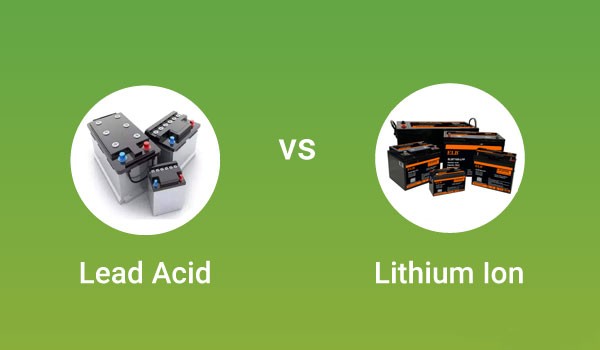
The rating printed on the side of a battery casing is not always the amount of power you should safely draw down. Modern lithium (LiFePO₄) batteries are designed to offer a high usable depth of discharge (DoD), often between 80% and 90% of their total rating. Traditional lead-acid or gel batteries require far more conservative use, often only safe to drain down to 50% if you want to prevent sudden degradation. This means two different battery banks with identical 10kWh tags on the box will deliver vastly different usable power in your home depending on their internal chemistry and system settings. For a deeper look at the trade-offs, see our comparison of lithium and lead-acid batteries.
Load Dictates Performance
What matters most isn't the size of your storage bank, but how much power your combined appliances consume every hour. Consider a standard evening setup: four standing fans taking 240W, a television drawing 100W, a Wi-Fi router taking 20W, and basic LED lighting pulling 100W. This creates a total continuous load of roughly 460W (0.46kW). Drawing from an available 8kWh usable capacity, that setup theoretically allows for roughly 17 hours of operation. In reality, that runtime drops slightly once inverter efficiency and power surges are factored into the equation.
Nighttime vs Daytime Usage
The daily routine for many Nigerian households involves leaving for work in the morning and returning in the evening, concentrating the heaviest electricity demands into the nighttime hours. During daylight hours, your solar panels power daytime loads directly while simultaneously pushing excess generation into the battery bank. At night, the process flips entirely: your battery bank powers the inverter, which then feeds the entire house. This means your daytime solar panel array must be large enough not just to cover daytime usage, but to completely top off the batteries before the sun sets.
A Practical Nighttime Example
Consider a typical home running four fans, a television, a refrigerator, an internet router, indoor lighting, and phone chargers from 7:00 PM to 7:00 AM. Assuming an average combined load of 600W (0.6kW) across that 12-hour stretch, total consumption comes out to 7.2kWh. Accounting for a standard 90% inverter conversion efficiency, the system actually needs to draw around 8kWh from the bank. For a household with this specific profile, an 8–10kWh battery setup provides a comfortable cushion without running the storage bank completely flat before morning.
Air Conditioners Change Everything
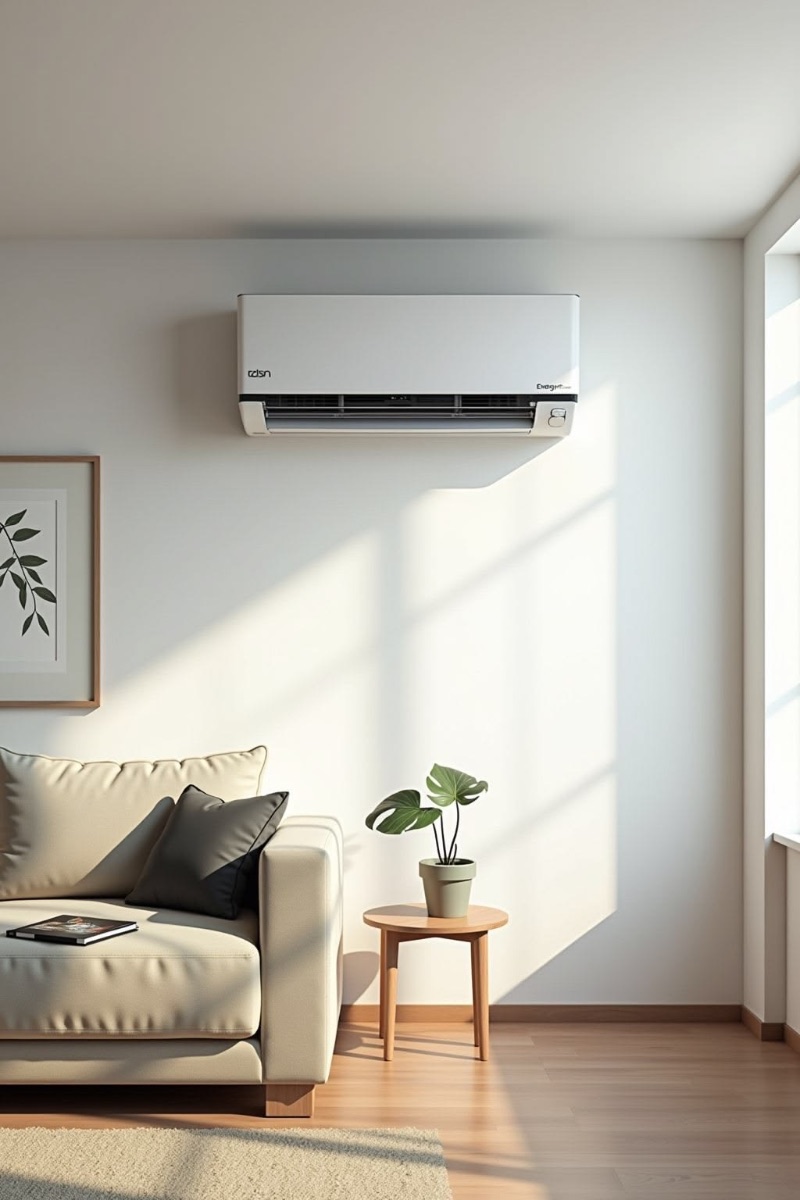
Air conditioners alter overnight energy calculations drastically compared to basic household electronics. A home running simple standing fans requires modest storage, but adding even a single 1HP air conditioner demands a massive jump in battery capacity. Air conditioner power draw varies depending on whether it uses inverter technology, the thermostat temperature setting, and how often the compressor cycles. Never calculate your system size based on horsepower ratings alone; always check the real-world running wattage and your intended hours of use. We covered the sizing math for this in more detail in our guide to running an AC on solar.
5kWh Battery Benchmarks
A 5kWh battery is a popular choice for light-to-moderate loads, but its actual performance depends strictly on what you plug into it. Assuming a conservative 4kWh of usable energy, running a light 200W load (basic lights, TV, and fans) yields roughly 20 hours of runtime before conversion losses. Increase that load to 400W and runtime drops to 10 hours; at 800W it lasts 5 hours, and a heavy 1,600W load will deplete the unit in just 2.5 hours.
| Load | Runtime |
|---|---|
| 200W | ~20 hours |
| 400W | ~10 hours |
| 800W | ~5 hours |
| 1,600W | ~2.5 hours |
10kWh Battery Benchmarks
Stepping up to a 10kWh battery provides roughly 8kWh of usable energy under standard depth-of-discharge limits. At a light 400W continuous draw, this setup yields up to 20 hours of backup time. Increasing the demand to 800W drops runtime to 10 hours, a 1,600W load lowers it to 5 hours, while a heavy 2,000W continuous draw exhausts the system in roughly 4 hours. This highlights a fundamental rule of solar storage: buying a larger battery won't grant you longer backup time if you scale up your consumption right along with it.
| Load | Runtime |
|---|---|
| 400W | ~20 hours |
| 800W | ~10 hours |
| 1,600W | ~5 hours |
| 2,000W | ~4 hours |
Why Batteries Drain Faster Than Expected
If your battery bank runs flat earlier than calculated, several common factors are usually at play:
- Actual load running higher than your initial manual estimate
- Appliances being left turned on longer than planned
- High inductive starting surges from pumps and motors dragging down capacity
- Cumulative energy losses through inverter heat conversion
- Natural battery aging, cell imbalance, or ambient room heat
- Inaccurate inverter state-of-charge settings or hidden standby loads like setup boxes and CCTV cameras
Understanding Refrigerator Power Draw
Refrigerators do not draw power in a flat, linear fashion because their internal compressors cycle on and off based on ambient temperature. Reading the wattage rating on the back label does not mean the appliance pulls that exact figure continuously over 24 hours. Actual energy consumption fluctuates based on how often the door is opened, room temperature, and internal storage load. For accurate solar calculations, measuring actual daily kWh consumption with a meter is far more reliable than multiplying nominal wattage by 24.
Battery Percentage Isn't a Fuel Gauge
The state-of-charge (SOC) percentage shown on your inverter or monitoring app should not be treated like a precise fuel gauge in a car. Depending on system configuration, SOC is estimated using voltage curves, current tracking, or direct communication with the battery management system (BMS). While modern lithium batteries linked via BMS provide highly accurate data, environmental changes, calibration drift, and voltage drops under sudden heavy loads can still cause percentage readings to jump or drop unexpectedly.
The Myth of the "Small" 10kWh Battery
It is common for homeowners to install a 10kWh battery and feel it is underperforming when it drains overnight. However, running two air conditioners alongside a refrigerator, chest freezer, lighting, televisions, and a water pump creates a combined load that draws several kilowatts simultaneously. Under that level of heavy demand, an 8kWh usable reserve drains in a matter of hours. Battery storage capacity must always be directly matched to your real load profile rather than assumed expectations.
How to Extend Overnight Battery Life
Extending your backup time does not always require spending money on additional batteries; optimizing your consumption is often cheaper and more effective. Simple adjustments yield significant runtime improvements:
- Swap old bulbs for high-efficiency LED lighting throughout the property
- Upgrade to energy-efficient DC inverter fans and appliances
- Avoid leaving non-essential electronics on standby overnight
- Set air conditioner thermostats to sensible temperatures (e.g., 24°C–26°C) to reduce compressor duty cycles
- Shift heavy power activities like water pumping or laundry to peak daylight hours when panels power them directly
Running Air Conditioners on Batteries
You can reliably run air conditioners off battery power overnight, provided the system was explicitly engineered for that load. The key technical question is not simply whether your inverter is strong enough to start the AC unit, but whether your battery bank holds enough total energy to sustain it for six to eight hours. Inverter power output (kVA) dictates what you can turn on at once, while battery storage capacity (kWh) dictates how many hours it stays running.
Power vs Energy Simplified
Understanding the difference between power and energy eliminates most common sizing mistakes:
- Power (kW / kVA): The instantaneous rate of electricity flow. This determines how many appliances your inverter can run simultaneously at any given second.
- Energy (kWh): The total volume of electricity consumed or stored over time. This determines how many hours your battery bank can sustain those running loads.
- Solar Panel Array (kWp): The generation engine that determines how quickly you can refill that battery bank during daylight hours.
A reliable solar setup requires all three components to be carefully balanced.
How to Estimate Your Overnight Needs
Calculating your custom battery requirement is a simple step-by-step process:
- List every appliance that must run overnight.
- Note the wattage, quantity, and total planned running hours for each item.
- Calculate daily energy using the formula below.
- Sum up the kWh totals for all items and divide by 0.90 to account for standard inverter conversion losses.
Daily Energy (kWh) = (Watts × Quantity × Hours) ÷ 1000
Using this final figure, select a battery bank based on its usable capacity rather than its advertised gross label.
Handling Cloudy or Rainy Days
A battery bank may perform flawlessly through a clear night, but fail the following evening if cloudy weather prevents the solar array from fully recharging it during the day. Solar panel capacity and battery sizing must always be designed as a matched pair. Ensuring reliable power through prolonged bad weather requires expanding your solar array yield, increasing battery reserves, or integrating grid or generator auto-start support to bridge temporary generation gaps.
Planning for Future Load Growth
A solar system sized strictly for your current setup will easily become overloaded as your power needs expand over time. Future additions such as extra air conditioners, deep freezers, electric pumping systems, or additional living spaces quickly strip away your engineered storage safety margin. Always discuss potential future appliance upgrades with your installer during the initial design phase so your inverter, cabling, and racking are built ready for seamless battery expansion later.
The Zookie Solar Approach
At Zookie Solar, system sizing is never based on guessing or pushing the largest battery on the shelf. We analyze your actual load profile, nighttime demand, usage habits, and local solar irradiance to design a tailored system where your panels, inverter, and battery work in perfect balance. Our technical process evaluates:
- Detailed appliance wattage audits and peak surge requirements
- Nighttime vs daytime energy distribution
- Battery chemistry longevity and true usable capacity limits
- Inverter efficiency curves and system expansion capability
If you want this analysis done for your specific home or business, book a free load assessment and we will size the system around your real usage.
Final Takeaway
Asking how long a solar battery will last at night comes down to measuring your overnight kWh consumption against your battery's true usable energy reserves. A modest 5kWh bank can last all night on a lean, efficient load, while a large 10kWh bank can drain quickly if subjected to heavy air conditioning. Size your system around your actual lifestyle, load profile, and daytime recharging capabilities rather than nominal capacity numbers on a box.
Zookie Solar Ltd.
Built on power. Driven by excellence. Your trusted solar partner.
Frequently Asked Questions
How long will a 5kWh solar battery last at night?
It depends entirely on your total wattage load. Drawing a continuous 200W load yields roughly 20 hours before efficiency losses, whereas a heavy 1kW load exhausts usable capacity in around 4 hours.
How long will a 10kWh solar battery last?
Assuming 8kWh of usable energy, an average 400W load lasts about 20 hours, an 800W load lasts around 10 hours, and a heavy 2,000W load drains the bank in roughly 4 hours.
Can a solar battery power an air conditioner all night?
Yes, provided both the inverter peak rating and the usable battery bank capacity have been engineered to handle the AC unit's continuous draw and compressor surges overnight.
Why does my battery percentage drop rapidly at night?
Rapid percentage drops are typically caused by heavy appliance loads, uncalibrated state-of-charge meters, high inverter conversion losses, or incomplete daytime solar charging.
Is a larger battery always the best choice?
Not necessarily. A larger battery requires a larger solar panel array to fully recharge it. Storage capacity must always match both your energy consumption and your solar charging capability.
Should I drain my solar battery down to 0% every night?
No. Frequently discharging a battery down to 0% accelerates cell degradation. Always operate within the manufacturer's recommended depth-of-discharge limits set on your inverter.
What is the ideal battery size for a Nigerian home?
There is no single ideal size. The correct capacity depends on your specific appliance list, nighttime running hours, inverter size, solar panel array, and overall backup goals.