Solar Power for Rice Mills in Nigeria: Motor Loads, Milling Energy and Production Planning
Solar Power for Rice Mills in Nigeria: Energy & Motor Sizing
Learn how to plan solar for Nigerian rice mills using milling energy per tonne, three-phase motor starting, production schedules, inverter capacity and battery backup.
Solar Power for Rice Mills in Nigeria: Motor Loads, Milling Energy and Production Planning
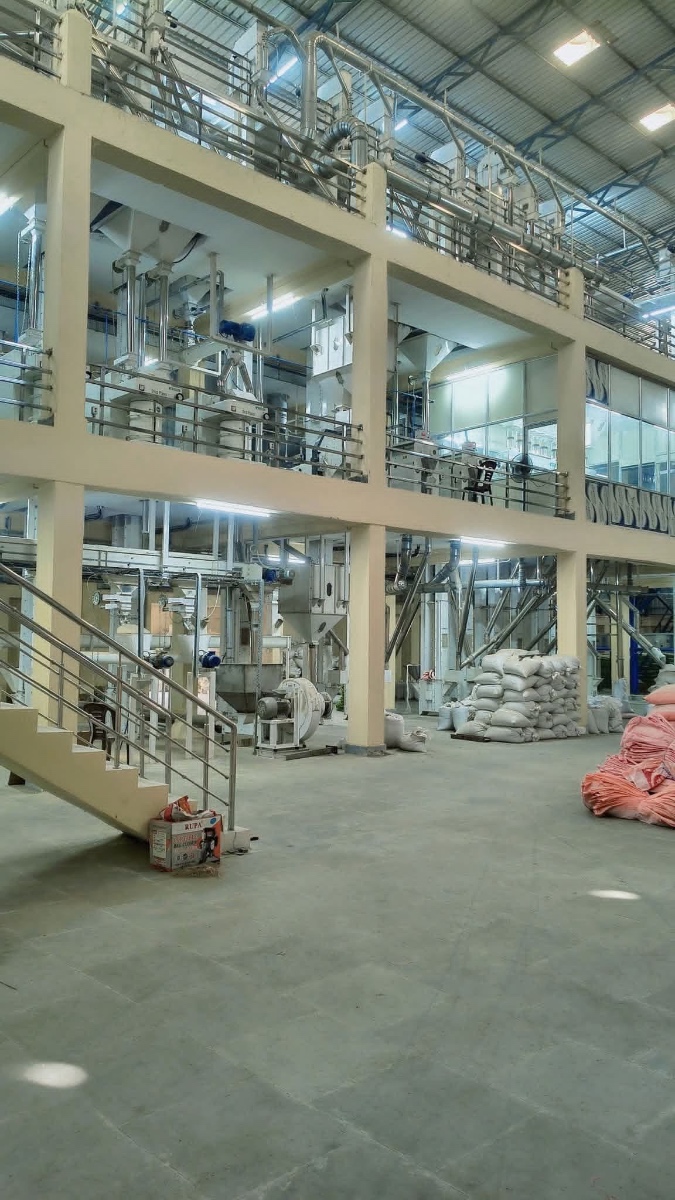
Rice milling depends on a coordinated line of machines: cleaners, destoners, huskers, separators, whiteners, polishers, graders, conveyors and dust extraction. If one stage loses power, the whole line may slow down or stop. For mill owners, the challenge is not simply buying enough solar panels. It is designing an electrical system for the actual production process, including three-phase motors, starting currents, shift patterns and the loads that must remain powered during an interruption.
Why Solar for Rice Mills Is Becoming a Practical Industrial Question
Nigeria has a notable industrial reference point. In January 2026, reporting on the UMZA Rice and Oil Mill in Kano described a commissioned solar-and-storage plant of approximately 1 MWp with a battery system reported at 2.15 MWh. An earlier announcement by project partner Empower New Energy projected annual generation of about 1,800 MWh. This is a partner-reported project, not a Zookie Solar installation, and its scale is not a template for a smaller mill.
Public discussions about Nigerian solar purchases also reveal recurring concerns about system sizing, equipment authenticity, supplier reliability and battery expansion. A June 2025 discussion in Reddit’s r/Nigeria community included questions about finding a reliable battery supplier and planning a 40 kWh system. It was not about rice milling, but it illustrates why buyers should insist on equipment data, written load assumptions and a clear design scope instead of buying by headline inverter size alone.
The practical opportunity is specific: assess the milling line as a production system, then determine which energy can be supplied directly by daytime solar, which short interruptions need battery support and what supply remains necessary when solar output is low.
Step 1: Map the Complete Milling Process
Before requesting a solar quotation, list every machine from paddy intake to bagging. Record each nameplate’s voltage, phase, rated kW or horsepower, full-load current, starting method, operating hours and whether the machine can run simultaneously with other equipment.
Pre-cleaners and destoners remove straw, stones and other impurities.
Huskers and paddy separators remove the husk and separate unprocessed paddy from brown rice.
Whiteners and polishers remove bran and finish the grain to the required market specification.
Graders, colour sorters and bagging equipment prepare finished rice for sale.
Bucket elevators, conveyors and dust extraction move material and control dust; these auxiliary loads are easy to overlook.
Lighting, office equipment, compressors and other support loads must also be inventoried.
Installed motor power is not the same as actual running demand. Some motors operate continuously, others cycle, and some must start in a particular order. Base the design on a documented operating sequence and, where possible, measured power data from a representative shift.
Step 2: Estimate Energy per Tonne and Daily Production
A useful metric is kilowatt-hours per tonne of paddy processed. A rice-mill equipment supplier’s planning guide gives a broad range of approximately 18–30 kWh per tonne for some small milling configurations. Treat this as a preliminary benchmark, not guaranteed Nigerian performance data: actual consumption depends on the line, throughput, whitening and polishing stages, paddy condition and operating practice.
Daily energy (kWh) = tonnes processed per day × estimated kWh per tonne
Compare the estimate with meter readings, generator runtime and fuel records, or a temporary power logger. If measured consumption differs materially, investigate why before selecting the solar array or battery.
Illustrative Example: A 5-Tonne-per-Day Rice Mill in Kebbi
This is a hypothetical planning example, not a surveyed site, final engineering design or completed Zookie Solar project. Assume the mill processes 5 tonnes of paddy daily and use a preliminary benchmark of 18–26 kWh per tonne.
Planning item
Illustrative assumption or result
Daily paddy throughput
5 tonnes/day
Energy benchmark
18–26 kWh/tonne
Estimated daily process energy
90–130 kWh/day
Midpoint for the worked example
110 kWh/day
Assumed equivalent peak-sun-hours
5 hours/day
Assumed overall performance factor
0.75
Midpoint array calculation
110 ÷ (5 × 0.75) ≈ 29.3 kWp
With a provisional 15% planning margin
Approximately 33.7 kWp
The roughly 34 kWp figure is an energy-based starting point only. It does not prove that a 34 kWp array can run the milling line at every moment. The designer must check local solar conditions, seasonal output, the hourly load profile, mounting area, inverter PV-input limits and the amount of production that must continue during cloudy periods. The actual array could be smaller or larger.
Step 3: Size for Three-Phase Motors and Starting Events
A mill can have moderate daily energy use yet demand substantial instantaneous power. Motors may draw much more current while starting than while running, and several motors starting together can overload an inverter or destabilise the site supply. Do not select an inverter from daily kWh alone.
Create a motor-starting schedule
Obtain each motor’s nameplate data and manufacturer starting-current or torque requirements.
Identify which motors can be started sequentially and which must operate together.
Confirm whether direct-on-line starting, a soft starter or a variable-frequency drive (VFD) is appropriate for each motor and process.
Check inverter continuous real-power output, three-phase rating, overload duration and surge capability against the actual sequence.
Verify protection coordination, phase balance and power-quality requirements with a qualified electrical engineer.
VFDs and soft starters can reduce the starting burden when correctly selected and commissioned, but they are not universal fixes. Drive selection must follow the motor and machine manufacturer’s instructions. Dust collectors and conveyors may also need interlocks so material is not fed into a machine that has stopped.
Step 4: Decide What the Battery Must Actually Do
Tie battery capacity to a specific operating objective. It might support a controlled shutdown, bridge a short interruption, keep controls and conveyors running long enough to clear material safely, or maintain a defined critical part of the process. A battery intended to power the entire mill through a long outage is a different project from one designed to bridge brief interruptions.
Illustrative battery calculation for a critical process segment
Assume a selected critical segment needs 15 kW for one hour. Its AC energy requirement is 15 kWh. If the preliminary calculation assumes 90% inverter efficiency and 80% usable battery capacity:
A nominal battery of about 21 kWh is only a mathematical starting point for that one-hour task. The battery and inverter must also supply the required instantaneous kW and motor-starting demand, with suitable reserve and within manufacturer limits. This does not size the whole mill and is not a procurement specification without engineering assessment.
Step 5: Keep Milling Quality and Process Conditions in the Energy Plan
Power planning should not be separated from process quality. Paddy moisture, machine adjustment, worn rubber rolls, blocked screens, overloaded conveyors and poor material flow can change the effort required to process grain and affect breakage and throughput. Follow the mill manufacturer’s operating limits and maintenance instructions.
If the facility also parboils or dries paddy, separate thermal energy from electrical demand. Steam generation or fuel-fired drying may have very different energy requirements from fans, conveyors and controls. Do not assume a solar-electric design for the milling line also covers the heat required for parboiling or drying.
Step 6: Plan Production Around the Energy Profile
Where production allows, schedule energy-intensive milling runs during stronger solar hours.
Record tonnes processed, kWh consumed and downtime for each shift to track kWh per tonne.
Prevent simultaneous motor starts unless the design explicitly allows them.
Use interlocks and a documented restart sequence to avoid feeding grain into a stopped downstream machine.
Reassess the design before adding a polisher, colour sorter, conveyor, compressor or second shift.
Scheduling can improve solar utilisation, but it cannot replace adequate inverter capacity or the energy needed for the mill’s actual workload. If the business requires high output regardless of weather or time of day, the design must explicitly provide for that requirement.
What to Request in a Solar Proposal for a Rice Mill
A machine-by-machine schedule with motor ratings, phases, starting methods and operating hours.
Estimated and measured kWh per tonne, daily throughput and the assumed production shift.
A maximum simultaneous-load calculation and documented motor-starting sequence.
PV array rating, inverter continuous kW and three-phase capability, PV-input limits and overload performance.
Battery usable energy and discharge power, with the exact production task and backup duration stated.
An explanation of system behaviour during low solar output and a list of unsupported loads.
A clear statement of whether the proposal covers milling only or also parboiling, drying, packaging and other thermal or auxiliary processes.
Ask every bidder to use the same machine inventory and production target. This makes proposals comparable and helps prevent a low-priced design from excluding the loads that determine whether the mill can meet its daily output.
A Real Nigerian Reference: UMZA Rice and Oil Mill, Kano
In January 2026, reports from Empower New Energy and other industry outlets described a solar-and-storage plant commissioned for UMZA Rice and Oil Mill in Kano. The reported system includes approximately 1 MWp of solar PV and a battery system reported at 2.15 MWh, following an earlier project announcement that projected annual generation of about 1,800 MWh. The project involved partners including Paras Energy and Huawei under a long-term energy agreement.
This is a partner-reported case study at industrial scale. It demonstrates that solar and battery storage are being applied to Nigerian rice processing, but it does not establish the right size, cost or financial return for another mill. A smaller site needs its own measurements, production targets and engineering design.
Plan a Rice-Mill Solar Assessment with Zookie Solar
A dependable solar system for rice milling starts with the process, not a catalogue package. Zookie Solar Ltd provides solar system design, installation, maintenance and energy solutions. Before requesting an assessment, prepare machine nameplate photographs, the production-line diagram, tonnes processed per shift, operating hours, recent generator or utility records and a list of machines that must run simultaneously.
With those details, the design can be based on actual milling energy, three-phase motor demand, battery objectives and production requirements—not guesswork.
Zookie Solar Ltd — Built on Power. Driven by Excellence.
Contact admin@zookiesolar.com to discuss a commercial or industrial solar assessment for your rice-processing operation.
How to Match a Lithium Battery to a Solar Inverter in Nigeria: BMS, Voltage, CAN & RS485 Guide