Solar Power for Petrol Stations in Nigeria: Pump Loads, Safety Zones & Backup Design
Solar Power for Petrol Stations in Nigeria: Design Guide
Learn how to design solar power for Nigerian filling stations, including pump loads, forecourt lighting, inverter sizing, batteries and hazardous-area safety.
Solar Power for Petrol Stations in Nigeria: Pump Loads, Safety Zones & Backup Design
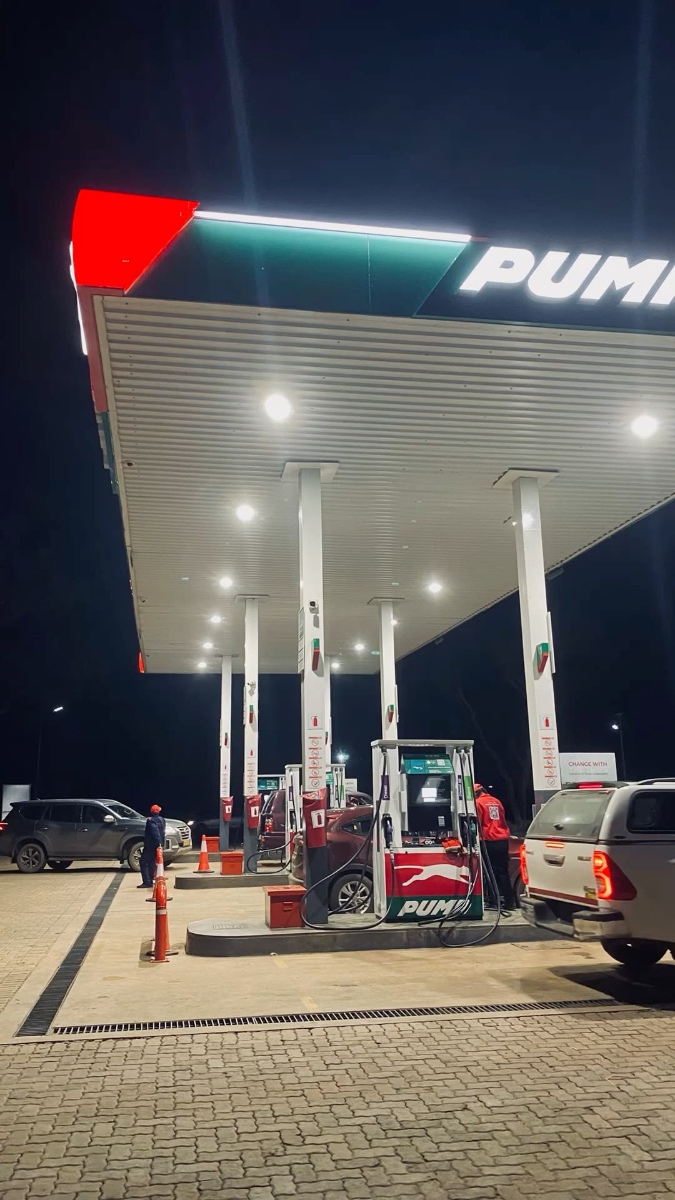
A filling station needs dependable electricity for fuel dispensing, forecourt lighting, payment terminals, CCTV, communications and any attached office or convenience shop. Some stations also operate air conditioning, compressors, water pumps, car washes or electric-vehicle charging equipment. These loads do not all behave alike, and they do not all belong on the same backup circuit.
Solar can support a petrol station, but the design must do more than match panel capacity to a guessed daily energy figure. It must account for pump and motor demand, the station’s operating hours, the loads that must remain available during an outage, and—above all—the special electrical safety requirements of a site where flammable fuel vapour may be present.
For owners considering a solar-powered filling station in Nigeria, the best starting point is a measured load audit and a hazardous-area review carried out by competent professionals. This guide explains the decisions to make before approving a design or quotation.
Why solar for filling stations is a current Nigerian business topic
On 10 September 2026, the Nigerian National Petroleum Company Limited announced the commissioning of its first Smart Self-Service Station on Bill Clinton Drive in Abuja. The company described a 24-hour site combining conventional fuel dispensing with solar power, electric-vehicle charging and other mobility and retail services. The announcement reflects a broader move toward stations that combine fuel sales with digital transactions and additional services.
The Guardian reported on 11 September 2026 that NNPC planned to upgrade more than 900 retail outlets with solar power, EV charging and digital self-service technology, with 50 to 70 smart stations targeted for delivery within six months. Those numbers describe the announced rollout plan; they should not be interpreted as proof that all sites have already been upgraded.
BusinessDay also reported on 6 April 2026 on solar adoption at Nigerian filling stations, describing a station using solar and battery storage for dispensing equipment, payment terminals and lighting. Separately, public Nairaland property discussions have listed filling stations with solar-inverter systems as an existing facility feature. These reports and community posts are useful qualitative signals of commercial interest, not audited market-wide adoption figures or exact Google search-volume data.
The commercial opportunity is not limited to removing a generator. Reliable electricity can protect transactions, keep lighting and security systems available, support attached retail services and make it easier to add digital equipment. Whether solar is financially attractive at a particular station depends on its actual energy profile, operating schedule, site constraints and capital costs.
Step 1: Map the station’s electrical loads
Start with an equipment register. Record the make and model, nameplate rating, voltage, phase, operating schedule and any motor-starting information for each major item. Then measure real demand during a representative busy period and a quieter period, because a station’s connected load is not the same as its average energy use.
Fuel dispensers and pump equipment
Record the electrical input for each dispenser or pump arrangement from its manufacturer documentation. Some equipment contains motors and control electronics; its starting current and operating cycle matter. Do not assume that all pumps draw their nameplate power continuously, or that every dispenser has the same rating.
Forecourt lighting and security
Include canopy and forecourt lights, office lighting, CCTV cameras, recorders, routers, access-control devices and any security equipment. Lighting may operate through the night, while security and communications can be continuous loads. Confirm the required backup duration for each group.
Office, shop and service equipment
List POS terminals, printers, computers, refrigerators, air conditioners, compressors, water pumps and car-wash equipment where present. A convenience shop or car wash can materially change the peak demand. Treat EV charging as a separate high-demand design decision rather than adding it as a small miscellaneous load.
Step 2: Separate essential loads from flexible loads
A useful design begins by agreeing what must remain powered when the grid fails. For one station, that may mean dispenser controls, payment systems, minimum safe lighting, CCTV and communications. Another station may need to maintain refrigeration or a small retail operation as well.
Classify loads into three groups:
Essential operational loads: the specific dispensing, payment, security and lighting circuits identified by station management and the relevant technical professionals as necessary for safe operation.
Important but flexible loads: office appliances, selected retail equipment and other services that may be scheduled or temporarily reduced during an outage.
High-demand or separately managed loads: car washes, large compressors, air conditioning and EV chargers that may require dedicated controls, a separate supply strategy or a different phase of investment.
The classification must not override the station’s approved operating procedures or safety requirements. A solar system should never encourage staff to continue dispensing fuel if a safety-critical system is unavailable or the station’s operating rules require shutdown.
Step 3: Understand the hazardous-area issue before choosing equipment locations
A filling station is not an ordinary commercial building. Areas around fuel dispensers, vents, fill points and other fuel-handling equipment may be classified as hazardous because flammable vapour can be present. The exact classification and boundaries must be established for the site by competent professionals under the applicable Nigerian regulatory and technical requirements.
Do not place a standard inverter, battery cabinet, DC isolator, connector, junction box or other non-approved electrical equipment inside a classified hazardous area. Equipment located in such areas must be suitable for the classification and installed using the required methods. In many designs, the inverter and battery room is positioned outside the hazardous zones, with the electrical routes and interfaces designed and inspected accordingly.
The project should involve the station’s responsible operator, qualified electrical and petroleum-facility professionals, and the relevant authorities where required. Confirm applicable requirements with the Nigerian Midstream and Downstream Petroleum Regulatory Authority and other responsible bodies before procurement. Do not rely on a generic solar installer’s verbal assurance that an ordinary installation is suitable for a fuel station.
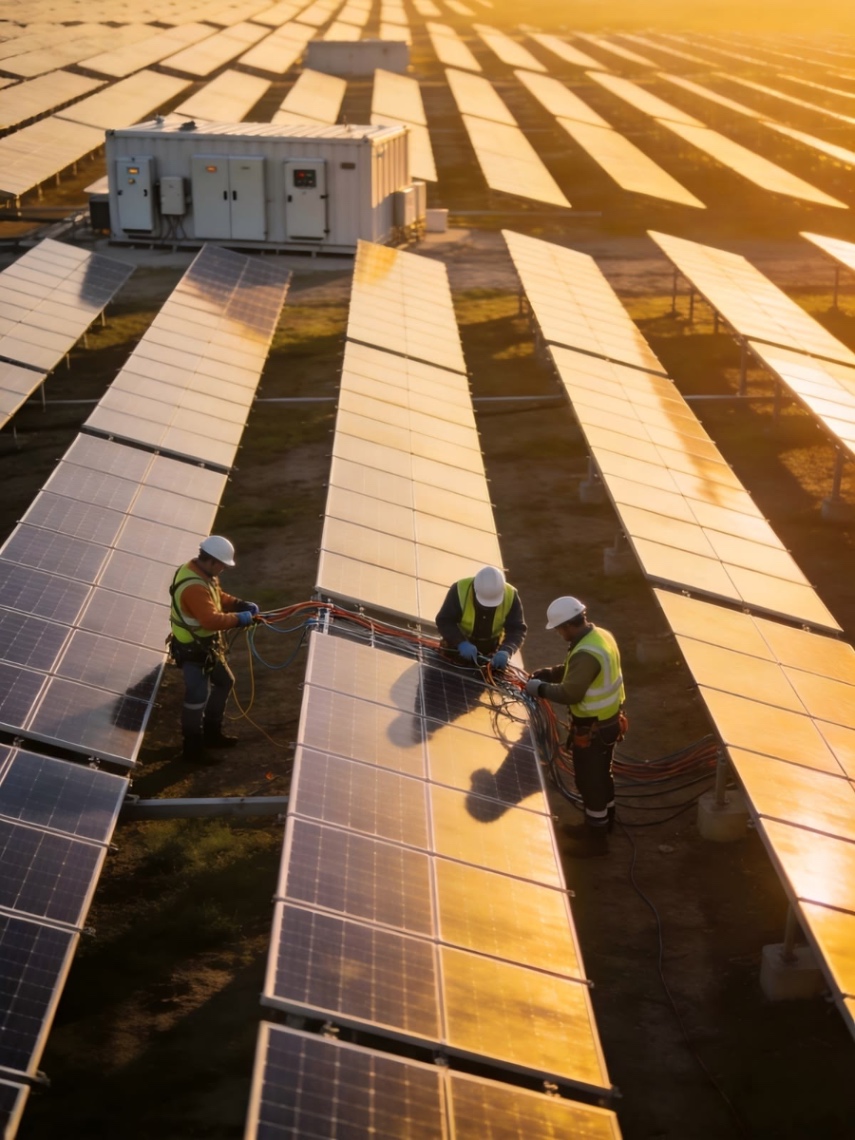
Solar panels on a canopy also require a site-specific design, appropriate mounting, safe cable routing, access for maintenance and approval of the installation arrangement. The canopy should not be treated as an ordinary roof, and no mounting work should proceed without the necessary technical review and site permissions.
Step 4: Estimate daily energy from operating patterns
For a first estimate, calculate energy for each load using average power multiplied by operating hours. For cyclical loads, use a measured average over the actual cycle rather than assuming full nameplate power for the whole shift.
The following example is illustrative only. It is not a standard load profile, a quotation, or a completed Zookie Solar project.
Illustrative load group
Assumed average input
Operating time
Daily energy
Dispensing equipment and controls
1.2 kW
14 hours
16.8 kWh
Forecourt and canopy lighting
1.5 kW
12 hours
18.0 kWh
POS, CCTV and communications
0.45 kW
24 hours
10.8 kWh
Office and small convenience shop
2.5 kW
10 hours
25.0 kWh
Water pump
1.1 kW
1.5 hours
1.65 kWh
Car-wash equipment
5.0 kW
1.5 hours
7.5 kWh
Illustrative total
—
—
79.75 kWh/day
This example totals approximately 79.8 kWh per day for the listed loads. Actual consumption may be much lower or higher, and the example excludes EV charging and any major additional equipment. A car wash may run in short, high-power cycles; its starting and simultaneous demand must be assessed separately from the daily energy total.
Step 5: Make a preliminary PV estimate
A preliminary photovoltaic estimate can be calculated from daily energy, effective peak-sun-hours and an overall performance factor that accounts for system losses:
Using the illustrative 79.75 kWh/day load, assume five effective peak-sun-hours and a 0.75 performance factor for a first-pass calculation:
79.75 ÷ (5 × 0.75) ≈ 21.3 kWp
This is a preliminary mathematical example, not a recommended system size for a real station. Five peak-sun-hours is an assumption, not a guarantee for every Nigerian location or month. The final design needs location-specific solar-yield data, monthly production estimates, available array area, inverter limits, operating schedules and allowance for battery charging.
A station with a large daytime load may use much of the solar generation directly. A station that needs substantial overnight support may require storage, a grid or generator fallback, load controls, or a combination. Do not size the PV array from daily energy alone without checking when the energy is needed.
Step 6: Size the inverter for simultaneous demand and motor starting
The inverter must be able to support the maximum combination of loads that may operate together, including relevant starting demand. A daily energy estimate does not establish the required inverter rating.
Review continuous output in kW and kVA, power factor, surge capability, voltage, phase configuration and the equipment manufacturers’ requirements. If the station has three-phase loads, the proposed system must be designed for those loads; a single-phase unit should not be assumed to operate them correctly.
The load schedule should show whether dispensers, compressors, air conditioners, water pumps and car-wash motors can start or operate simultaneously. If load sequencing is proposed, make sure it is compatible with business operations and equipment instructions. Do not rely on a brief surge rating to support a load that needs high power continuously.
Step 7: Calculate battery backup for the agreed essential loads
Battery capacity should be based on the loads that need to operate during an outage and the required duration. It is not automatically necessary to place every appliance, car wash or EV charger on battery backup.
For example, suppose a station identifies 2 kW of essential loads and wants four hours of backup. The load-side energy requirement is:
2 kW × 4 hours = 8 kWh
If a simplified estimate assumes 90% conversion efficiency and 80% usable battery energy, the nominal storage estimate is:
8 ÷ (0.90 × 0.80) ≈ 11.1 kWh
This is an illustrative calculation only. Final battery sizing must account for manufacturer limits, ageing, temperature, discharge rate, inverter standby demand, reserve margin and any motor-starting requirements. A battery should not be treated as a substitute for safe electrical protection or the station’s approved emergency procedures.
Step 8: Design the operating modes and fallback plan
Before installation, document what happens when grid power fails, PV production drops, the battery reaches its reserve threshold, or the inverter or generator is unavailable. The plan should identify which loads remain powered, which are shed, who is authorised to switch operating modes and when station operations must stop for safety.
The design review should include:
A one-line electrical diagram showing the sources, protection, isolation and supported circuits.
A clear list of loads included in and excluded from the solar-backed supply.
A documented grid, solar, battery and generator operating sequence, if those sources are combined.
Protection and isolation arrangements reviewed by qualified personnel, including the interface with existing station equipment.
Commissioning tests for normal operation, source failure, load shedding, alarms and the approved fallback procedure.
A maintenance plan for PV equipment, batteries, inverters, protective devices and monitoring.
Do not promise 24-hour uninterrupted operation merely because the quotation includes batteries. Reliability depends on the actual design, equipment compatibility, maintenance, available energy and the way staff operate the system.
Illustrative design review: an independent filling station in Benin City
This is a hypothetical design scenario only. It is not a claim that Zookie Solar has completed a project at this station.
Imagine an independent station in Benin City with four dispensers, forecourt lighting, POS terminals, CCTV, a small convenience shop and a car wash. The owner wants to keep essential transactions and security equipment available during outages while reducing generator runtime.
The first step would be to collect the equipment ratings and measure demand during busy and quiet periods. The owner and technical team would agree which dispensing-related circuits and safety systems must be available and what procedures apply if any of them lose power. The hazardous areas would be reviewed before equipment locations and cable routes were approved.
The designer would then calculate daily energy from measured operating patterns, assess motor starting and simultaneous demand, and estimate the PV array. Battery capacity would be calculated for the agreed essential loads and backup duration—not for every appliance by default. The car wash would be assessed as a distinct high-demand load, and any future EV charger would require a separate review of electrical supply and demand.
Before handover, the installation would be tested against the agreed operating modes. Station personnel would receive written instructions identifying backed-up circuits, excluded loads, alarm response and conditions under which fuel dispensing must not continue. This approach turns the proposal into an operational plan rather than simply a list of solar equipment.
Common mistakes when buying solar for a filling station
Choosing a system by panel count alone
Panel count does not reveal the inverter’s ability to support the load, the battery’s autonomy, or whether the station’s daytime and nighttime demands match solar production. Ask for the assumptions and calculations.
Ignoring high-power service equipment
A car wash, compressor or large air conditioner may change the peak demand significantly. Record these loads and decide whether they belong on the same inverter system.
Putting ordinary equipment in a hazardous area
Fuel-station electrical work requires a site-specific hazardous-area assessment. Do not use ordinary residential solar equipment in a classified area unless the equipment and installation method are specifically approved for that classification.
Assuming every circuit needs the same backup duration
A POS terminal, security recorder and car-wash motor have different operational roles. Agree on backup priorities before choosing battery capacity.
Accepting a quotation without commissioning details
The proposal should explain how the system will operate, how faults are isolated, what happens during an outage, which loads are excluded and how the installation will be tested and maintained.
What to prepare before requesting a solar quotation
A list of dispensers, motors, lighting, POS, CCTV, office, shop and service equipment, with nameplate photographs where available.
Recent grid bills and generator runtime or fuel records, if available.
Operating hours, peak business periods and any planned expansion such as a convenience shop, car wash or EV charging.
The loads that must remain available during outages and the required backup duration.
Available site drawings and details of existing electrical rooms, distribution equipment and approved hazardous-area boundaries.
The station’s location and the person responsible for approving safety, operating and maintenance procedures.
Ask each bidder for a site-specific load audit, PV production assumptions, inverter and battery calculations, a hazardous-area review, an electrical diagram, a commissioning plan and clear warranty and maintenance terms. Compare proposals on the same scope rather than comparing inverter sizes alone.
Final takeaway
Solar can support a Nigerian filling station’s dispensing equipment, payment systems, lighting, security and attached retail services. The correct design depends on measured energy use, simultaneous demand, motor-starting requirements and the loads that truly need backup.
But fuel-station safety is non-negotiable. Hazardous areas must be identified correctly, ordinary electrical equipment must be kept out of classified zones unless suitably approved, and the system must be integrated by qualified professionals in line with applicable requirements and the station’s operating procedures.
Zookie Solar Ltd provides solar system design, equipment supply, installation and maintenance for businesses. If you operate a filling station, share your equipment list, operating schedule, recent energy records, existing supply arrangement and planned services so the system can be assessed against the real site conditions.