Installing an EV Charger in Nigeria: AC vs DC, Connector Compatibility & Solar Integration
EV Charger Installation in Nigeria: AC, DC & Solar Guide
Learn how to install an EV charger in Nigeria, compare AC and DC charging, check vehicle compatibility, assess electrical capacity and integrate solar and battery storage.
Installing an EV Charger in Nigeria: AC vs DC, Connector Compatibility & Solar Integration
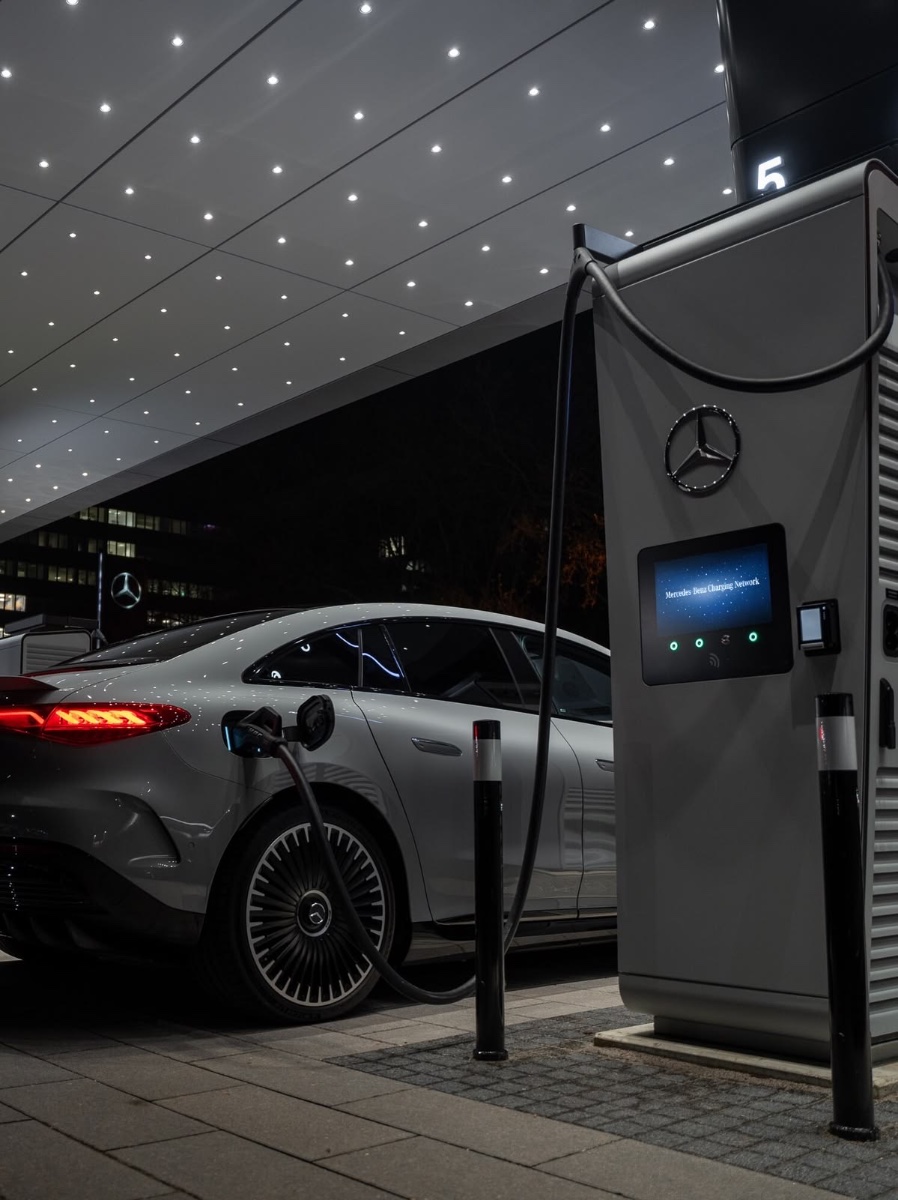
Electric vehicles are beginning to create a new kind of electrical project in Nigeria: the EV charging point. Homeowners may want to charge a car overnight, businesses may want a charger for staff or customers, and fleet operators may need several vehicles ready for work every morning.
Installing a charger is not simply a matter of buying a wallbox and connecting it to an available socket. The charger must match the vehicle, the building’s electrical supply, the expected charging schedule and the site’s protection arrangements. If solar is part of the plan, the designer must also decide whether the charger will use solar directly, grid electricity, battery storage or a controlled combination.
This guide explains the practical decisions involved in installing an EV charger in Nigeria, from AC versus DC charging and connector compatibility to electrical capacity, solar integration, battery storage and commissioning.
Why EV charging installation is becoming a relevant Nigerian solar opportunity
Nigeria’s charging-infrastructure market is still developing, but recent announcements show that charging is moving beyond a purely theoretical discussion. On 30 June 2026, Punch reported plans for 10 hybrid solar-powered charging stations and more than 500 electric vehicles for commercial operations. On 15 June 2026, a separate announcement described a renewable-energy programme involving solar, battery storage and 60 kW EV charging stations at selected MTN locations.
These announcements are market signals, not proof that every planned station is already operating. They nevertheless show why businesses, fleet operators, property owners and solar installers should understand the electrical requirements before investing.
Step 1: Confirm what the vehicle can actually accept
Start with the exact vehicle make, model, year, market version and charging-port specification. Vehicles that look similar may have different charging hardware depending on where they were manufactured or sold.
Check the vehicle’s maximum AC charging power.
Confirm whether the vehicle supports AC charging, DC fast charging or both.
Identify the actual connector standard and inlet on the vehicle.
Check the vehicle manual for charging limits and any restrictions on adapters.
Confirm whether the charger’s communication and safety functions are compatible with the vehicle.
A charger’s advertised rating is not a promise that every vehicle will charge at that rate. For example, a 22 kW AC wallbox cannot force a vehicle with a lower-rated onboard AC charger to accept 22 kW. The vehicle’s own charging equipment may be the limiting factor.
Step 2: Choose between AC charging and DC fast charging
AC charging for homes, offices and longer parking periods
With AC charging, the charging station supplies alternating current and the vehicle’s onboard charger converts it for the battery. AC chargers are often appropriate where a vehicle remains parked for several hours, such as a home, office, hotel, residential estate or workplace fleet depot.
Common AC charger ratings include approximately 7 kW for single-phase installations and 11 kW or 22 kW for suitable three-phase installations. These are examples, not a recommendation for every property. The available supply, vehicle capability, cable route and building demand must be checked first.
DC fast charging for high-turnover sites
A DC fast charger converts power externally and supplies DC power to the vehicle’s battery under the vehicle and charger’s control. Commercial DC chargers may be rated at tens or hundreds of kilowatts. They can shorten charging time, but they also create much larger instantaneous electrical demands and usually require a more substantial site design.
A 60 kW charger operating near full output can demand roughly 60 kW of charging power before accounting for upstream losses and auxiliary loads. A solar array that produces enough energy over an entire day may still be unable to support that instantaneous demand on its own. The design may need a strong grid connection, a suitably rated energy-storage system, controlled charging power, or a combination of these.
Step 3: Check the electrical supply before buying the charger
A qualified electrical professional should establish the site’s actual supply voltage, phase arrangement, available capacity, earthing system, distribution equipment and existing maximum demand. The installer should not assume that a property can support an EV charger simply because it already has electricity.
A simple 7 kW AC example
At a nominal 230 V single-phase supply, a 7,000 W load would draw about 30.4 A at a power factor of 1, before allowing for equipment losses and the charger’s actual input characteristics: 7,000 ÷ 230 ≈ 30.4 A. The real design current and protection requirements must come from the charger documentation and applicable electrical rules.
This is why a 7 kW charger should not automatically be treated as an ordinary plug-in appliance. The installation may require a dedicated circuit, suitable isolation, protective devices, correctly selected conductors, verified earthing and a safe cable route. The circuit must be designed for the charger’s continuous operating duty.
A simple 22 kW three-phase example
For a balanced 400 V three-phase supply, a theoretical 22 kW load at a power factor close to 1 draws about 31.8 A per phase: 22,000 ÷ (√3 × 400) ≈ 31.8 A. This is a planning calculation, not a breaker or cable specification. The manufacturer’s data, actual power factor, installation method, protective coordination and local requirements govern the final design.
Step 4: Check connector and charging-protocol compatibility
Do not choose a charger by power rating alone. Confirm that the connector fits the vehicle and that the charging standard is supported. Depending on the vehicle’s origin and model, the relevant connection may be Type 2 for AC, CCS2 or another DC standard, GB/T, or a different arrangement.
Never assume that an adapter will make an incompatible charger safe or fully functional. Verify the vehicle manufacturer’s guidance and the charger supplier’s approved compatibility list. For a business installing chargers for multiple vehicle brands, connector strategy should be decided before equipment is ordered.
Step 5: Decide how solar will work with the EV charger
Option A: Charge directly during productive solar hours
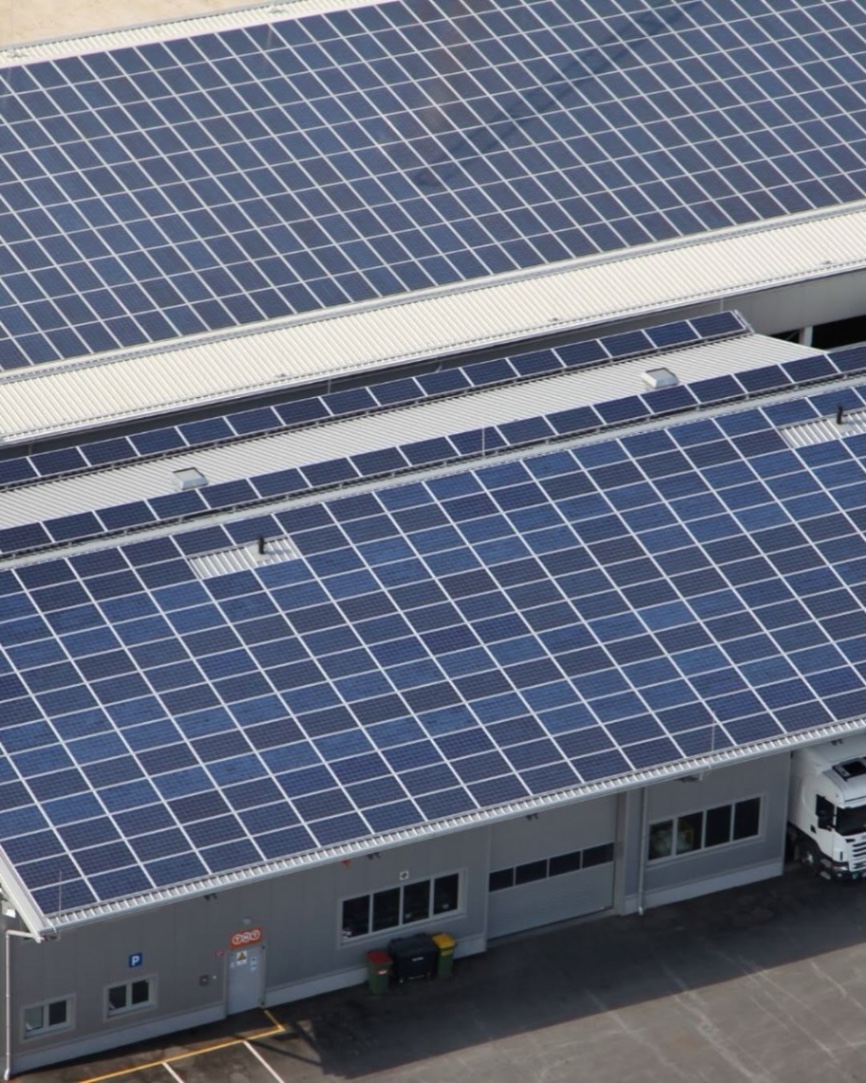
If the vehicle is parked during the day, a smart charging system may be able to adjust charging power to use available solar production. This can reduce the amount of energy drawn from the grid, but the control method must be supported by the specific inverter, meter, energy-management system and charger.
Ask the installer to demonstrate what happens when clouds reduce PV output or another large load starts. Some systems follow a fixed charging schedule; others can measure surplus generation and dynamically change the charging rate. Do not assume automatic solar-surplus control exists just because solar panels and a charger are installed at the same property.
Option B: Combine solar and grid power
A hybrid arrangement can use solar when available and draw permitted shortfalls from the grid. This can be practical where charging must continue at a predictable rate even when solar output changes. The system must be configured so the charger’s demand does not exceed the site’s available supply or the agreed operating limit.
A grid-connected solar installation does not necessarily keep an EV charger operating during a grid outage. Many grid-tied systems shut down when the grid fails unless they have a specifically designed backup arrangement. The installer should explain the exact behaviour during an outage, including whether charging stops, reduces power or transfers to an approved backup source.
Option C: Add stationary battery storage
A stationary battery can store solar energy for later charging or help supply short periods of high demand. It may also reduce peak demand on a limited grid connection. However, storage adds capital cost, conversion losses, controls and equipment that must be maintained.
Battery design has two separate dimensions: energy capacity in kWh and power capability in kW. A battery bank may store plenty of energy but still be unable to supply a fast charger at its required power. Conversely, a battery inverter may support a high power briefly but lack enough stored energy for the intended charging session.
Step 6: Estimate daily charging energy separately from peak power
Consider an illustrative home or small-business case. A vehicle is expected to receive 20 kWh of usable energy in its battery each day. If an assumed 90% of the energy drawn from the charging supply reaches the vehicle battery, the supply must provide about 22.2 kWh for that session: 20 ÷ 0.90 ≈ 22.2 kWh.
Now assume, purely for illustration, that a site-specific solar design is expected to deliver 4 kWh per installed kWp per day at the usable AC output. Allocating 22.2 kWh to charging would require about 5.6 kWp of PV before adding design margin, other building loads, poorer-production days or energy reserved for other uses: 22.2 ÷ 4 ≈ 5.6 kWp.
The 4 kWh/kWp/day assumption is not a Nigeria-wide guarantee. Actual yield depends on location, weather, shading, temperature, array orientation, system losses and the month of the year. A designer should provide a site-specific monthly estimate and explain the assumptions.
Most importantly, daily energy does not establish that the charger can run at full power at every moment. A system may generate enough energy over the day but still need the grid or a battery to support the charger’s instantaneous demand.
Step 7: Plan load management for homes and businesses
EV charging often overlaps with air conditioning, pumps, kitchen equipment, lifts, production machinery or other building loads. The installation should establish the maximum permitted charging power when the building is busy, rather than assuming the charger can always draw its full rating.
Dynamic load management can measure the building’s demand and reduce EV charging power when the site approaches a configured limit. This may help avoid upgrading the entire incoming supply, but it must be supported by compatible equipment and correctly commissioned.
For fleet depots, a charging schedule can spread demand across the available parking window. The plan should be based on vehicle departure times, expected energy needed, charger ratings and the number of vehicles that may need charging simultaneously.
An illustrative design review for a small commercial fleet
The following is an illustrative design scenario only; it is not a claim that Zookie Solar completed this project.
Imagine a logistics company in Port Harcourt with three electric delivery vehicles that return to its premises in the evening. Management initially requests three 7 kW chargers and assumes the existing building supply can support them.
A responsible design review would first verify each vehicle’s AC charging limit and connector. The team would then record the building’s existing maximum demand and determine whether all three chargers need to run simultaneously. Three chargers operating at 7 kW each could create about 21 kW of additional charging demand before losses and other loads are considered.
The designer would compare several operating strategies: charging all vehicles at a controlled lower rate, scheduling charging in sequence, using solar during the day when vehicles are present, or adding storage if the economics and operating requirements justify it. The team would then confirm supply capacity, protection, earthing, communications, metering and safe parking/cable arrangements.
The final choice would be based on the actual vehicles, return times, required morning charge levels, site supply and budget—not on the charger count alone.
Step 8: Make safety and commissioning part of the project
EV charging combines substantial electrical loads with a vehicle and its high-voltage battery. The installation should be completed and tested by competent professionals using the charger manufacturer’s instructions and applicable standards.
Provide a dedicated, correctly rated circuit and isolation arrangement as required by the design.
Verify earthing and the protective-device arrangement, including the charger’s requirements for residual-current and DC fault protection.
Use suitable outdoor-rated equipment and cable protection where exposed to weather, impact or vehicle movement.
Protect the charging cable from trip hazards, crushing and damage from parked vehicles.
Confirm emergency isolation, signage and access arrangements for public or fleet sites.
Test communication, charging start/stop, power limiting, metering and solar or battery controls where fitted.
Record commissioning results and provide the owner with operating instructions and maintenance requirements.
The exact protective-device type, ratings and wiring method depend on the charger, the installation and applicable rules. They should not be selected from a generic online checklist.
What should be included in an EV charger installation quotation?
A useful quotation should separate equipment supply from the electrical and civil work needed to make the charger operational. Ask the installer to identify:
Charger make, model, rated power and supported connectors.
Site survey and assessment of available electrical capacity.
Required circuit, protective equipment, isolation and earthing work.
Cable route, trenching or other civil works, mounting and weather protection.
Any supply upgrade, load-management equipment, metering or communications hardware.
Solar PV, inverter, battery and energy-management components, if included.
Commissioning tests, handover documents, warranty terms and maintenance responsibility.
Assumptions about daily charging energy, operating hours, grid availability and expected solar contribution.
Avoid quotations that promise a fixed charging cost or payback period without stating the electricity tariff, expected energy delivered, charger utilisation, equipment cost, maintenance assumptions and battery-replacement assumptions where relevant.
Questions to answer before you buy
Which exact vehicle model will use the charger, and what charging power does it accept?
Is AC charging sufficient, or is DC fast charging genuinely needed?
What connector and communication standard does the vehicle support?
Can the site supply the charger while other building loads are operating?
Will charging happen mainly during the day, overnight or in short turnaround windows?
Should solar reduce grid consumption, provide backup through storage, or do both?
What happens when solar output drops or the grid fails?
Can charging power be reduced automatically when the building approaches its supply limit?
What tests will be performed before the installation is accepted?
Final takeaway
A reliable EV charging point starts with the vehicle and the site—not with the charger advertisement. Confirm the connector and the vehicle’s charging limit, assess the available electrical supply, choose AC or DC according to the use case, and design solar, storage and load management around the actual charging schedule.
For Nigerian homes, estates, businesses and fleets, solar can contribute to EV charging, but the system must be engineered so energy availability and instantaneous power both match the requirement. Battery storage is a design option, not an automatic requirement, and a solar installation should never be assumed to provide backup during an outage without a verified backup configuration.
Zookie Solar provides solar system design, equipment supply, installation and maintenance for homes and businesses. If you are planning an EV charger for a property, business or vehicle fleet, share the vehicle model, charger requirement, site location and typical charging schedule so the installation can be assessed against your real needs.
Built on Power. Driven by Excellence.
How to Match a Lithium Battery to a Solar Inverter in Nigeria: BMS, Voltage, CAN & RS485 Guide