Solar Power for Warehouses and Distribution Centres in Nigeria: Shift Loads, Forklift Charging and Dispatch Continuity
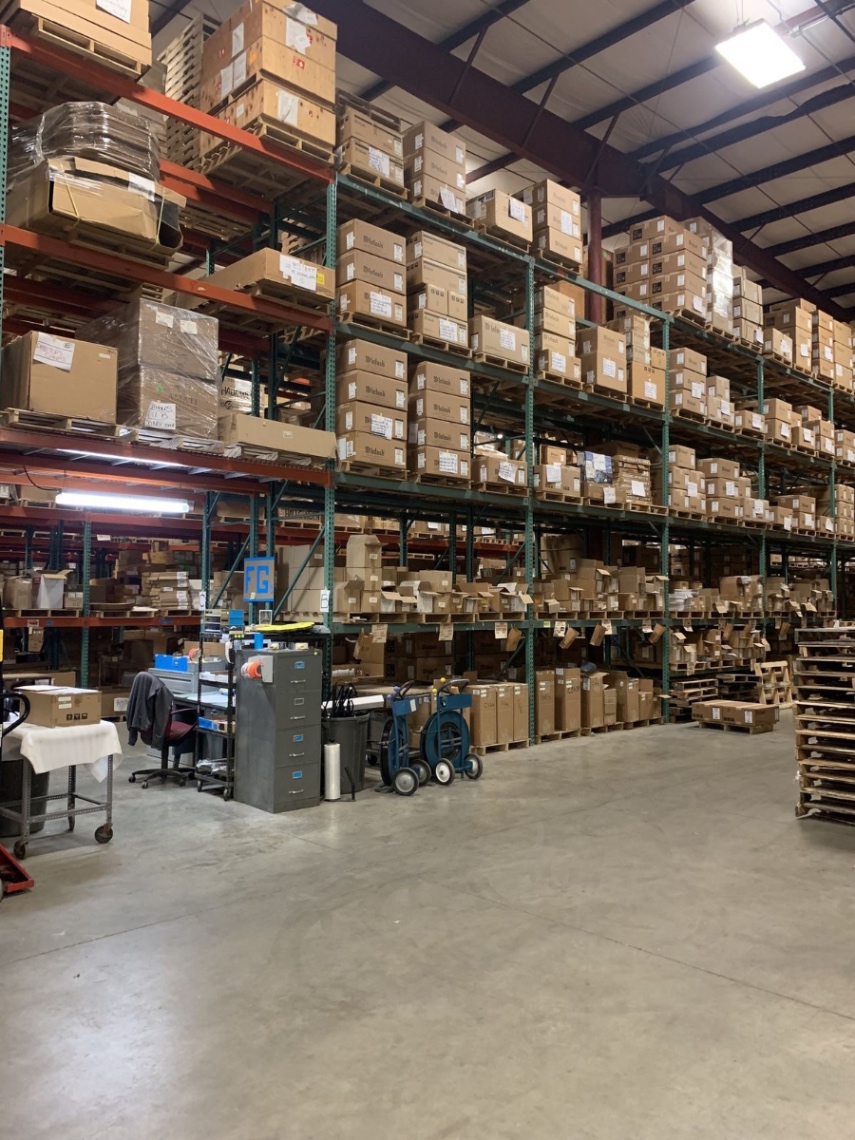
A warehouse or distribution centre depends on more than lighting. Conveyor systems, loading-bay equipment, forklift chargers, dispatch computers, handheld scanners, ventilation and security systems can operate across different shifts. If electricity fails during receiving, picking, packing or dispatch, the result may be delayed orders and disrupted work.
A solar-and-battery system can support selected warehouse operations, but the design should start with measured energy use, the shift timetable and the equipment that must operate together. This guide focuses on dry-goods warehousing and distribution operations. It does not cover cold rooms or temperature-controlled storage, which require a separate load and continuity assessment.
All numerical values below are hypothetical engineering assumptions used to explain the calculation method. They are not a typical Nigerian warehouse benchmark, a quotation, a vendor performance claim or a completed Zookie Solar installation. Replace them with actual equipment data and site measurements.
Why warehouses need a shift-based energy assessment
Two warehouses with similar floor areas may have very different electrical requirements. A facility that stores palletised goods with manual picking may have a modest electrical load; a distribution hub with powered conveyors, electric material-handling equipment and late dispatch windows may need much more power.
- High-bay and loading-area lighting. Record which zones are illuminated, the number and wattage of fittings, and the hours each zone is used. Security lighting may remain on after the main shift ends.
- Conveyors and dock equipment. Include powered rollers, conveyor motors, dock levellers, compactors or other installed equipment. Verify motor ratings, starting methods and whether several machines can run together.
- Forklift and pallet-truck charging. Use the charger's AC input rating and actual charging schedule—not only the battery voltage or amp-hour label. Charging can create a substantial load during a defined window.
- Dispatch and warehouse technology. Include computers, label printers, barcode scanners, Wi-Fi access points, CCTV, access-control systems and other supporting equipment.
- Ventilation and fans. Document which fans operate continuously and which run only during occupied shifts. Their energy may be modest individually but material across a large building.
- Shift overlap. The highest demand may occur when one team is finishing, another is starting and chargers or conveyors are running together. The shift schedule matters as much as the daily energy total.
Start with the warehouse workflow—not a generic solar package
Before requesting a quotation, map the normal workday from receiving to dispatch. For each electrical load, collect:
- Make and model, nameplate input power, voltage, current and single-phase or three-phase requirement.
- Operating hours and equivalent running time, rather than assuming every motor runs for the entire shift.
- The equipment that can run simultaneously during busy periods and during shift handover.
- Motor-starting method, charger specifications and manufacturer restrictions on supply quality.
- Which operations must continue during an outage, which may pause safely and which can be rescheduled.
- Available grid, generator and meter data, plus any energy bills or fuel records that help establish the current load profile.
- Available rooftop or ground area, shading, access routes, fire-safety constraints and proposed locations for inverters and batteries.
If the site is already operating, a qualified technician can use a suitable power analyser or energy meter to record representative working days and shift changes. Measurements can reveal whether a conveyor cycles, whether chargers overlap, and how much energy the building consumes outside dispatch hours.
Illustrative daily energy calculation for a dry-goods distribution warehouse
This hypothetical example excludes cold storage and assumes one main operating shift with some equipment remaining on outside the shift. The assumed input figures must be replaced with actual nameplates, measured consumption and equipment operating schedules.
| Load | Illustrative assumption | Daily energy |
|---|---|---|
| Warehouse high-bay lighting | 4.0 kW × 10 h | 40.0 kWh |
| Loading-bay and external task lighting | 1.2 kW × 10 h | 12.0 kWh |
| Powered conveyor system | 3.0 kW average × 6 h | 18.0 kWh |
| Ventilation and circulation fans | 1.5 kW × 8 h | 12.0 kWh |
| Dispatch office and workstations | 2.0 kW × 8 h | 16.0 kWh |
| Scanners, network, CCTV and security systems | 0.8 kW × 12 h | 9.6 kWh |
| Electric forklift charger | 3.0 kW AC input × 4 h equivalent | 12.0 kWh |
| TOTAL | Sum of the illustrative assumptions | 119.6 kWh/day |
The arithmetic is 40.0 + 12.0 + 18.0 + 12.0 + 16.0 + 9.6 + 12.0 = 119.6 kWh/day. The forklift figure uses the charger's assumed AC input for four equivalent hours; it is not a claim about the charging time or energy use of a particular forklift.
A warehouse with manual material handling and fewer operating hours may consume much less. A multi-shift hub with more conveyors, larger chargers, dock equipment or additional ventilation may consume considerably more.
Estimate a preliminary solar-array capacity
For a simplified arithmetic example, assume 4.5 equivalent peak-sun-hours per day and a combined performance factor of 0.75. These are planning assumptions, not a site-specific forecast for Lagos, Abuja, Port Harcourt or any other Nigerian location.
119.6 kWh ÷ (4.5 h × 0.75) ≈ 35.4 kWp
Adding a provisional 20% planning allowance gives approximately 42.5 kWp as an energy-based starting estimate. This is not a final array recommendation. The designer must verify local and seasonal solar resource, roof capacity and usable area, shading, module temperature, inverter PV-input limits, direct daytime consumption and the energy needed to recharge the battery after low-solar periods.
A warehouse with mostly daytime activity may use a larger share of solar generation directly. A site that runs late shifts may need more storage or a defined grid/generator contribution. The hourly load curve—not just daily kWh—helps determine which design is appropriate.
Daily energy and inverter capacity are different calculations
The example's assumed running inputs add to 15.5 kW if every listed load operates at the stated level at the same time. That is a simple arithmetic sum, not a final inverter size. The true peak must be established from actual nameplate data, measured demand, power factor, motor starting and charger behaviour.
Ask the designer to check:
- Continuous inverter output in both kW and kVA, including phase requirements.
- Starting current and overload duration for conveyor and dock-equipment motors.
- Whether several motors can start together and whether approved sequencing is practical.
- Forklift-charger input, power factor and manufacturer requirements.
- Battery discharge power and current limits, not just nominal energy in kWh.
- Whether the proposed inverter can support the required loads while charging the battery or accepting power from another source.
Do not assume that an inverter can run a machine simply because its rated kW is below the inverter's headline kW. Motor-starting conditions, phase configuration, overload duration and the battery's maximum discharge capability can determine whether the system works as intended.
Battery planning for after-hours security and dispatch
A warehouse does not necessarily need battery storage for every load throughout the entire night. Management should define which services must remain available and for how long. Production or material-handling equipment may be allowed to pause, while selected security, network and dispatch functions remain powered.
For illustration, assume an after-hours critical-load requirement of 17.2 kWh AC: security lighting at 1.0 kW for 8 hours (8.0 kWh), CCTV and network equipment at 0.3 kW for 12 hours (3.6 kWh), dispatch terminals and scanners at 0.6 kW for 6 hours (3.6 kWh), and fans at 0.5 kW for 4 hours (2.0 kWh).
If conversion efficiency is assumed to be 90% and usable nominal battery capacity is assumed to be 80%, the energy-only estimate is:
17.2 ÷ (0.90 × 0.80) ≈ 23.9 kWh nominal
Adding a provisional 20% reserve gives approximately 28.7 kWh nominal. These values are hypothetical and describe only the listed after-hours loads. They do not include overnight forklift charging or continuous conveyor operation.
The final battery must also meet required discharge power, permitted current, manufacturer limits, temperature conditions, ageing allowance and recharge requirements. If the warehouse needs a forklift charger or conveyor to operate during the outage, recalculate the energy and power requirements from that explicit operating objective.
Forklift charging needs its own safety and scheduling review
Forklift charging is not just another small office load. The charger may draw several kilowatts for a sustained period, and multiple chargers can overlap with warehouse operations. Obtain the charger manual, input rating and charging profile; then decide whether charging should occur during strong solar hours, in a defined off-peak window or under a managed combination.
Charging-area requirements depend on the battery chemistry and equipment. For lead-acid industrial-truck batteries, charging can involve hydrogen, electrolyte and spill hazards; designated charging areas, suitable ventilation, fire protection and appropriate emergency provisions are important. Lithium industrial batteries have different hazards and must follow their own manufacturer instructions. Do not apply one battery type's procedures to another.
The U.S. Occupational Safety and Health Administration's powered-industrial-truck guidance describes designated charging areas and ventilation and safety provisions for applicable battery-charging operations. It is a useful technical reference, not Nigerian law; the site must follow applicable Nigerian requirements, fire-safety rules and the equipment manufacturer's instructions.
Keep warehouse operations running during installation and maintenance
- Plan work around receiving and dispatch. Agree on access routes, roof work zones, lifting plans and shutdown windows before installation. Do not block loading bays or emergency routes without an approved plan.
- Separate essential and deferrable loads. The design can identify which circuits must stay on and which can be shed when storage is low. The arrangement must be implemented by a qualified electrical professional.
- Retain a documented backup plan. Where the business retains grid or generator supply, define the intended operating modes and safe source-transfer arrangement. Do not assume the generator can be connected to an inverter without a compatible design.
- Track energy after commissioning. Compare PV generation, battery state of charge, grid/generator contribution and operating hours with the design assumptions. Review the results across busy and quiet shifts.
- Reassess when the operation expands. Adding a conveyor, another charger, a second shift or more dock equipment can change both energy and peak demand. Update the load study before assuming the original system remains adequate.
What current Nigerian market signals do—and do not—show
Nigerian solar providers are now publishing dedicated warehouse and logistics solar pages. Olasupo Energy's warehouse page, published approximately two months before this article's research date, markets systems for warehouses and distribution centres and lists example sizes and prices verified by the vendor on 13 August 2026. Those are vendor marketing figures, not independently audited market averages or a substitute for a site-specific quotation.
DB Energy also publishes a case study for a warehouse in Abuja, describing a 30 kW system and reporting an 85% reduction in diesel consumption and estimated annual savings of ₦7.2 million. Those results are claims published by the vendor; the page does not provide independently audited measurement data in the material reviewed here. Treat the figures as a vendor-reported example, not a forecast for another warehouse.
A Reuters report dated 27 February 2026 described gas-supply constraints affecting Nigeria's electricity generation. That is wider power-sector context, not warehouse-specific demand evidence. Searches of available public community results did not identify a strong, recent warehouse-owner discussion about solar design; a few older or general solar discussions are too weak to establish current demand or keyword volume. The topic is therefore supported by visible commercial offering signals, not by a claimed search-volume statistic or a fabricated social trend.
What to prepare before requesting a warehouse solar quotation
- A load schedule covering lighting zones, conveyors, dock equipment, forklift chargers, fans, dispatch IT and security systems.
- Photographs of equipment nameplates, charger specifications and manufacturer manuals.
- Opening hours, shift overlap, dispatch windows and a list of loads that can run together.
- Measured energy, peak-demand data, electricity bills and generator runtime or fuel records where available.
- A clear statement of the required backup task and duration, including any loads that may be paused safely.
- Available roof or ground area, shading, building access, fire-safety constraints and proposed inverter/battery location.
- A written proposal stating PV capacity, inverter kW/kVA and phase, nominal and usable battery capacity, operating assumptions, source-transfer arrangement, protection, monitoring, commissioning tests, maintenance and exclusions.
Conclusion: design around dispatch, shifts and real equipment
Solar can support a Nigerian warehouse or distribution centre, but the right design depends on what the site handles, how shifts overlap, which material-handling machines are powered electrically and what must remain available after hours. Daily energy, peak inverter demand, forklift charging and battery autonomy are separate design questions.
Zookie Solar Ltd provides solar-system design, equipment supply, installation and technical consultation for Nigerian homes and businesses. Contact the team for a site-specific assessment based on the warehouse's real load profile, equipment data and dispatch requirements.
Zookie Solar Ltd — Built on Power. Driven by Excellence.
Email: admin@zookiesolar.com