Solar Power for Tailoring Businesses in Nigeria: Sewing Machines, Pressing Irons and Production Loads
Solar for Tailoring Businesses in Nigeria | Machine Load Guide
Learn how to size solar for Nigerian tailors and fashion studios, including sewing machines, overlockers, pressing irons, battery backup and production loads.
Solar Power for Tailoring Businesses in Nigeria: Sewing Machines, Pressing Irons and Production Loads
A tailoring or fashion-production business can lose valuable working time when electricity fails in the middle of an order. Sewing machines stop, overlockers sit idle, pressing is delayed, and delivery dates become harder to keep. For a business serving customers, boutiques, schools, organisations or bulk buyers, reliable electricity is part of production planning—not just a convenience.
Solar can help, but a fashion studio should not be sized like a home. Sewing-machine motors, embroidery equipment, cutting tools and computers have different power profiles. Pressing irons and steam generators can add large heating loads that change both inverter capacity and battery requirements. The right design starts with the machines you actually use, how many run together, and the production schedule you need to protect.
Why solar for fashion businesses is a timely question in Nigeria
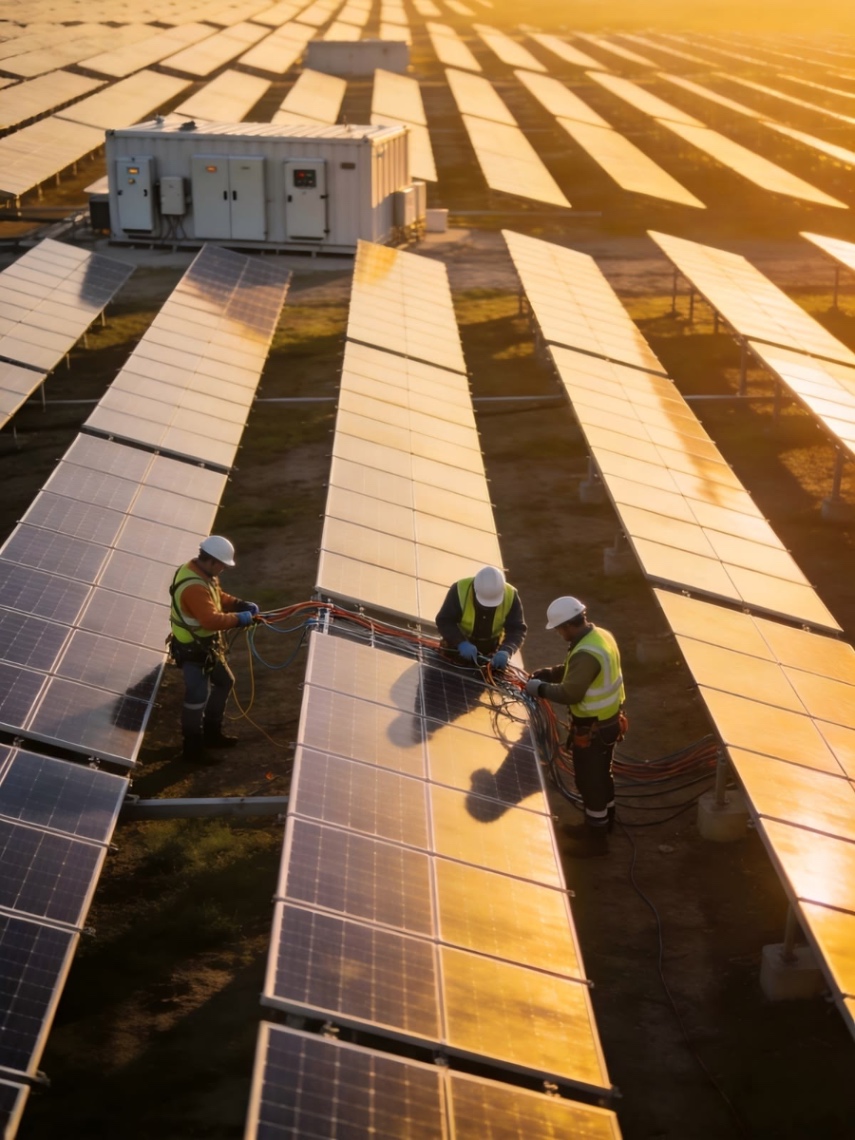
On 15 September 2026, the Bank of Industry reported handing over solar installations at the Tinubu and Apongbon Fashion Hubs on Lagos Island, expected to benefit 81 young fashion entrepreneurs. The announcement identified unreliable electricity as a barrier to production, meeting deadlines and business expansion. In a public LinkedIn post viewed in October 2026, UNDP Nigeria also highlighted how a solar mini-grid at SMEDAN’s Garment and Textile Workshop in Abuja helps entrepreneurs work more consistently and take on larger orders.
These institutional examples do not tell every tailor what size system to buy. They do show that reliable power for garment production is a current Nigerian business concern. A shared production hub with many machines is very different from a small studio with two or three machines, so its system should not be copied without a load study.
Step 1: List the machines and their real operating pattern
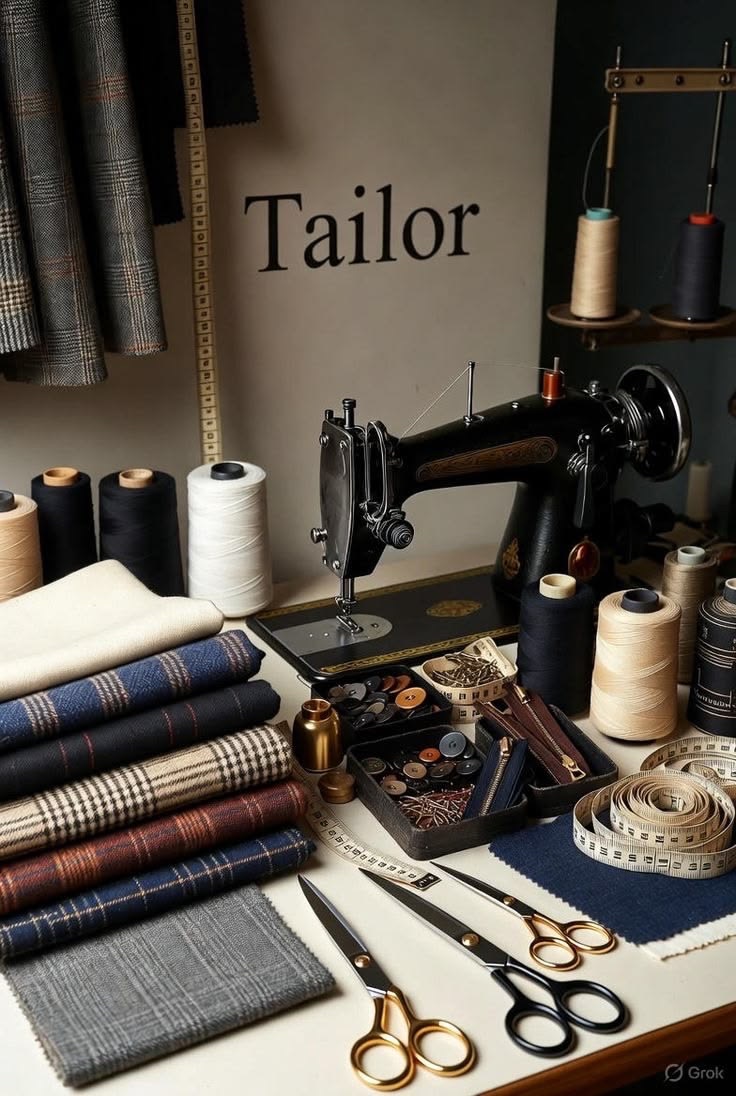
Before choosing an inverter, battery or panel array, prepare an inventory of the equipment in the shop. Record each nameplate rating, quantity, operating hours and whether the machine runs continuously or only for short periods. Include industrial lockstitch sewing machines; overlock and coverstitch machines; buttonhole, button-attaching and embroidery machines; fabric-cutting tools; steam irons, pressing stations and steam generators; LED task lighting, fans and ventilation; design computers, printers and pattern-making equipment; and POS, CCTV and security equipment.
Do not rely on a machine’s appearance or a generic wattage from an online list. Sewing machines vary by model, motor type and workload. A domestic electronic machine, a small servo-driven industrial machine and a heavy-duty production machine may have very different ratings. Where possible, measure power during a typical production run. Record idle, active stitching and start-up behaviour, and use manufacturer specifications for the final design.
Step 2: Separate sewing loads from pressing and heating loads
A major design decision is whether the solar system must run pressing equipment at the same time as production machines. Sewing machines and control electronics may use relatively modest energy for the work completed, depending on motor type and duty cycle. Pressing irons and steam generators convert electricity into heat, and their energy demand can be substantial. A high-wattage iron may cycle on and off through its thermostat, but its rated power still matters when selecting the inverter and estimating peak demand.
Create two groups: production-critical loads such as selected sewing machines, overlockers, task lighting, design computer and essential communications; and high-energy or flexible loads such as pressing irons, steam generators, large cutting tools and equipment that can be scheduled around available solar generation. This does not mean pressing must always be excluded. It means deciding deliberately whether pressing must continue during an outage or can be scheduled when solar output is strong or another supply is available.
Step 3: Calculate daily energy separately from peak power
Daily energy is calculated as: Energy (kWh) = Power (kW) × Operating time (hours). For example, a machine averaging 180 watts while actively stitching for seven hours uses 0.18 kW × 7 hours = 1.26 kWh. That is an assumption for this calculation, not a universal rating for all sewing machines; replace it with measured or manufacturer-supported values.
Peak power is different. It is the combined demand when several machines and tools operate at the same time. Peak demand helps determine inverter output; daily energy helps determine the solar array and battery storage. Both calculations are necessary.
Illustrative example: a six-machine fashion studio in Kano
The following example is hypothetical and demonstrates a calculation method only. It is not a completed Zookie Solar installation, a surveyed site or a final equipment recommendation.
Load group
Assumed average load while in use
Daily use
Estimated energy
Six industrial sewing machines
1.08 kW combined
7 hours
7.56 kWh
One overlocker
0.25 kW
5 hours
1.25 kWh
Embroidery or buttonhole machine
0.50 kW
3 hours
1.50 kWh
LED task and general lighting
0.15 kW
9 hours
1.35 kWh
Fans
0.24 kW
8 hours
1.92 kWh
Design computer and printer
0.20 kW
6 hours
1.20 kWh
Pressing iron
1.50 kW equivalent full-power use
2 hours
3.00 kWh
Fabric-cutting machine
0.40 kW
1 hour
0.40 kWh
Router, CCTV and small electronics
0.06 kW
10 hours
0.60 kWh
Illustrative total
—
—
18.78 kWh/day
The sewing-machine figure assumes an average combined input of 180 watts per machine while active. The pressing figure treats the iron as using its full 1.5 kW rating for two equivalent hours; actual energy may be lower or higher depending on the model, temperature setting and duty cycle. A plug-in energy meter can help establish actual consumption.
The example totals about 18.8 kWh per production day. If the business adds more machines, a large steam generator, industrial embroidery equipment or longer operating hours, the calculation must be revised.
Step 4: Estimate a preliminary solar-array size
For a first-pass energy estimate, divide daily energy by assumed equivalent peak-sun-hours and an overall system performance factor. For this example, assume 18.8 kWh per day, 4.5 peak-sun-hours and a 0.75 performance factor.
18.8 kWh ÷ (4.5 × 0.75) ≈ 5.57 kWp
Adding a planning margin of about 20% gives approximately 6.68 kWp. A solar array around 6.5–7 kWp could therefore be investigated as a starting point for this hypothetical daily energy profile. This is not a universal recommendation for tailoring shops in Kano or elsewhere in Nigeria.
The final array must be checked against local solar conditions, the actual operating calendar, available mounting space, inverter PV input limits, string voltage and current, and the energy needed to recharge batteries after outages. If pressing and other heavy loads can be scheduled during strong daylight, direct solar use may reduce the energy that must pass through the battery.
Step 5: Check inverter capacity against simultaneous machine use
Daily energy does not tell you whether an inverter can operate the whole shop at once. For a simplified peak-load check, suppose six sewing machines have combined nameplate ratings of 2.1 kW, the overlocker and embroidery equipment together require 1.1 kW, the iron draws 1.5 kW, the cutting machine draws 0.4 kW, and lighting, fans, computer and network equipment total about 0.65 kW.
2.1 + 1.1 + 1.5 + 0.4 + 0.65 = 5.75 kW
This is an assumed scenario, not a measurement. If all these loads really need to run simultaneously, assess an inverter with adequate continuous real-power output above this demand, while checking power factor, motor behaviour, overload duration and future expansion. A 7.5 kVA-class inverter may be one option to evaluate, but the actual unit’s kW rating and surge specifications—not its headline kVA alone—must support the measured loads.
If the iron can be excluded while all sewing machines run, or if not all machines operate at once, the required inverter may be smaller. Conversely, a large steam generator or industrial embroidery machine can raise the requirement materially.
Step 6: Size the battery around the outage you need to cover
The battery should be based on the loads the business expects to keep running during an outage and for how long. Suppose the studio wants four hours of backup for a selected production group averaging 1.6 kW. The required AC energy is 1.6 kW × 4 hours = 6.4 kWh.
If the preliminary design assumes 80% usable battery depth of discharge and 90% inverter efficiency, the nominal battery estimate is 6.4 kWh ÷ (0.80 × 0.90) ≈ 8.9 kWh. A nominal battery around 10–11 kWh could be assessed for that defined load, with additional reserve or capacity if conditions require it. Final selection depends on the manufacturer’s usable-energy specification, maximum discharge current, temperature, warranty limits and inverter.
If the shop also needs to operate a 1.5 kW iron for 90 minutes during the same outage, that iron alone adds 1.5 kW × 1.5 hours = 2.25 kWh of AC energy. That extra demand increases the battery requirement. A system that comfortably runs sewing machines may not support pressing for several hours without additional storage.
Step 7: Match the production schedule to solar availability
Fashion businesses often operate mainly during daylight, which can be favourable because the machines use energy while the array is generating it. But the timing of the heaviest loads matters.
Run flexible pressing work during strong solar hours when deadlines permit.
Avoid starting every machine and heating appliance at once if the inverter was not designed for that combination.
Plan battery recharge time after a long outage or extended production shift.
Track energy use on a normal day and during the busiest order periods.
Reassess the system before adding an industrial iron, steam generator or new production machine.
Do not let a timetable compromise quality or safety. The goal is to make production predictable while respecting equipment requirements and the limits of the power system.
Shared fashion hubs need a different engineering approach
A shared garment hub serving dozens of entrepreneurs is not simply a larger version of a single tailor’s shop. It may have many machines operating together, shared pressing areas, common lighting, computers, ventilation and changing production shifts.
On 15 September 2026, the Bank of Industry reported solar installations handed over at two Lagos Fashion Hubs intended to benefit 81 young fashion entrepreneurs. Separately, UNDP reported that the SMEDAN Garment and Textile Workshop in Abuja had received a 120 kVA solar mini-grid with a 240 kWh lithium battery system. These are institutional projects with their own design and operating requirements; their capacities should not be copied for a small studio without a detailed load study.
For a shared facility, the design process should include a full equipment register, measurements of simultaneous demand, shift schedules, expansion plans, metering arrangements, maintenance responsibilities and clear rules for adding equipment.
What to request in a solar quotation for a tailoring business
A machine-by-machine load schedule, including nameplate ratings and operating hours.
A clear distinction between average energy use and maximum simultaneous demand.
Separate treatment of sewing machines, cutting equipment, irons and steam generators.
Inverter continuous kW output, kVA rating, surge performance and compatibility details.
Solar-array capacity, panel specifications and inverter PV-input checks.
Battery nominal and usable capacity, autonomy assumptions, recharge expectations and warranty.
A defined list of included and excluded equipment and the conditions under which heavy tools may run.
Protection, installation, testing, commissioning, monitoring and maintenance details.
A handover pack with equipment manuals, warranty documents, operating guidance and a support contact.
Compare proposals against the same machine list and the same promised operating hours. A lower quotation may exclude pressing equipment, adequate battery capacity, installation work or necessary protection. Ask the installer to explain the system’s limitations in writing.
Commission the system during a real production run
Before accepting the installation, test the equipment under the studio’s normal operating pattern. Run the sewing machines, overlocker, design equipment and agreed pressing loads together. Observe inverter loading, battery state of charge, unexpected shutdowns and the ability to recharge the battery after the test.
Record the readings and retain the commissioning report. Train staff not to connect new machinery without checking capacity, and assign responsibility for reporting alarms or abnormal behaviour. Qualified personnel should handle electrical installation, protection and testing.
Keep your fashion business producing with Zookie Solar
A dependable solar system for a tailoring or fashion-production business starts with a measured machine inventory, an honest operating schedule and a clear decision about whether pressing equipment must run during outages. The best design is not necessarily the largest one; it is the one that supports the required production workflow without promising more than its inverter, panels and batteries can deliver.
Zookie Solar Ltd provides solar system design, installation, maintenance and energy solutions. If your tailoring shop, fashion studio or garment workshop is planning a new installation or an upgrade, prepare your machine list, working hours, recent electricity or generator records and details of any pressing or steam equipment for a site assessment.
Zookie Solar Ltd — Built on Power. Driven by Excellence.
Contact Zookie Solar at admin@zookiesolar.com to discuss a production-focused assessment and a quotation based on measured loads.
How to Match a Lithium Battery to a Solar Inverter in Nigeria: BMS, Voltage, CAN & RS485 Guide