Solar Power for Pharmacies in Nigeria: Medicine Refrigerators, Temperature Alarms and Critical-Load Backup
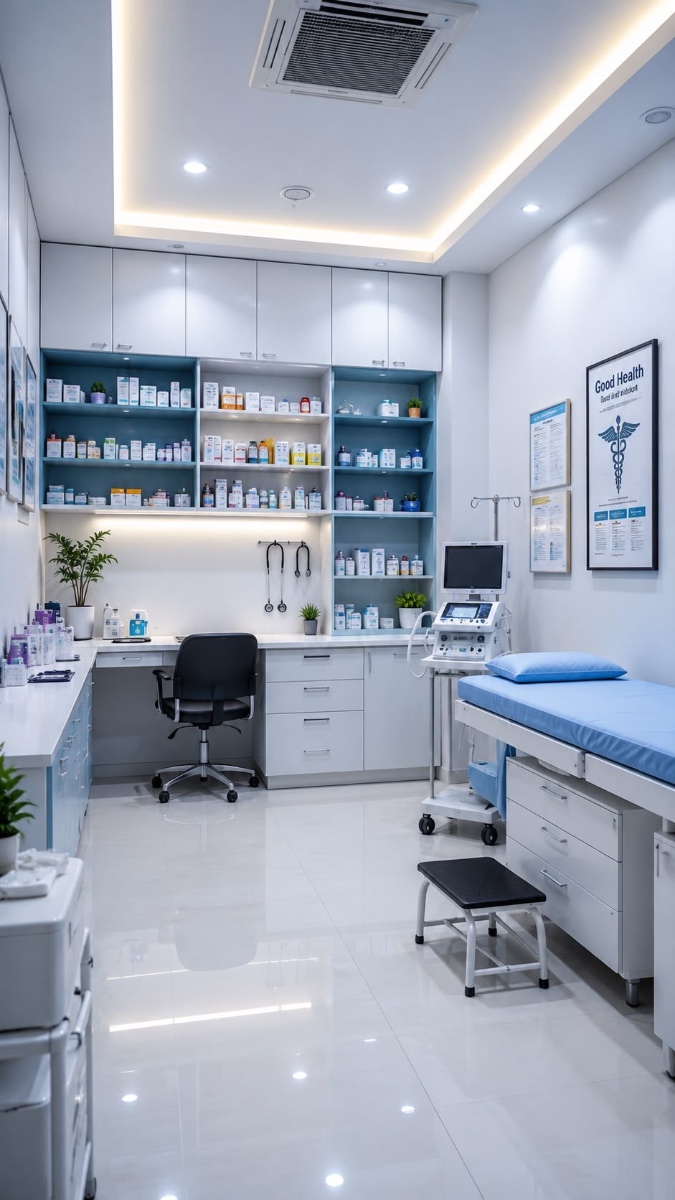
For a community pharmacy, a power interruption can affect more than lighting, card payments and customer service. If the pharmacy stores medicines that require controlled temperatures, the refrigerator, monitoring devices and the process for responding to a temperature excursion need particular attention. A solar-and-battery system can support these loads, but it must be designed around the actual equipment and the pharmacy’s storage and operating procedures.
This guide focuses on retail and community pharmacies rather than hospital-wide power systems. The numerical examples are hypothetical engineering illustrations, not a typical Nigerian pharmacy benchmark, a quotation or a Zookie Solar installation. Use the refrigerator’s measured energy, nameplate details, product storage requirements and site data for a real design.
Why pharmacy power planning needs a critical-load approach
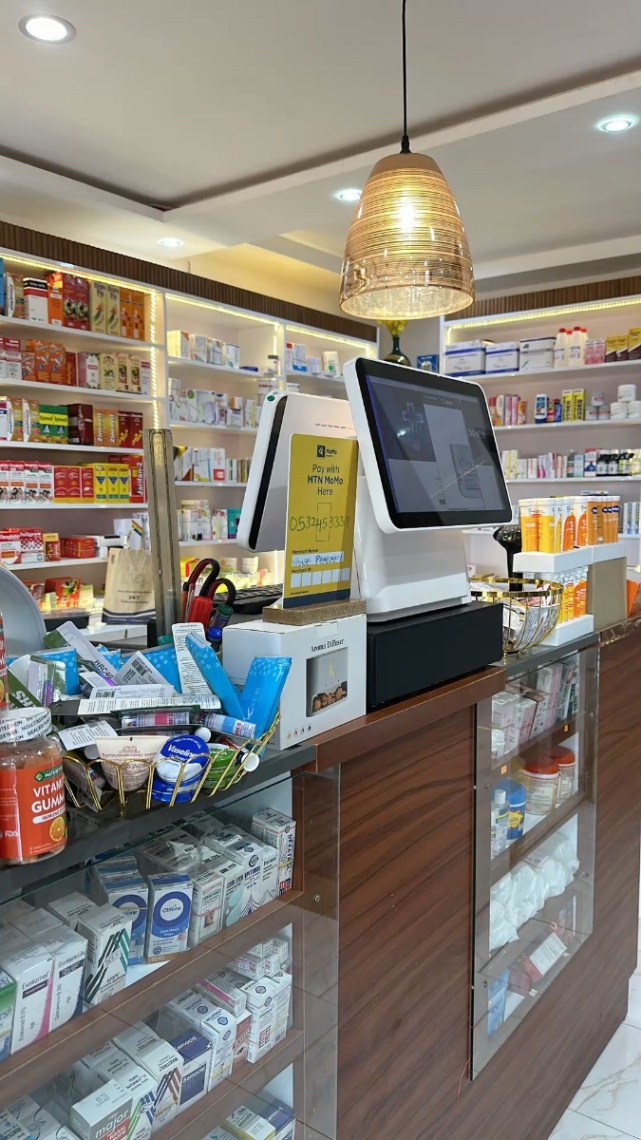
A pharmacy may have a medicine refrigerator, lighting, a computer or dispensing system, POS terminals, a router, CCTV, fans and possibly air-conditioning. These loads do not all have the same priority or operating pattern.
- Temperature-controlled stock. Only products that require refrigerated storage should be assigned to the relevant refrigerator. Follow each product’s approved storage instructions and the pharmacy’s quality procedures.
- Refrigerator duty cycle. A compressor cycles on and off, so its average energy over a full day can differ from its rated input while running. Measure actual consumption where practical and check compressor starting behaviour.
- Temperature monitoring. A powered refrigerator is not proof that medicines stayed within their permitted range. Temperature records, appropriate alarms, calibrated monitoring equipment and a response procedure remain necessary.
- Flexible shop loads. Lighting, fans, POS equipment and air-conditioning can have different priorities. Decide in advance what can be reduced if the battery reaches a reserve threshold.
What Nigerian storage guidance means for the power design
NAFDAC’s Good Storage and Distribution Practice Guidelines for Pharmaceutical Products took effect on 26 November 2024 and list a review date of 25 November 2029. The guidelines say storage conditions should follow the product manufacturer’s recommendations, and that temperature-monitoring records should be available, checks should occur at defined intervals, monitoring equipment should be checked and calibrated, and temperature mapping should consider seasonal variation.
The guidelines also call for temperature-monitoring devices for temperature-controlled storage equipment and appropriate alarms for excursions from defined conditions, with alarms tested regularly. For alarms that trigger outside working hours, the guidelines describe telephone or SMS warning arrangements. These quality controls are separate from the solar system: power backup supports the equipment, while monitoring and staff procedures help detect and manage a temperature problem.
Where a product’s storage range is specified, follow that product-specific requirement. NAFDAC’s guideline defines a refrigerator range of 2°C to 8°C where a temperature range is not stated, but this should not be treated as a universal instruction for every medicine. Consult the responsible pharmacist and the relevant product information.
Audit the actual equipment before choosing a system
Record the following information for the pharmacy:
- Medicine refrigerator make and model, rated input, voltage, current and manufacturer’s instructions.
- Measured refrigerator energy over representative 24-hour periods, if a suitable meter can be used safely.
- Compressor starting behaviour and any restrictions on supply quality or restart timing.
- Computer, dispensing equipment, POS terminals, router, CCTV, lighting, fans and air-conditioning details.
- Which loads must remain available during an outage, and for how long.
- The temperature-monitoring device, alarm method, sensor location, calibration status and who receives after-hours alerts.
- Existing grid, generator, inverter and distribution-board arrangement, plus the proposed location for panels, batteries and inverter equipment.
If the pharmacy handles temperature-sensitive products, include the pharmacist or responsible quality person in the design review. They should define the required storage conditions, acceptable response times and the procedure to follow if a temperature alarm activates. A solar installer should not make medicine-disposition decisions.
Illustrative daily energy calculation for a small community pharmacy
The following example shows how a load schedule can be converted into daily energy. Every input and runtime is assumed for demonstration. The refrigerator’s 0.12 kW value represents a hypothetical average over the full 24-hour period, not its compressor nameplate rating.
| Load | Illustrative assumption | Daily energy |
|---|---|---|
| Medicine refrigerator | 0.12 kW average × 24 h | 2.88 kWh |
| Air-conditioning | 0.80 kW average × 6 h | 4.80 kWh |
| Shop lighting | 0.12 kW × 12 h | 1.44 kWh |
| Fans | 0.16 kW total × 10 h | 1.60 kWh |
| Computer and POS equipment | 0.15 kW average × 10 h | 1.50 kWh |
| Router, CCTV and temperature monitor | 0.05 kW total × 24 h | 1.20 kWh |
| Small label printer | 0.05 kW × 2 h | 0.10 kWh |
| TOTAL | Sum of the illustrative assumptions | 13.52 kWh/day |
The arithmetic is 2.88 + 4.80 + 1.44 + 1.60 + 1.50 + 1.20 + 0.10 = 13.52 kWh/day. This is not a recommended package size. A pharmacy without air-conditioning could use less energy; a larger store with multiple refrigerators, more cooling or additional equipment could use considerably more.
A preliminary solar-array estimate—only for initial planning
For a simplified illustration, assume 4.5 equivalent peak-sun-hours per day and a combined performance factor of 0.75. These are calculation assumptions, not a forecast for a particular Nigerian city, season or roof.
13.52 kWh ÷ (4.5 h × 0.75) ≈ 4.0 kWp
A provisional 20% planning allowance would bring this simplified energy estimate to approximately 4.8 kWp. A final design must account for local and seasonal solar resource, shading, available array area, module temperature, inverter and charge-controller limits, battery recharge needs, and how much energy is used directly during daylight. The array must not be selected from this example alone.
Battery planning: protect the agreed critical loads first
A pharmacy may not need the battery to supply every shop load for the entire outage. The pharmacist and designer can agree on a critical-load plan—for example, the medicine refrigerator and its monitoring/alarm equipment first, followed by selected lighting, communications and other services. This is an operational decision that must reflect the stock being stored and the pharmacy’s own risk assessment.
For a hypothetical 12-hour backup period, assume the refrigerator averages 0.12 kW, the temperature-monitoring and alarm equipment uses 0.01 kW, essential communications use 0.04 kW, and critical lighting averages 0.06 kW for four hours:
Refrigerator: 0.12 × 12 = 1.44 kWh; monitoring: 0.01 × 12 = 0.12 kWh; communications: 0.04 × 12 = 0.48 kWh; lighting: 0.06 × 4 = 0.24 kWh. Total critical-load energy = 2.28 kWh AC.
2.28 ÷ (0.90 × 0.80) ≈ 3.17 kWh nominal battery
If a provisional 25% planning reserve is added, the arithmetic becomes about 3.96 kWh nominal. This is an energy-only illustration using assumed 90% conversion efficiency and 80% usable nominal capacity. It does not establish that a particular battery will provide 12 hours of safe medicine storage. Actual refrigerator consumption, compressor cycling, ambient temperature, battery power limits, ageing, inverter losses and required operating conditions all need checking.
Do not size the inverter from kWh alone
Daily energy in kWh describes consumption over time. The inverter must also support the highest credible simultaneous load in kW/kVA and the refrigerator compressor’s start-up behaviour. Confirm voltage, phase, continuous output, overload capability, waveform and transfer behaviour against the refrigerator and other equipment manufacturers’ requirements.
A battery may contain enough stored energy yet be unable to deliver the required instantaneous power. Likewise, a large inverter does not by itself guarantee adequate battery duration or suitable refrigerator temperature. The complete design must coordinate PV, inverter, battery, protection, monitoring and the equipment’s own controls.
Temperature alarms and outage procedures are not optional extras
- Keep monitoring independent enough to remain useful. Confirm whether the temperature logger or alarm has its own backup supply and how it reports a problem if the router or mains supply fails.
- Test the alert path. Check that alarms reach the correct staff member after hours, that contact details remain current and that a test is performed at a documented interval.
- Record and review temperature data. Use the pharmacy’s quality procedure to review excursions and retain records as required. Do not assume that a refrigerator’s display captures the full temperature history.
- Create an escalation plan. Define who responds, what information is recorded, and who decides whether affected products can be used, quarantined or otherwise managed. Follow manufacturer guidance and applicable professional requirements.
- Plan for system faults as well as grid failure. Consider inverter or battery faults, refrigerator failure, a tripped circuit, depleted storage and prolonged poor solar conditions. Identify an approved contingency arrangement before an incident occurs.
What recent Nigerian market signals tell pharmacy owners
Public web results show that pharmacy-specific backup systems are being marketed in Nigeria. Mercury Direct, for example, has a page dedicated to inverter solutions for pharmacies. This is a vendor marketing signal, not independent proof that its listed system sizes, prices, runtime or savings apply to another pharmacy.
A Nairaland thread dated 5 September 2025 also shows a patent-medicine shop owner asking for advice on backup power for a 200 W refrigerator, fans, laptop, POS terminals, lighting, CCTV and a router. This is one public discussion, not a representative survey or proof of search volume, but it illustrates the practical mix of loads a small shop may need to assess.
The Guardian Nigeria reported on 9 December 2023 that Koolboks and the Association of Community Pharmacists of Nigeria had announced a partnership to supply solar-powered refrigerators to pharmacists. That report is historical market context; it does not verify current availability, delivery totals or the performance of any system today.
Checklist before requesting a pharmacy solar quotation
- List the equipment and collect nameplates and manufacturer manuals.
- Measure refrigerator energy over representative days where practical.
- State which products require controlled storage and provide the applicable storage requirements to the responsible pharmacist and designer.
- Define critical loads and the intended backup period.
- Identify how temperature data and alarms will continue to work during outages.
- Confirm the existing grid/generator arrangement and how source transfer is managed.
- Ask for the proposal to state PV capacity, inverter kW/kVA and phase, nominal and usable battery capacity, autonomy assumptions, monitoring, protection, commissioning tests, maintenance and exclusions.
- Require an agreed procedure for alarm response and temperature excursions; solar installation alone is not a medicine-quality procedure.
Conclusion: design for continuity and temperature control
Solar and battery storage can support a Nigerian community pharmacy, but the system should be designed around the actual refrigerator, the loads that must remain on, the required backup period and the pharmacy’s temperature-monitoring process. Daily energy, inverter power, battery autonomy and medicine-storage compliance are separate questions that must work together.
Zookie Solar Ltd provides solar-system design, equipment supply, installation and technical consultation for Nigerian homes and businesses. Contact the team for a site-specific assessment and involve the responsible pharmacist or quality person when defining temperature-controlled storage and emergency procedures.
Zookie Solar Ltd — Built on Power. Driven by Excellence.
Email: admin@zookiesolar.com