Solar Power for Hospitals and Diagnostic Centres in Nigeria: Critical Loads, Power Quality & Backup Design
Solar Power for Hospitals in Nigeria: Backup & Safety
Plan solar power for Nigerian hospitals and diagnostic centres. Learn critical-load prioritisation, medical equipment power quality, UPS backup and PV sizing.
Solar Power for Hospitals and Diagnostic Centres in Nigeria: Critical Loads, Power Quality & Backup Design
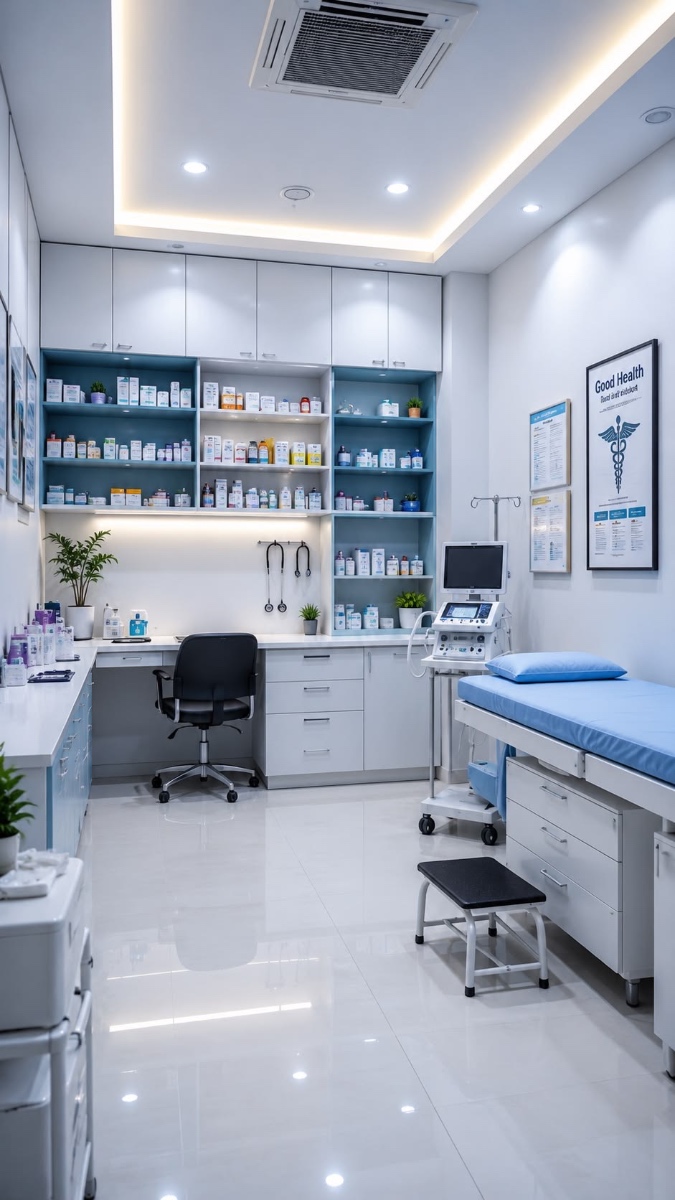
A hospital or diagnostic centre needs more than electricity that is available most of the day. Medical equipment may need stable voltage and frequency, some devices cannot tolerate even a brief interruption, and other loads—such as air conditioning, water heating or sterilisation equipment—can create large power demands. A solar installation that works well in a home may not automatically be suitable for a clinical environment.
For Nigerian healthcare facilities, the practical question is how to protect essential clinical services while designing a system that can be operated, maintained and expanded safely. The answer starts with a clinical-load assessment, power-quality requirements and a clear backup plan—not with choosing an inverter by kVA alone.
Why healthcare power reliability is attracting attention in Nigeria
Recent developments show growing attention to solar power for healthcare. On 22 May 2026, the Nigerian Institute of Medical Research (NIMR) commissioned a 100 kVA solar power system for critical laboratories and research facilities in Lagos. NIMR said the installation supports areas including molecular diagnostics and a biobank holding sensitive biological samples. BusinessDay reported the project on 26 May 2026.
On 14 April 2026, BusinessDay reported that a World Health Organization-backed solar pilot at two primary health facilities in Rivers and Akwa Ibom states had reduced power outages by more than 80% during the reported pilot period. Premium Times also reported on 13 March 2026 that 371 primary healthcare centres across 16 states and the FCT had been solarised with government and development-partner support.
A financing framework for healthcare electrification was reported by THISDAY on 5 August 2026, while public discussion has continued around hospitals' dependence on grid supply and backup power. A Nairaland discussion about solar adoption at Lagos University Teaching Hospital illustrates the public interest, although it is older and should be treated as background discussion rather than a current demand statistic.
These developments are evidence of a real healthcare-energy problem and investment activity. They do not establish a precise Google keyword volume for any phrase. For a solar provider, however, they point to a commercially relevant need: facilities want power designs matched to the equipment and clinical services they must keep running.
Step 1: Separate clinical criticality from ordinary electrical demand
Do not treat every socket or appliance in a healthcare facility as equally critical. Work with the facility manager, clinical engineering personnel and the equipment manufacturers to classify loads by clinical importance and their tolerance for an interruption.
Tier 1: Equipment that must not lose power unexpectedly
This may include selected life-support equipment, monitoring systems or other devices identified by the clinical team as interruption-intolerant. The correct supply arrangement must follow the equipment manufacturer's requirements and the facility's clinical safety plan. A generic hybrid inverter should not be assumed to provide the transfer time, waveform, isolation or redundancy a particular medical device requires.
Tier 2: Diagnostic and essential support equipment
Depending on the facility, this can include laboratory analysers, diagnostic workstations, sample-handling equipment, essential communications and selected refrigeration. Check the actual input specification, start-up sequence, permitted voltage range and any manufacturer requirement for a dedicated UPS or conditioned supply.
Tier 3: Deferrable or separately managed loads
Administrative equipment, non-essential outlets, comfort cooling, laundry, water heating and some high-power process equipment may be candidates for separate scheduling or a different supply strategy. Do not automatically classify an autoclave, imaging machine or other clinical appliance as non-critical: its role, cycle and power requirements must be agreed with the clinical team.
This classification is not a substitute for a formal clinical risk assessment. It is a way to make the energy design reflect the consequences of a power interruption.
Step 2: Audit the equipment and its power-quality requirements
Collect the make, model, nameplate data and operating schedule for each significant device. Where practical, log real power and energy during representative operating periods. Nameplate watts alone may not reveal the highest demand, the power factor, start-up behaviour or sensitivity to supply disturbances.
For each critical device, document:
Rated input in watts or volt-amperes, voltage, frequency and phase.
Maximum or start-up current and whether the device has a compressor, pump, motor or high-power heater.
The acceptable voltage and frequency range and the manufacturer's instructions for backup supply.
Whether a brief interruption is acceptable, or whether a dedicated uninterruptible power supply (UPS) is required.
Any special earthing, isolation, leakage-current or electromagnetic-compatibility requirements stated by the manufacturer.
The power system should be reviewed against applicable Nigerian requirements, equipment instructions and the facility's clinical engineering procedures. Medical equipment should not be connected to an improvised supply arrangement simply because the inverter rating appears sufficient.
Step 3: Understand the difference between inverter capacity and energy
Inverter capacity, usually expressed in kW and/or kVA, describes how much power the system can supply at a given moment. Energy, measured in kWh, describes how much electricity is used over time. A design needs both figures.
For example, a laboratory may have a relatively modest daily energy requirement but several devices that start together or need a clean, uninterrupted supply. Conversely, a facility may have a large daily energy requirement because cooling and other auxiliary loads operate for long periods. These are different design challenges and should not be reduced to a single inverter-size figure.
Create a schedule showing which devices may operate simultaneously. Include power factor, motor-starting demand, phase requirements and any load that must be kept on a dedicated UPS. Where equipment has a high-power heater or compressor, confirm the actual operating cycle instead of assuming it draws full nameplate power continuously.
Step 4: Estimate daily energy using measured operating patterns
A first estimate of daily energy is the average power of a load multiplied by its operating hours. For cyclical equipment, use a measured or manufacturer-supported average over the actual cycle where possible.
The following example is illustrative only. It is not a measured profile from a real clinic or a completed Zookie Solar project.
Example load group
Assumed average input
Operating time
Illustrative energy
Diagnostic workstations and selected analyser support
0.8 kW
8 hours
6.4 kWh/day
Lighting and essential IT
0.5 kW
10 hours
5.0 kWh/day
Selected medical refrigeration, measured average
0.15 kW
24 hours
3.6 kWh/day
Communications and monitoring
0.1 kW
24 hours
2.4 kWh/day
Total
—
—
17.4 kWh/day
The example totals 17.4 kWh per day for the listed loads. It deliberately excludes major imaging equipment, air conditioning, water heating, sterilisation and other high-demand devices. Those loads must be measured and assessed separately. The values are planning assumptions, not typical ratings for all diagnostic centres.
Step 5: Make a preliminary solar estimate—but verify the site
A preliminary PV estimate can be made from daily energy, an effective peak-sun-hours assumption and an overall performance factor for system losses:
Using the illustrative 17.4 kWh/day load, assume five effective peak-sun-hours and a 0.75 overall performance factor for a first-pass calculation:
17.4 ÷ (5 × 0.75) ≈ 4.64 kWp
This is not a final system recommendation. Five peak-sun-hours is an assumption for the example, not a guarantee for every Nigerian location or month. The design must use location-specific solar-yield data, monthly conditions, array layout, inverter limits, load timing and the energy needed to recharge batteries after an outage.
A clinical facility may also need a generator or grid supply for prolonged low-solar periods, equipment faults or loads that are uneconomical to serve entirely from batteries. The backup plan should be explicit and tested.
Step 6: Calculate battery backup for the loads that truly need it
Battery storage should be based on the energy required during an outage, the required duration, the actual DC or AC architecture, and the battery manufacturer's usable-energy and current limits. Do not assume the entire building needs the same backup duration.
For example, suppose a facility identifies 1.5 kW of essential loads that must operate for four hours. The load-side energy requirement is:
1.5 kW × 4 hours = 6 kWh
If a simplified estimate assumes 90% conversion efficiency and 80% usable battery energy, the nominal storage estimate is:
6 ÷ (0.90 × 0.80) ≈ 8.33 kWh
This is an illustrative calculation only. The final design must account for ageing, temperature, battery current limits, reserve margin, inverter standby consumption, discharge rate and any additional losses. Some clinical devices may require a dedicated UPS independent of the main battery system.
Step 7: Design for transfer, continuity and failure—not just normal operation
The facility should document what happens when grid power fails, solar production falls, a battery reaches its reserve threshold, or a generator fails to start. The answer may differ for life-critical devices, diagnostic equipment and ordinary building loads.
A robust design review should consider:
Whether a dedicated UPS is required for interruption-sensitive devices and how its bypass and maintenance modes work.
Whether transfer time, output waveform, voltage regulation and frequency stability meet each device's stated requirements.
How grid, PV, battery and generator sources interact, including what happens during source transitions and system faults.
How faults are isolated without unintentionally removing power from other critical services.
Whether the system has a documented manual operating procedure and a safe fallback if the hybrid controller or communications link fails.
Do not promise uninterrupted clinical service based only on the presence of batteries. Reliability depends on the full design, equipment compatibility, maintenance and tested operating procedures.
Step 8: Monitor the system and maintain clinical equipment records
Monitoring can help the facility distinguish between poor solar production, battery deterioration, a failed inverter, a grid interruption and a change in the building's energy demand. Useful data may include PV output, battery state of charge, system alarms, critical-load energy and generator runtime.
Assign responsibility for reviewing alarms and responding to faults. Keep an equipment register, commissioning results, settings, maintenance history and the approved backup sequence. When a new analyser, imaging device, air-conditioning unit or steriliser is purchased, review its effect on the power design before connecting it.
Illustrative design review: a private diagnostic centre in Owerri
This is a hypothetical design scenario only. It is not a claim that Zookie Solar completed a project at this facility.
Imagine a diagnostic centre in Owerri with laboratory equipment, workstations, essential lighting, selected medical refrigeration and a mix of grid and generator supply. Management wants to protect selected diagnostic operations during outages without assuming that every appliance can be placed on one battery-backed circuit.
The project team would first consult the clinical and technical staff to identify interruption-sensitive devices and review each manufacturer's power requirements. A site audit would record simultaneous demand, operating hours, phase requirements and the energy used during a normal day. The centre would then agree which loads need no-break UPS protection, which need several hours of battery support, and which can remain on the facility's ordinary supply.
Only after that review would the designer calculate PV capacity, battery energy and inverter ratings. Commissioning would test the agreed operating scenarios, alarms and backup sequence with the facility's responsible technical personnel. The final handover would include a clear list of supported and excluded loads, equipment settings and maintenance responsibilities.
The lesson is simple: a healthcare solar design should be driven by clinical function and equipment specifications, not by a generic package or a promise that one inverter will run the entire facility.
What to request in a hospital or diagnostic-centre solar proposal
A site-specific load audit and an agreed list of critical, essential and deferrable loads.
A schedule of equipment ratings, phase requirements, power-quality limits and UPS needs.
PV yield assumptions and a monthly production estimate for the actual location.
Battery autonomy calculations, reserve assumptions and a plan for extended low-solar periods.
A documented source-transition and backup strategy, including generator and grid coordination where applicable.
Protection, earthing, isolation and commissioning documentation appropriate to the equipment and applicable requirements.
Remote monitoring, alarm ownership, maintenance intervals, warranty terms and a process for reviewing new equipment.
Compare proposals on the same assumptions. A larger inverter rating alone does not prove that a design provides the right power quality, backup duration or clinical continuity.
Final takeaway
Solar can strengthen power resilience for Nigerian hospitals, clinics and diagnostic centres, but healthcare installations demand careful attention to clinical criticality, power quality, backup duration and equipment compatibility. Start with the devices and services that must remain available, measure the real load, and design the solar, battery, UPS and conventional backup arrangement around those requirements.
A well-designed system should clearly state what it supports, how long it can support those loads, what happens during a fault and who is responsible for maintenance. That is a stronger basis for procurement than selecting equipment by capacity alone.
Zookie Solar Ltd provides solar system design, equipment supply, installation and maintenance for homes and businesses. If your hospital, clinic or diagnostic centre is evaluating solar, prepare your equipment list, operating schedule, existing power arrangement and required backup duration so the proposed system can be assessed against real operating conditions.
Built on Power. Driven by Excellence.
Solar Power for Telecom Towers in Nigeria: PV Sizing, Battery Autonomy & 24/7 Site Reliability