Solar Power for Schools in Nigeria: Planning Classroom, ICT Lab and Boarding-School Loads
Solar Power for Schools in Nigeria: System Design Guide
Learn how to plan solar for Nigerian schools, estimate classroom and ICT loads, size batteries, and design reliable power for day and boarding schools.
Solar Power for Schools in Nigeria: Planning Classroom, ICT Lab and Boarding-School Loads
Reliable electricity supports more than lights and fans in a school. It keeps computer-based learning available, helps teachers use projectors and digital resources, supports administration, and allows security systems to operate after classes. Yet a school’s electricity profile is different from that of a home, hotel or hospital: much of a day school’s demand occurs while the sun is available, while boarding schools and campuses may need power throughout the night.
A well-designed solar installation for a Nigerian school should therefore begin with the timetable and the equipment—not with a package size copied from another building. This guide explains how to assess school loads, estimate solar and battery capacity, plan a phased installation, and compare quotations on a like-for-like basis.
Why solar design for a school needs a school-specific plan
Public-sector activity shows that solar for education is an active infrastructure need. In February 2026, Nigeria’s Rural Electrification Agency and partners inspected solar-hybrid projects at Federal University Lafia and the University of Port Harcourt, designed to serve lecture halls, laboratories, ICT centres and hostels. In June 2026, pv magazine reported a tender for solar systems at seven public schools among a wider group of institutional sites. These examples do not determine what any individual school needs, but they show why education facilities deserve a tailored engineering approach.
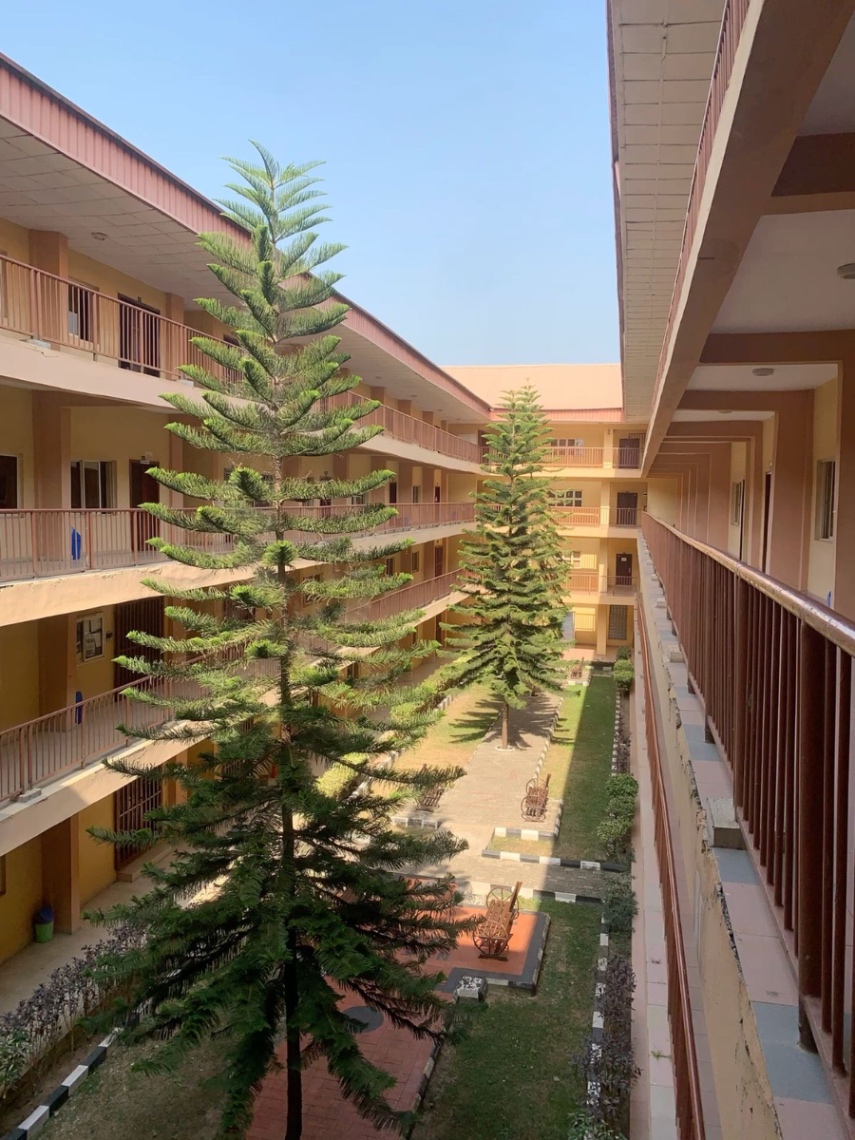
A school’s operating calendar matters. A day school may use most of its energy between morning assembly and closing time, when solar generation is strongest. A boarding school adds evening study, dormitory fans, security lighting, water pumping and other night-time loads. A university may also include workshops, research equipment, lecture theatres and multiple buildings with different schedules.
Step 1: Audit the loads by building and school activity
Before choosing panels, batteries or an inverter, record each appliance’s rated power, quantity, operating hours, starting behaviour and whether it must run during an outage. Confirm the information with nameplates, measurements and staff interviews where possible. Do not assume every device is switched on at the same time.
Separate essential, scheduled and high-demand loads
Essential loads: network equipment, selected ICT equipment, security systems, emergency lighting and administrative devices that must remain available.
Scheduled learning loads: classroom lights and fans, projectors, library equipment and computer labs. Their hours can often be aligned with daylight.
High-demand or intermittent loads: water pumps, air conditioners, workshop machinery, kitchen equipment and large laboratory appliances. Assess these individually for starting current and operating schedule.
This classification helps the school decide what should be powered first if the system is operating on battery, and which activities can be scheduled when solar generation is high. It also prevents an expensive design from promising that every appliance can run at once when the system was never sized for that duty.
Step 2: Estimate daily energy use—not just inverter size
Energy use is calculated as power multiplied by operating time. For example, a 60-watt fan running for six hours uses 0.36 kWh. Repeat the calculation for each load, then total the daily energy. Keep estimated maximum simultaneous demand separate from daily kWh: the first helps determine inverter capacity, while the second is central to solar-array and battery planning.
Illustrative example: a day school in Nsukka
The following is an illustrative calculation for a hypothetical school with classroom blocks, an administration area, an ICT lab, a library and basic site services. It is not a Zookie Solar installation, site survey or final design. Actual equipment measurements and the school timetable could change the result.
Load group
Assumed running load
Use per day
Estimated energy
12 classrooms: LED lights and fans
3.02 kW
6 hours
18.1 kWh
Administration and staff room
1.20 kW
7 hours
8.4 kWh
ICT lab: computers, network gear, projector and one AC
3.60 kW
5 hours
18.0 kWh
Library
0.60 kW
5 hours
3.0 kWh
Water pump
1.10 kW
1 hour
1.1 kWh
Security lighting and network allowance
0.40 kW
12 hours
4.8 kWh
Assembly/public-address equipment
0.50 kW
2 hours
1.0 kWh
Illustrative total
About 10 kW if loads coincide
—
About 54.4 kWh/day
The figures are assumptions to demonstrate the method. A real audit may find different fan wattages, more computers, several air conditioners, additional buildings or a pump with a much higher starting demand. Include weekends, holidays, examination periods and school events when reviewing the schedule.
Step 3: Estimate the solar-panel capacity
A preliminary PV estimate can be made by dividing daily energy demand by the site’s equivalent peak-sun-hours and an overall performance factor. For the example, assume 54.5 kWh per day, 4.5 peak-sun-hours and a 0.75 performance factor to allow for system losses:
54.5 kWh ÷ (4.5 hours × 0.75) ≈ 16.1 kWp
Adding a planning margin of about 20% gives roughly 19.4 kWp, so a 20 kWp array could be used as a preliminary design starting point for this example. This is not a universal recommendation for Nigerian schools. The final array must use an appropriate local solar-resource assumption, the site’s shading and roof conditions, the inverter’s PV input limits, string-voltage calculations, and the school’s seasonal operating profile.
Where practical, schedule computer-lab sessions, water pumping and other flexible activities during productive daylight hours. This can allow more solar energy to be used directly instead of storing it in batteries and converting it back later.
Step 4: Size the inverter for simultaneous demand and starting loads
The example’s estimated connected demand is around 10 kW if all listed groups operate together. That points toward evaluating an inverter in approximately the 12–15 kW class, but the number must not be selected from the table alone. An engineer should confirm the actual coincident load, power factor, motor-starting surge, overload duration, phase arrangement and any planned expansion. A pump or air conditioner may briefly draw substantially more current when starting than it uses once running.
For a campus with separate buildings or three-phase equipment, assess the distribution architecture and phase balance before choosing the inverter configuration. Do not assume a single small inverter can safely or practically serve every block. Protect circuits appropriately, preserve safe isolation and ensure the school’s existing electrical installation is suitable for the proposed system.
Step 5: Size battery storage around after-hours priorities
A day school usually does not need to store a full day’s classroom energy for use at night. Instead, identify what must remain powered after closing: perhaps security lights, network equipment, selected office devices and a few essential lights. The smaller and clearer this list is, the easier it is to estimate storage honestly.
Suppose the school needs 15 kWh of usable AC energy after sunset. If the design allows 80% usable battery depth of discharge and assumes 90% conversion efficiency from battery energy to AC loads, the approximate nominal battery requirement is:
15 kWh ÷ (0.80 × 0.90) ≈ 20.8 kWh
A nominal battery bank around 22–25 kWh could be assessed as a starting point after allowing for reserve and design details. This example is for the stated after-hours load only; it does not provide a full night of power for all classrooms or an entire boarding school. Battery chemistry, temperature, warranty conditions, maximum charge/discharge current, inverter compatibility and required autonomy must be checked before specifying equipment.
Day schools, boarding schools and universities need different designs
Day schools
Prioritise classroom fans and lighting, administration, ICT, library use and essential security loads. Where the timetable permits, use daylight hours for computer labs and water pumping. Batteries may focus on essential after-hours services rather than storing every daytime load.
Boarding schools
Add dormitory lighting and fans, evening study areas, staff accommodation, security lighting, water supply and any kitchen or laundry equipment that is expected to run electrically. Because these loads continue after sunset, storage and generator or grid backup strategy can become more significant than in a day school.
Universities and multi-building campuses
Treat each faculty, hostel, laboratory, library and service building as a defined load centre. Large campuses may require staged engineering, three-phase distribution, central or distributed inverter arrangements, metering, coordinated protection and a long-term operations plan. Federal university projects measured in megawatts are not directly comparable to a small private school; scale and operating requirements are fundamentally different.
How to phase a school solar project without overbuying
If the budget cannot support every building at once, use a written phased plan. A first phase might support essential administration, ICT and security; a later phase can add classroom blocks, libraries or additional buildings. Design the first phase with a documented expansion pathway, including inverter capacity, PV input limits, cable routes, protection, battery communications and available mounting space. A phased approach should not mean installing incompatible equipment or leaving unsafe temporary wiring behind.
What a school should request in a solar quotation
A measured load schedule showing quantities, watts, operating hours and estimated daily kWh.
A clear list of circuits and buildings included—and expressly excluded—from the scope.
PV capacity, module specifications, string design and inverter input-limit checks.
Inverter continuous output, surge capability, phase configuration and expansion limits.
Mounting and structural assessment, electrical protection, earthing, safe isolation, testing and commissioning.
A breakdown of equipment, installation, transport, cabling, civil works, taxes where applicable, training and maintenance.
A handover pack containing as-built drawings, settings, warranties, emergency shutdown instructions and a maintenance schedule.
Compare quotations using the same load list and service scope. A lower price may exclude important buildings, adequate battery storage, protection, monitoring or after-sales support. Ask the installer to explain the assumptions behind projected energy output and to state what happens during prolonged cloudy periods, school holidays and equipment faults.
Operations and maintenance are part of the design
Assign a staff member to monitor system alerts and record unusual behaviour, while leaving electrical work to qualified personnel. Keep a register of inverter alarms, battery state of charge, energy production and major load changes. Train staff not to connect new air conditioners, heaters, pumps or laboratory equipment without reviewing capacity. A system that was suitable before a new ICT lab was added may no longer be adequate afterward.
Remote monitoring can help a school or its service provider identify reduced output or recurring alarms before they cause a major disruption. The contract should define response times, preventive inspections, warranty handling and the process for requesting changes to the system.
Plan a school solar installation with Zookie Solar
A dependable school solar project starts with a clear learning and operating brief, a measured load audit and an engineering design that fits the school’s actual timetable. It should make the limits of the system clear, protect equipment, and provide a practical plan for maintenance and future expansion.
Zookie Solar Ltd provides solar system design, installation, maintenance and energy solutions for homes and businesses. If your school is planning a new installation or wants to evaluate a phased upgrade, prepare your building list, recent electricity bills or generator records, equipment inventory and operating hours for a site assessment.
Zookie Solar Ltd — Built on Power. Driven by Excellence.
Contact Zookie Solar to discuss a school-specific assessment and a quotation based on measured loads—not guesswork.
Solar Power for Hotels in Nigeria: Guest-Room Load Tiers, Night Backup & Phased Retrofit Design