Solar Power for Barbershops and Hair Salons in Nigeria: Clippers, Dryers and Peak-Load Planning
Solar Power for Barbershops & Hair Salons in Nigeria
Discover how to plan solar for Nigerian barbershops and salons by calculating clipper, hair-dryer and steamer loads, inverter capacity, solar generation and battery backup.
Solar Power for Barbershops and Hair Salons in Nigeria: Clippers, Dryers and Peak-Load Planning
For a Nigerian barbershop or hair salon, a power interruption can mean paused appointments, customers waiting with wet hair, clippers that cannot be charged, and styling equipment that must be switched off mid-service. Solar can help keep a grooming business operating, but a design that runs only lights and clippers is not automatically capable of running professional hair dryers, hood dryers or steamers.
The key is to separate low-power essentials from heat-producing appliances, calculate daily energy and simultaneous demand independently, and decide which services must remain available when the grid is down. This guide explains how to plan solar for a barbershop, unisex salon or beauty studio in Nigeria without relying on a generic inverter package.
Why Salon Solar Sizing Needs More Than a Clipper Count
Recent Nigerian online guidance for small-business solar increasingly treats salons and barbershops as a distinct load category. Local retail listings show why the equipment inventory matters: professional hand-held hair dryers are commonly advertised around 2,000 W, while a Nigerian salon-steamer listing gives a 1,300 W rating. Actual appliances vary, so use the nameplate on the equipment you own—not an online average—for design.
Public community discussions make the distinction clear. In a Nairaland thread in August 2025, a prospective barbershop owner asked about a modest setup for lights, a sound system and a fan, specifically noting that a TV would be used only when grid power was available. That is a different requirement from a full-service salon using high-wattage dryers and steamers. Treating both businesses as the same load profile can lead to an unsuitable design.
These sources are useful demand signals, not verified Google keyword-volume data. They show practical buyer questions: what can be powered, what can be excluded, and whether a proposed system matches the business’s actual equipment.
Step 1: Make a Complete Equipment List
Walk through the business from opening to closing and record every electrical appliance. Photograph the rating label where possible. Record rated watts, voltage, operating hours, how often the equipment is used and whether several units are likely to run at the same time.
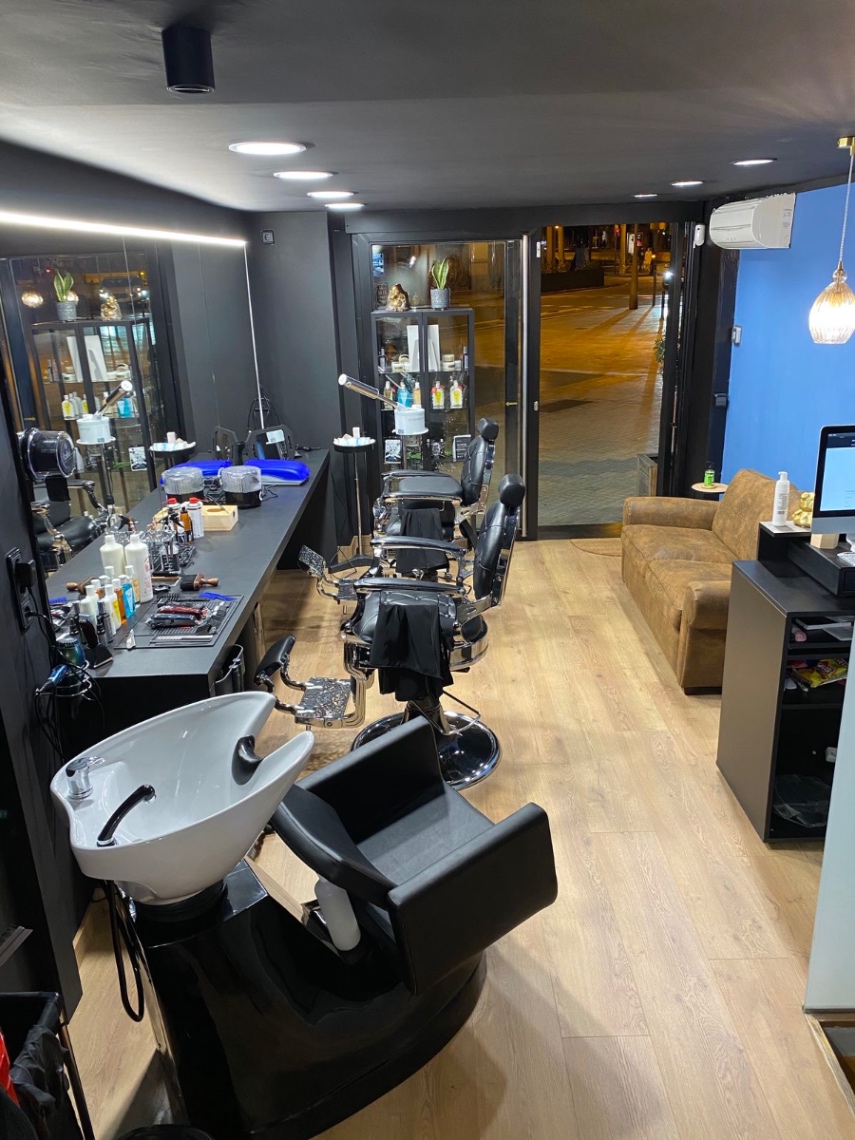
Barbershop equipment: clippers, trimmers, clipper chargers, sterilising equipment, lighting, fans, music system, TV, router and POS terminal.
Hair-styling equipment: hand-held dryers, hood or standing dryers, hair steamers, straighteners, curling tools and electrically heated treatment equipment.
Shared salon loads: reception computer, lighting, fans, water dispenser, CCTV, signage and charging outlets.
Optional or heavy loads: air conditioners, water heaters and other appliances that may need a separate load decision.
Do not count every appliance as though it runs for the entire business day. A clipper may run intermittently, while a fan may operate for ten hours. A hair dryer can draw several kilowatts while in use but may be used for only a fraction of the day. Both power rating and operating time matter.
Step 2: Separate Daily Energy from Peak Power
Two calculations are required. Daily energy, measured in kilowatt-hours (kWh), helps estimate solar generation and storage for the chosen backup objective. Peak simultaneous power, measured in watts or kilowatts (kW), helps determine whether the inverter can run the appliances that may be on together.
Energy per appliance (kWh/day) = appliance power (kW) × operating hours per day
For example, a 2,000 W hair dryer is a 2 kW load. If it runs for 45 minutes, its energy use is approximately 2 kW × 0.75 hours = 1.5 kWh. That single short appointment can use more energy than several hours of LED lighting and clipper charging.
Illustrative Example: A Three-Chair Unisex Salon in Abeokuta
This is a hypothetical planning example, not a surveyed business, final engineering design or completed Zookie Solar project. It assumes three clippers, two fans, lighting, basic electronics and several styling appliances. Confirm actual ratings and usage patterns on site.
Equipment
Assumed power
Assumed daily use
Estimated energy/day
3 clippers
3 × 15 W
8 h equivalent
0.36 kWh
2 fans
2 × 65 W
10 h
1.30 kWh
LED lighting
90 W total
10 h
0.90 kWh
TV, router and POS
110 W total
10 h
1.10 kWh
2 hand-held dryers
2 × 2,000 W
1.5 h each
6.00 kWh
1 hood dryer
1,300 W
2 h
2.60 kWh
1 hair steamer
1,300 W
1 h
1.30 kWh
Illustrative total
13.56 kWh/day
This daily-energy estimate is only as reliable as the assumed operating hours. Keep a simple usage log for a typical week and compare it with measured energy where possible. Busy weekends, bridal styling and special-event appointments may produce a different profile from a quiet weekday.
Step 3: Check the Worst-Case Combination of Appliances
In the example above, the two hand-held dryers, hood dryer, steamer and low-power background loads could total approximately 7 kW if they all operate together. That does not mean they always will—but the design must either support that combination or establish a realistic operating rule that prevents it.
Do not select an inverter by kVA label alone. Check its continuous real-power output in kW, voltage and phase requirements, overload rating, ambient-temperature derating and manufacturer instructions. The inverter must handle the loads that can genuinely run together, with appropriate engineering margin.
Three practical ways to manage the peak
Design for simultaneous use: choose equipment and an inverter system that can support the confirmed maximum combination.
Use an operating schedule: avoid running the hood dryer and steamer at the same time as two high-power hand dryers if the business can work safely and efficiently that way.
Create a clear load boundary: keep essential barbershop loads separate from optional high-power styling equipment, and label which appliances are supported in each operating mode.
A load schedule is not a substitute for adequate equipment. If the salon must run all dryers simultaneously during peak appointments, that requirement belongs in the design brief from the beginning.
Step 4: Estimate a Preliminary Solar Array
For a first energy estimate, assume the illustrative 13.56 kWh/day demand, five equivalent peak-sun-hours per day and an overall performance factor of 0.75. These are planning assumptions only; actual site conditions, season, array orientation, temperature, shading, equipment losses and usage must be assessed.
Adding a provisional 20% planning allowance gives approximately 4.34 kWp. This is an energy-based starting point, not a final array specification. The engineer must also check inverter PV-input limits, string voltage and current, available mounting area and whether the array can cover daytime use while meeting the battery-charging target.
If the business has two high-wattage dryers and a hood dryer, inverter peak-power capability may be more restrictive than this daily-energy calculation. A sufficiently large panel array does not compensate for an inverter that cannot carry the simultaneous load.
Step 5: Size the Battery for a Clearly Defined Service
Avoid the vague requirement to “power the whole salon.” Decide which service the battery must provide and for how long. A barbershop that needs lighting, fans, clippers and payment processing during a short outage has a different battery requirement from a full-service salon that expects to keep several heating appliances running after sunset.
Illustrative essential-load calculation
Assume lighting, two fans, clippers and basic electronics together average about 0.37 kW. For three hours of backup, the AC energy requirement is approximately 0.37 kW × 3 h = 1.11 kWh.
The result of roughly 1.5 kWh is a mathematical starting point for those essential loads only. Real design must allow for reserve, battery ageing, temperature, conversion losses, permitted discharge rate and actual duty cycle. If a 2 kW dryer must also run during backup, both the energy requirement and the battery’s instantaneous power capability increase.
Battery capacity in kWh and battery power in kW are not interchangeable. A battery can contain enough energy for several hours but still be unsuitable if it cannot safely deliver the power demanded by the connected appliances.
Step 6: Decide Which Services Solar Must Support
A useful salon design begins with three service tiers:
Scheduled styling: one selected dryer or other treatment appliance operating under an agreed load schedule.
High-demand styling: multiple dryers, hood dryers, steamers, air conditioners or other loads that may need a larger inverter, more solar generation and additional storage—or may remain on grid power when available.
This is a business decision as much as an electrical one. If high-demand styling services account for much of the salon’s revenue, excluding them from backup may not be acceptable. If the business mainly provides haircuts and basic grooming, prioritising the essential circuit may be a more practical first phase.
Common Mistakes to Avoid
Buying an inverter based only on the number of clippers or salon chairs.
Ignoring the rating of hair dryers, steamers and other heating appliances.
Using daily kWh to guess inverter size without checking simultaneous kW demand.
Assuming every appliance will run for the same number of hours.
Buying a battery based only on kWh while ignoring its continuous discharge-power limit.
Assuming a solar array that covers daytime energy will automatically support all appliances during a cloudy afternoon or evening.
Adding an air conditioner or another dryer later without reassessing the design.
What to Give Your Solar Installer
To obtain a proposal that reflects your business, provide the installer with:
Photos of the rating labels on all dryers, steamers, clippers and other significant appliances.
Opening hours and approximate daily use for each appliance.
The number of dryers or heated devices that may operate simultaneously.
Your priority during an outage: essential services only, one styling appliance, or full salon operation.
Recent generator runtime, fuel records or electricity bills where available.
Any planned expansion, such as additional chairs, dryers, air conditioning or a larger treatment area.
Ask the installer to document the assumed load, daily energy, maximum simultaneous power, battery backup objective and excluded appliances in writing. This makes proposals easier to compare and reduces the risk of buying a system that works for clippers but fails when the first high-wattage dryer is switched on.
Plan Your Salon Solar System with Zookie Solar
A dependable salon solar system should match the services you sell, not just the equipment you hope to switch on. Zookie Solar Ltd provides solar design, installation, maintenance and energy solutions. With an accurate appliance list and operating schedule, the system can be planned around the salon’s essential services, styling equipment, daily energy and peak-power needs.
Contact admin@zookiesolar.com to discuss a solar assessment for your barbershop, unisex salon or beauty studio.
Zookie Solar Ltd — Built on Power. Driven by Excellence.
Solar Power for Commercial Laundries in Nigeria: Washing Machines, Dryers and Daily Load Planning