How to Earth and Protect a Solar System from Lightning in Nigeria: 2026 Safety Guide
Introduction
Solar panels, batteries and hybrid inverters are major investments, but one of the least visible parts of a solar installation can be one of the most important: the earthing and surge-protection system.
In Nigeria, this subject has become especially important in 2026. The Nigerian Electricity Management Services Agency (NEMSA) issued rooftop-solar safety guidance after concerns about fire incidents linked to poor workmanship, substandard components and missing protective devices. The guidance calls for proper earthing, surge protection and lightning protection as part of a safe rooftop PV installation.
At the same time, real solar-owner discussions show that buyers frequently ask whether an inverter really needs earthing, whether built-in surge protection is enough, and how AC, DC and lightning protection should be coordinated.
So what should a proper Nigerian solar installation actually contain—and what should a homeowner or business owner ask the installer to prove?
What Is Earthing in a Solar System?
Earthing, or grounding, is the intentional connection of exposed conductive parts of an electrical installation to an earth-termination system so that dangerous fault currents and certain surge currents have a controlled path.
In a solar installation, this can involve bonding the metal frames of PV modules, mounting structures, inverter chassis, battery enclosures and other exposed conductive equipment as required by the system design and applicable standards.
Earthing is not the same thing as simply driving a metal rod into the ground and connecting one wire to it.
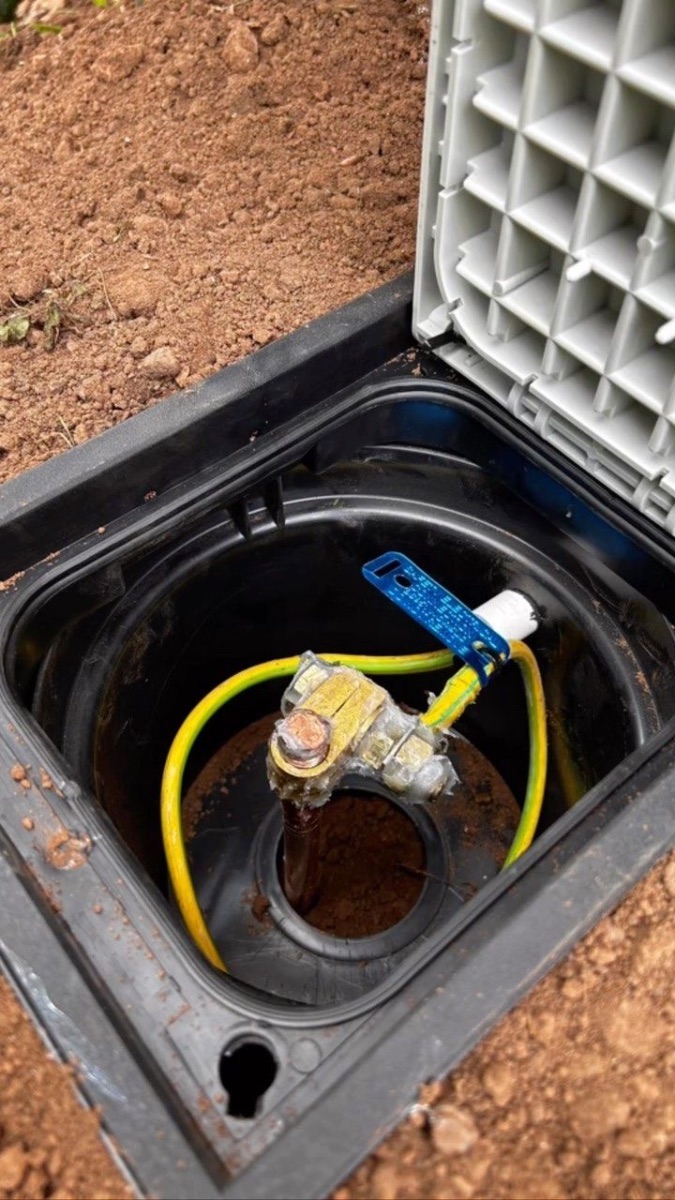
A complete system includes the earth electrode or electrodes, conductors, bonding points, connections, protective devices and verification tests.
Why Solar Systems Need More Than One Kind of Protection
People sometimes use the words earthing, lightning protection and surge protection as though they mean the same thing. They do not.
Earthing
Provides a protective path for fault currents and establishes the bonding framework required by the electrical design.
Surge Protection Devices (SPDs)
SPDs are designed to limit transient overvoltage by diverting surge energy through an appropriate protective path.
External Lightning Protection
Where a building requires a lightning-protection system, air terminals, down conductors, bonding and an earth-termination system may be needed. The PV system should be coordinated with that lightning-protection design rather than treated as an isolated installation.
These systems work together. An SPD is not a substitute for proper earthing, and an earth rod by itself is not a complete lightning-protection strategy.
What NEMSA's 2026 Rooftop-Solar Guidance Says
NEMSA's 2026 rooftop-PV guidance is particularly relevant to Nigerian solar buyers because it addresses several installation details that are easy to overlook.
The guidance calls for DC and AC isolators, correctly rated protective devices, surge protection against lightning surges, and proper earthing with an earth-resistance value of 2 ohms or below. It also calls for lightning protection on rooftops and appropriate battery installation and ventilation.
NEMSA also provides public services for verifying certified electrical contractors and requesting inspections of electrical facilities and renewable-energy installations.
For a Nigerian solar buyer, this means safety should be treated as part of the installation specification—not an optional accessory added if money remains.
Illustrative Case Study: A 10kW Hybrid Solar Installation
This is an illustrative design case study, not a claim that Zookie Solar completed this project.
Imagine a commercial property installing a 10kW hybrid inverter, lithium battery storage and a rooftop PV array.
The owner receives a quotation showing panels, inverter, batteries and cables. The installer says the inverter already has built-in surge protection and therefore proposes no external SPD or dedicated earthing work.
That should trigger questions.
A proper engineering review would ask:
• How is the inverter chassis earthed?
• How are the PV module frames and mounting structure bonded?
• Is DC surge protection required for this array and cable route?
• Is AC surge protection required at the appropriate distribution point?
• What is the measured earth resistance?
• How is the PV system coordinated with any existing building lightning-protection system?
• Where are the isolation points?
• What protective devices are installed, and what are their ratings?
The objective is not to add every possible device blindly. The objective is to design a coordinated protection system based on the installation, equipment specifications and applicable requirements.
How Is Earth Resistance Tested?
Earth resistance is measured with proper electrical test equipment and an appropriate test method. It should not be demonstrated with a bucket of water, a multimeter alone or a visual inspection.
For a simple example, imagine an installer says: “The earth is good because the rod is deep.” That statement does not prove the required electrical performance.
A professional commissioning record should show the measured result, test method and relevant earth point or system tested.
NEMSA's 2026 rooftop-PV guidance specifies an earth-resistance value of 2 ohms or below.
Important: the target value does not by itself prove that the complete protection system is correctly designed. Conductor sizing, continuity, bonding, SPD selection, connection quality and lightning-protection design still matter.
Does a Lower Resistance Number Always Mean a Better Solar Installation?
Not necessarily.
Earth resistance is an important measurement, but it is only one part of the protection system.
An installation can show a low earth-resistance reading and still have poor bonding, incorrectly selected SPDs, long or badly routed protective conductors, loose connections or an incomplete lightning-protection design.
Think of the resistance measurement as one test result—not a certificate that every safety requirement has been satisfied.
Where Should the Solar Panels Be Earthed?
PV module frames and mounting structures are normally bonded using the equipment-grounding arrangement specified for the installation and mounting system.
The exact conductor size, bonding method and connection hardware should follow the applicable design and equipment requirements.
Do not improvise by drilling random holes into panels or attaching wires to painted surfaces where a reliable electrical bond has not been established.
Use compatible bonding hardware designed for the mounting system, and verify continuity during commissioning.
Should the Inverter, Battery and Solar Panels Share One Earth?
This is one of the questions that causes the most confusion among solar buyers.
The answer should not be based on a simplistic rule such as “every component needs its own completely separate earth rod” or “everything must use one rod no matter what.”
The system should be designed as a coordinated bonding and earthing network that complies with the applicable requirements and the equipment manufacturer's instructions.
Lightning-protection conductors also require special consideration because lightning currents can be extremely large and fast. A poorly coordinated set of separate earth electrodes can create dangerous potential differences during a surge.
One current Nigerian technical source specifically warns against creating unrelated earth pits for grid, inverter, PV and lightning protection without an engineered design, and recommends documented testing rather than informal demonstrations.
What Is the Difference Between AC SPD and DC SPD?
An AC SPD protects an AC circuit against transient overvoltage. A DC PV SPD is designed for the characteristics and voltage of the photovoltaic side.
They are not automatically interchangeable.
The correct SPD must be selected for the circuit voltage, configuration, fault conditions and installation arrangement.
For a solar system, protection may therefore need to be considered on both the PV/DC side and the AC side, depending on the system architecture and applicable design requirements.
One common mistake is assuming that an SPD built into an inverter means every external circuit and cable route is automatically protected.
Can a Built-In Inverter SPD Replace External Surge Protection?
Sometimes an inverter may contain internal surge-protection components, but that does not automatically answer the protection requirements of the entire installation.
The location of the inverter, length of PV cable runs, array configuration, building characteristics, external lightning-protection system and manufacturer's instructions all affect the protection design.
An installer should be able to show you the inverter's documentation and explain what protection is internal and what protection is being provided externally.
Do not accept the statement “the inverter has SPD” as the end of the engineering discussion.
Lightning Protection Is Not the Same as a Lightning Rod
A lightning-protection system is more than placing a metal rod on the roof.
A properly designed external lightning-protection system can involve air terminals, down conductors, bonding, separation distances and an earth-termination network.
Current Nigerian technical guidance stresses that the PV system should be coordinated with lightning protection where required.
Whether a particular building needs an external lightning-protection system depends on factors such as building characteristics, exposure, occupancy, existing protection and the applicable risk-assessment approach.
Illustrative Lightning Scenario: A Rooftop Array Near a Tall Mast
This is an illustrative scenario, not a Zookie Solar project.
Imagine a factory with a rooftop solar array installed near an existing tall communications mast.
A simplistic approach might install a new “lightning rod” directly beside the PV array and connect it to a convenient earth rod.
A better engineering approach would first assess the existing lightning-protection system, the required protected zones, separation distances, bonding arrangements and how the PV system interfaces with the building's electrical and structural systems.
The lesson is simple: adding a rod without a coordinated design can create a false sense of security.
Why Cable Routing Matters During a Lightning Surge
Lightning and transient surges can travel through conductive paths. Long cable runs, poorly arranged protective conductors and excessive loop areas can affect the surge environment seen by equipment.
Protective conductors should therefore be routed appropriately, kept as short as practical where required by the protection design, and installed according to the relevant technical requirements.
Do not coil excess solar cable around the inverter simply because it looks tidy. Cable routing is part of electrical design.
What Happens When Earthing Is Poor?
Poor earthing or bonding can increase the risk of:
• electric shock
• equipment damage during faults or surges
• inverter or battery faults
• nuisance operation of protective devices
• fire risk from poorly cleared faults
• lightning-related damage
These risks are not theoretical. NEMSA's 2026 intervention specifically linked poor workmanship, substandard components and missing protective devices with safety concerns around rooftop PV installations.
Five Questions to Ask Your Solar Installer About Earthing and Lightning Protection
1. What is the measured earth resistance?
Ask for the actual test result and test method.
2. What exactly is earthed?
Ask whether the PV frames, mounting structure, inverter, battery enclosure and other exposed conductive parts have been bonded as required.
3. Where are the AC and DC SPDs?
Ask for their locations, ratings and the circuits they protect.
4. How does the solar installation interact with the building's existing lightning protection?
This matters particularly for tall commercial buildings, factories and facilities that already have lightning-protection infrastructure.
5. How will the system be tested before handover?
Ask for documentation covering insulation, polarity, protective devices, earthing/bonding and functional checks appropriate to the installation.
Illustrative Commissioning Checklist
For a commercial rooftop installation, a practical handover package could include:
• equipment schedules and model numbers
• single-line diagram
• inverter configuration record
• PV string information
• protection-device schedule
• AC/DC isolator locations
• earth-resistance test results
• bonding/continuity checks
• SPD details
• battery and BMS information
• emergency shutdown procedure
• maintenance recommendations
• installer and inspection documentation
This documentation becomes extremely valuable when the system later needs maintenance, expansion or fault investigation.
What Should You Never Do During a Thunderstorm?
Do not climb onto the roof to inspect solar panels during a thunderstorm.
Do not touch outdoor PV wiring, metal mounting structures or exposed electrical equipment during lightning activity.
Do not attempt to unplug live PV connectors during a storm.
Solar modules can continue producing dangerous DC voltage whenever they receive light, even if the inverter has been switched off.
If you suspect lightning damage, keep people away from the equipment and have a qualified professional inspect and test the system.
Final Takeaway
Earthing is not a decorative wire attached to a solar inverter. It is part of the safety architecture of the entire installation.
For a Nigerian solar system, proper protection means thinking about earthing, bonding, AC and DC surge protection, isolation, cable routing and—where required—coordinated lightning protection.
NEMSA's 2026 rooftop-PV safety guidance makes this especially relevant for Nigerian homeowners and businesses, including its requirements around earthing, surge protection, lightning protection and certified installation.
At Zookie Solar, we design solar systems around both performance and safety. That includes appropriate protection, professional installation practices and a clear handover process.
Planning a solar installation or concerned about the safety of an existing system? Contact Zookie Solar for a professional assessment, system design and installation quotation.
Built on Power. Driven by Excellence.