How to Protect Solar Panels and Batteries from Theft in Nigeria: 2026 Installation Guide
Introduction
Solar power can solve a major electricity problem for a Nigerian home or business, but a good installation has to protect the equipment as well as generate electricity.
For properties with exposed rooftops, compounds, farms, telecom sites, construction sites and remote facilities, security should be considered during system design—not after panels or batteries have already been installed.
Current Nigerian solar-market activity shows a growing focus on commercial and industrial installations, while local suppliers and installers are also offering anti-theft mounting, alarms and security measures for solar equipment.
Public Nigerian discussions also show that buyers are concerned about finding trustworthy solar vendors and protecting relatively expensive battery and solar investments.
Why Solar Equipment Theft Is a Design Problem
Solar theft is not only a security issue. It can become an engineering, insurance and business-continuity issue.
A stolen or damaged panel reduces PV generation. A stolen battery can remove the system's backup capability entirely. Damaged DC cables, connectors or junction boxes can also create electrical hazards.
That means the security strategy should cover four areas: physical security—making equipment difficult to remove; electrical security—detecting abnormal disconnection or tampering; site security—controlling access; and operational security—monitoring the system so unusual behaviour is noticed quickly.
Which Solar Components Are Most Vulnerable?
Not every component needs the same security treatment.
Solar panels
Ground-mounted panels and low roof installations can be easier to access than panels on a properly secured high roof. External clamps and accessible fasteners can also create removal points.
Batteries
Battery banks can be particularly valuable because they are compact, expensive and relatively easy to move if installed in an accessible location.
Inverters and protection equipment
Inverters, combiner boxes and exposed DC protection equipment can also be targeted or damaged, especially in remote installations.
Copper cables
Long external cable runs can create additional theft and tampering exposure. Keeping cable routes short, protected and appropriately concealed can reduce the opportunity for interference.
Illustrative Design Case Study: A Small Business Compound
This is an illustrative design case study, not a claim that Zookie Solar completed this project.
Imagine a business compound with rooftop solar panels, a hybrid inverter and a lithium battery bank. The property has a perimeter fence, a security gate and a generator house.
A weak design might place the batteries in an unlocked external room, run exposed DC cables along a wall and use standard mounting hardware that can be removed with common tools.
A security-focused design would instead: place the battery and inverter in a locked, ventilated equipment room; restrict access to authorised personnel; route cables through protected pathways where practical; use tamper-resistant mounting hardware for accessible equipment; secure the solar-panel mounting structure appropriately; install lighting or CCTV covering vulnerable access points; and configure system monitoring so unexpected PV disconnection generates an alert.
The objective is not to make theft impossible. It is to increase the time, tools and access required to remove equipment while increasing the chance that tampering is detected.
How to Secure Solar Panels on a Roof
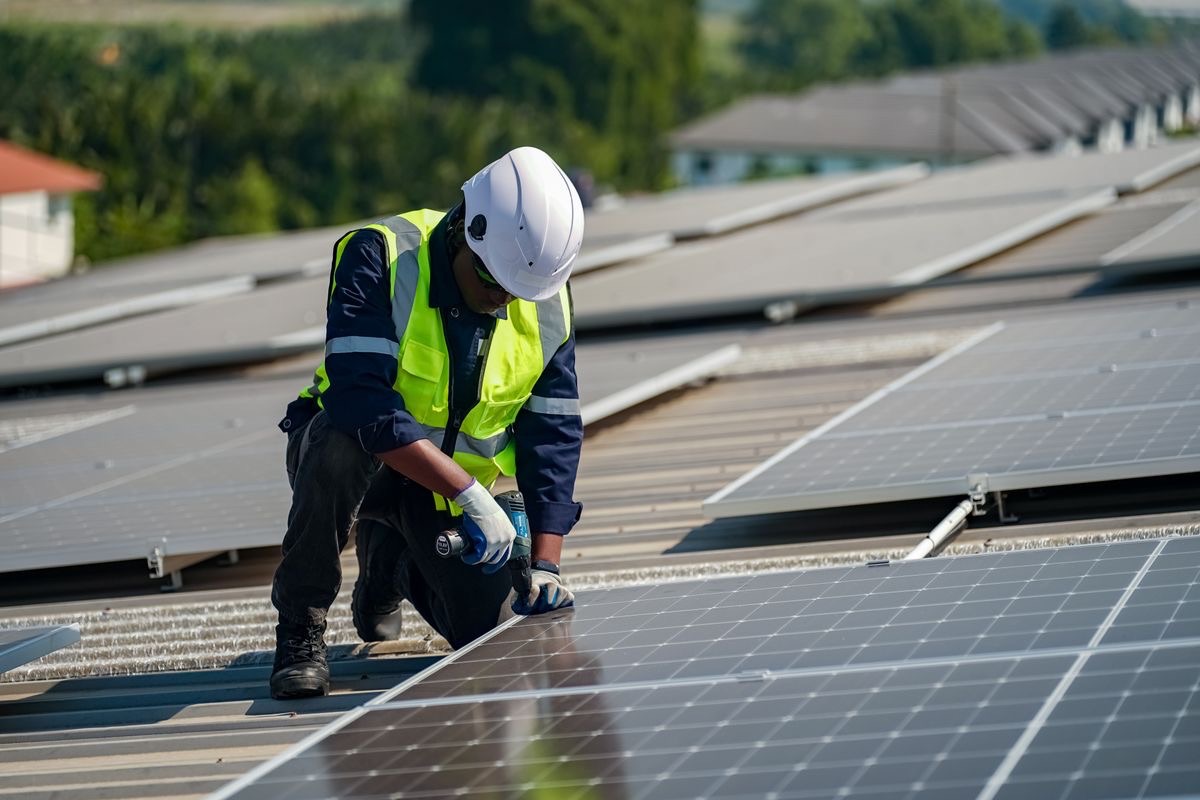
For rooftop systems, the first line of defence is a properly engineered mounting structure.
Use quality rails, clamps and fasteners appropriate for the module and mounting system. Where panels are accessible from a roof edge, adjacent balcony, staircase or low structure, consider tamper-resistant fasteners or anti-theft hardware where appropriate.
Do not drill arbitrary holes through solar-module frames or modify the panel itself to create a security attachment. The mounting method should follow the module and mounting-system manufacturer's requirements.
Also consider the route someone would take to reach the panels. A roof may look inaccessible from the ground but become easy to reach through a neighbouring roof, water tank platform, external staircase or unfinished building.
Ground-Mounted Solar Needs Stronger Physical Security
Ground-mounted systems deserve particular attention because the equipment may be within arm's reach.
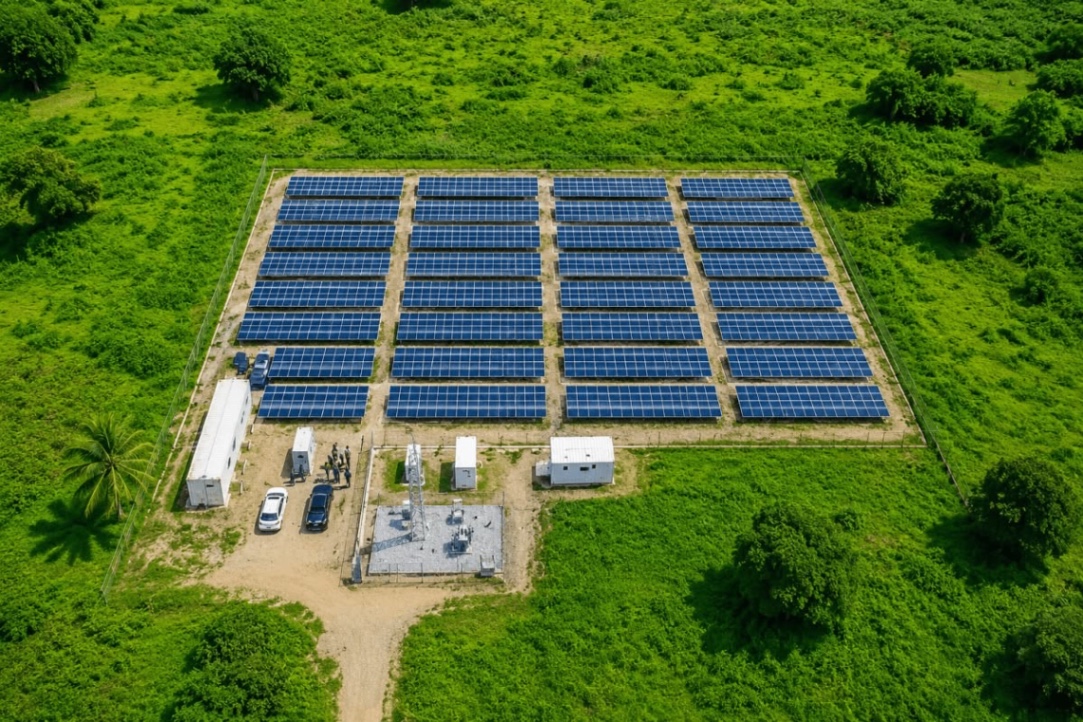
A security design can include perimeter fencing, controlled gates, buried or anchored foundations, concealed or tamper-resistant mounting connections, short protected cable routes, security lighting, CCTV or motion detection, and equipment alarms.
Recent Nigerian solar-security guidance describes buried concrete anchoring, concealed mounting connections and optional monitoring for higher-risk installations.
For remote sites, the fence itself should be designed as part of the system rather than treated as a separate construction item.
How to Protect Solar Batteries
Battery security starts with location.
A battery should not simply be placed somewhere convenient. It should be installed in an appropriate, secure and ventilated environment that satisfies the battery manufacturer's requirements.
For lithium batteries, the battery management system is an important part of the electrical protection architecture. Nigerian safety guidance has also emphasised appropriate battery installation, ventilation and BMS requirements.
A good battery room should consider controlled access, ventilation and temperature management, protection from water ingress, appropriate fire-safety provisions, adequate clearance, secure cable entry, monitoring and alarms, and protection from accidental impact.
Don't Turn the Battery Room Into a Security Trap
Security does not mean sealing a battery room so tightly that heat, ventilation and emergency access become problems.
The battery manufacturer's installation requirements should determine ventilation, clearances and environmental conditions.
The room should be secure but still allow authorised technicians to inspect, service and isolate the equipment safely.
A locked room with poor ventilation can create a new reliability problem while attempting to solve a theft problem.
Can CCTV and Solar Monitoring Help Prevent Theft?
Yes—but they perform different jobs.
CCTV helps you see and record what is happening around the installation. Solar monitoring tells you what the electrical system is doing.
For example, if a monitored system suddenly loses PV production during daylight while the inverter, battery and grid remain available, that may indicate shading, a fault, a disconnected string or physical tampering.
A security-focused installation can combine CCTV, motion lighting, door/contact sensors, inverter alerts, battery alarms, remote monitoring and site-security response procedures.
Some Nigerian solar-security providers are already combining solar power with CCTV, alarms and remote monitoring for homes, farms and commercial properties.
A Simple Solar Theft-Detection Example
Consider an illustrative 10kWp rooftop installation that normally produces around 30kWh on a particular clear day under a known operating pattern.
If the monitoring platform suddenly reports almost no PV production while the weather and inverter status do not explain the change, the owner should investigate rather than waiting until the next monthly inspection.
The point is not that a specific production number automatically proves theft. It is that baseline monitoring makes abnormal behaviour visible much earlier.
For larger installations, panel-level or string-level monitoring can provide more useful fault isolation than looking only at total system output.
What About Solar Street Lights?
Standalone solar street lights have a different security profile because their panels, batteries and electronics are distributed across outdoor poles.
Security measures can include tamper-resistant pole access, secured battery compartments, anti-theft mounting hardware, robust pole foundations, controlled access to maintenance points, CCTV in high-risk areas, and periodic inspection.
This is especially relevant to estates, factories, campuses and remote roads where many individual lighting points can make physical inspection difficult.
How Much Does Solar Theft Protection Cost?
There is no single security price because the appropriate solution depends on the site's risk level.
A small residential rooftop system may only require secure mounting, controlled access and basic monitoring. A large ground-mounted commercial system may need fencing, gates, lighting, CCTV, alarms, protected cable routes and additional structural security.
Instead of treating security as an optional extra, include it in the initial project budget.
For example, an illustrative commercial project might divide its budget into solar generation equipment; battery and power electronics; electrical protection; mounting and structural works; security infrastructure; installation and commissioning; and monitoring and maintenance.
Spending a small additional amount during installation can be far cheaper than redesigning the system after a theft or repeated vandalism.
Five Security Mistakes Nigerian Solar Buyers Should Avoid
1. Installing valuable batteries in an unlocked space
Convenience should not determine battery location.
2. Using exposed cable routes where they are easy to tamper with
Protect and route cables appropriately while maintaining safe access for maintenance.
3. Assuming a high roof automatically means the panels are safe
Consider neighbouring structures and access routes.
4. Buying the cheapest mounting hardware
Mounting is both a structural and security component.
5. Installing the system without remote monitoring
Without a baseline, unusual system behaviour can go unnoticed for too long.
Security Should Be Included in the Site Survey
Before installation, the engineer should inspect more than the roof and available sunlight.
The site survey should also identify perimeter walls and gates, roof accessibility, neighbouring buildings, external staircases, water-tank platforms, unfinished structures, locations for CCTV, battery-room access, cable routes, areas with poor nighttime visibility, and likely vandalism or theft exposure.
This creates a security-aware solar design instead of trying to retrofit protection after the equipment is already installed.
Illustrative Security Specification for a Commercial Solar Installation
Consider an illustrative 50kWp commercial rooftop system.
A security-conscious specification could include professionally engineered roof mounting; tamper-resistant hardware at accessible points where appropriate; a secured inverter/battery room; protected cable routes; CCTV coverage of equipment access points; remote inverter monitoring; alarm notification for abnormal system events; controlled technician access; and a documented inspection schedule.
None of these measures guarantees that theft cannot occur. Their purpose is to reduce vulnerability, increase detection and make unauthorised removal more difficult.
Final Takeaway
A solar installation should be designed to produce power reliably—and to remain there long enough to produce it.
For Nigerian homes, businesses, farms, factories, estates and remote facilities, solar security should be considered during the design stage. Panels need secure mounting, batteries need controlled access, cables need sensible routing, and larger installations can benefit from monitoring and security integration.
The Federal Government's 2026 warnings about fires associated with poorly installed rooftop PV systems also reinforce a broader lesson: solar installation quality matters. Proper equipment, mounting, protection, earthing, cable management and qualified installation are not optional extras.
At Zookie Solar, we can assess your site not only for solar generation and battery capacity, but also for the physical and electrical security requirements of the installation.
Planning a solar installation for a home, estate, factory, farm, hotel or commercial facility? Contact Zookie Solar for a professional site assessment, secure system design and installation quotation.
Built on Power. Driven by Excellence.