Can Nigerian Businesses Sell Excess Solar Power to the Grid? NERC Net Billing 2026 Guide
Introduction
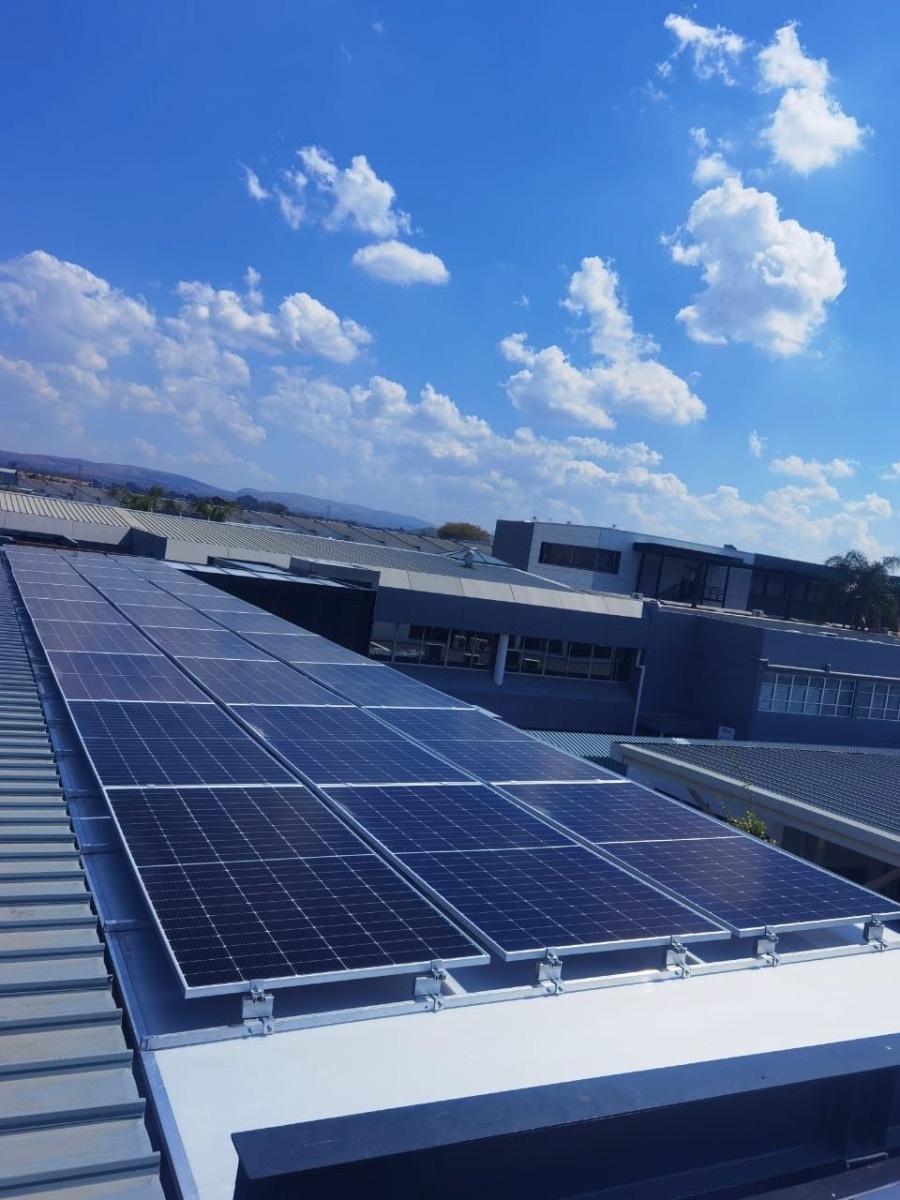
Nigeria's solar market has entered a new phase. Solar is no longer being installed only to keep lights on during outages; larger businesses are increasingly using rooftop and ground-mounted systems to reduce diesel consumption, improve energy reliability and control operating costs.
Now there is another question for businesses with larger solar systems: what happens when the system produces more electricity than the business can use?
On 3 June 2026, the Nigerian Electricity Regulatory Commission (NERC) published the Net Billing Regulations 2026, creating a framework under which eligible renewable-energy customers can export surplus electricity to their distribution network and receive billing credits. NERC lists the Net Billing Regulations 2026 among its current regulations.
This is potentially important for factories, hotels, hospitals, universities, large estates, commercial buildings and other high-load facilities—but it is not simply a matter of installing extra solar panels and asking the DisCo to pay you.
What Is Net Billing?
Net billing allows an eligible customer—often called a prosumer because the customer both consumes and generates electricity—to use its own renewable power and export qualifying surplus electricity to the distribution network.
Instead of treating every exported unit as cash paid directly to the customer, the framework uses energy-based compensation in the form of credits that are applied against electricity imported from the utility.
That distinction matters.
If your business produces solar electricity at midday and exports some of it, the value of that export is determined under the approved export-tariff framework. Your business can then use the resulting credit to reduce eligible electricity charges.
So the commercial question is not simply: “How much solar can I generate?” It is: “How much of my solar will I consume, how much will I export, and what will those exports be worth?”
Who Can Participate Under Nigeria's 2026 Framework?
The Net Billing Regulations 2026 target larger grid-connected renewable-energy systems rather than the typical small residential solar installation.
NERC's framework covers eligible renewable-energy systems connected to a distribution network, with a minimum installed capacity of 50kWp and a maximum of 1.5MWp per user.
That means an ordinary 5kVA home inverter system or a small 5kW rooftop array is generally outside this particular net-billing framework.
The opportunity is much more relevant to:
• factories and manufacturing plants
• hotels and large hospitality facilities
• hospitals
• universities and campuses
• large commercial buildings
• shopping and business complexes
• agricultural and processing facilities
• large residential estates
• other high-load commercial or institutional premises
The system must also be connected to a participating distribution network and meet the technical and regulatory requirements.
Illustrative Case Study: A 100kWp Commercial Solar System
This is an illustrative design case study, not a claim that Zookie Solar completed this project.
Imagine a manufacturing facility installing a 100kWp solar array to reduce daytime grid and generator consumption.
Suppose the plant consumes most of its solar production during working hours, but on some Sundays or low-production days there is a period when the solar array produces more power than the facility is using.
Assume that during one hour the plant is using 55kW while the solar system is producing 80kW.
The instantaneous surplus is approximately:
80kW − 55kW = 25kW.
If that 25kW surplus were exported for one hour, the exported energy would be:
25kW × 1 hour = 25kWh.
The important point is that 25kWh of export is not automatically 25kWh of cash at the customer's retail electricity tariff. Under net billing, exported energy receives credits according to the approved export-tariff framework.
This is why a commercial solar design should prioritise self-consumption before deliberately creating large export volumes.
Self-Consumption Usually Comes Before Export
For most businesses, the most valuable solar energy is the energy that directly replaces electricity the business would otherwise have purchased from the grid or generated with a fuel-powered generator.
Consider an illustrative factory that generates 500kWh of solar energy in one day.
If the factory directly consumes 430kWh of that energy, only 70kWh remains potentially available for export or other energy-management strategies.
That is generally a more useful design conversation than simply installing a much larger PV array and assuming the grid will absorb everything produced.
A good commercial solar engineer should therefore study the facility's hourly load profile—not just its monthly electricity bill.
How Does the Net Billing Process Work?
Net billing is a regulated interconnection process, not an informal arrangement between a customer and a solar installer.
At a high level, the project involves:
1. Assessing the customer's load and proposed renewable-energy system.
2. Applying to the relevant Distribution Licensee.
3. Providing the required technical and property documentation.
4. The Distribution Licensee conducting a technical feasibility assessment.
5. Executing a Net Billing Agreement if the project is approved.
6. Registering the arrangement with NERC.
7. Installing the compliant renewable-energy system and required metering/protection.
8. Completing the required NEMSA inspection and certification.
9. Commissioning the interconnection before exporting electricity.
Current legal and industry summaries of the 2026 framework emphasise that technical feasibility, DisCo approval, NERC registration, compliant metering and NEMSA inspection are all part of the process.
Why You Cannot Simply Export Solar Through Your Existing Meter
A normal electricity meter is not automatically a net-billing meter.
The net-billing framework requires metering capable of separately recording energy imported from the distribution network and energy exported to it. NERC's framework describes revenue-grade import/export metering or compliant dual-register smart metering.
This is important because electricity moving in the opposite direction from normal consumption must be measured accurately for settlement.
Your solar installer should therefore not connect an export-capable system to the grid and simply assume the existing meter will calculate the credits correctly.
What Happens When the Grid Goes Off?
A grid-connected export system has to protect the distribution network during outages.
Net-billing systems require anti-islanding protection and appropriate automatic/manual isolation so that the renewable-energy system does not continue energising a section of the distribution network when the grid is down.
This is one reason a professional grid-interconnected solar installation is different from a basic off-grid system.
The inverter, protection devices, synchronisation, isolation and commissioning process all have to be designed around safe grid interaction.
How Much Excess Solar Should a Business Export?
There is no universal percentage that makes sense for every business.
The right answer depends on the facility's load profile, solar production profile, battery capacity, tariff structure, export tariff, network capacity and operating schedule.
A factory operating heavily from 9am to 6pm may naturally consume most of its solar energy. A weekend-only business may have far more daytime surplus.
A hotel may have a relatively stable daytime and nighttime load. A warehouse may have high daytime lighting and refrigeration demand but lower weekend consumption.
That means two businesses with identical 100kWp solar arrays can have completely different net-billing economics.
The 30% Network-Capacity Issue
Net billing does not mean a distribution network can accept unlimited customer-generated electricity.
The regulatory framework includes a network constraint under which aggregated excess capacity injected by prosumers into a relevant distribution-network asset is limited relative to the average load of that network asset. Industry summaries of the 2026 framework describe a 30% limit for the relevant network asset.
In practical terms, a technically sound solar project can still require a feasibility review because the local network may not be able to absorb the proposed export level.
This is another reason businesses should begin the regulatory and technical assessment before purchasing all of the equipment.
How Export Credits Affect the Economics of Solar
Suppose an illustrative business imports 20,000kWh from the grid in a month and its solar system exports 2,000kWh under an approved net-billing arrangement.
The business does not simply subtract 2,000kWh from 20,000kWh and assume the result is its final bill.
The imported electricity is billed under the applicable retail tariff, while exported electricity is credited using the approved export-tariff mechanism. The credit value can therefore differ from the value of electricity the business would have paid to purchase.
This makes self-consumption extremely important when designing the project.
Why Oversizing a Solar System Just to Export Can Be Risky
More solar panels can increase daytime energy production, but installing capacity purely to maximise exports can change the project's financial outcome.
You have to account for:
• PV equipment cost
• mounting and installation
• inverter capacity
• grid-interconnection equipment
• metering
• engineering and certification
• possible network upgrades
• export-credit value
• battery-storage strategy
• maintenance
A business should therefore model the incremental cost of every additional kWp against the amount of useful energy it will actually consume or export.
Illustrative Expansion Decision: 100kWp vs 150kWp
This is an illustrative financial-design scenario, not a Zookie Solar quotation.
Suppose a factory's load profile indicates that a 100kWp PV array can cover most of its useful daytime solar demand.
The owner considers increasing the system to 150kWp because the roof has enough space.
The extra 50kWp may produce useful additional energy—but if much of that additional generation occurs when the factory is not consuming enough electricity, a greater share may become export energy.
The engineering question becomes:
Will the additional export credits justify the additional PV, mounting, inverter, protection, interconnection and financing costs?
The answer must come from the facility's actual hourly data and the applicable net-billing terms—not from a generic claim that “more panels are always better.”
Do You Need Batteries If You Have Net Billing?
Not necessarily.
A battery can still be valuable because it can store solar energy that would otherwise be exported and use it later when the business needs power.
For example, an illustrative factory might generate a 40kW surplus at 1pm and have a 20kW deficit after 7pm. Storage can shift part of that daytime solar energy into the evening.
However, battery storage adds capital cost, conversion losses and another layer of equipment.
The right question is whether the additional value of stored energy—through reduced grid consumption, backup capability, demand management or improved solar utilisation—justifies the battery investment.
What Documents Should a Business Prepare?
A prospective commercial prosumer should expect the project to require more documentation than a normal small solar installation.
Depending on the application and stage, documentation can include:
• proof of occupancy or property rights
• solar-system technical specifications
• single-line diagram
• proposed interconnection arrangement
• earthing and protection information
• load and generation information
• inverter documentation
• metering details
• prior approvals for an existing system where applicable
• inspection and commissioning documentation
The framework also requires professional technical involvement. A certified engineer is central to the technical documentation and installation process.
What Should Businesses Ask a Solar Installer Before Choosing a Net-Billing System?
1. Is my proposed system within the 50kWp–1.5MWp range?
Confirm the system capacity against the current regulatory framework.
2. Will my local DisCo network accept the proposed export?
This requires technical feasibility—not a verbal promise.
3. What percentage of my solar generation will I actually self-consume?
Use hourly load data rather than monthly energy totals alone.
4. What metering and protection equipment will be required?
Ask for a clear single-line diagram and equipment schedule.
5. What happens if the grid fails?
Confirm anti-islanding and isolation arrangements.
6. What regulatory and inspection costs are excluded from the quotation?
Make sure the commercial proposal distinguishes equipment, EPC work, certification, metering, connectivity and potential network upgrades.
7. Is the financial model based on export credits or cash payments?
Do not assume exported solar is paid to you like an ordinary electricity sale.
Illustrative Commercial Solar Design Workflow
For a factory, hotel or commercial campus considering a 100–500kWp solar project, a sensible workflow could be:
1. Collect 12 months of electricity bills and available interval/load data.
2. Measure the facility's actual load profile.
3. Identify the daytime self-consumption opportunity.
4. Model PV production.
5. Determine whether battery storage improves the economics.
6. Estimate unavoidable surplus export.
7. Assess the local distribution network and net-billing feasibility.
8. Develop the protection and metering design.
9. Obtain the required approvals and certifications.
10. Install, inspect, commission and monitor the system.
This approach is more reliable than choosing a large PV capacity first and trying to work out what to do with the excess later.
What This Means for Nigerian Businesses in 2026
Nigeria's solar market is expanding rapidly. Ember estimates that Nigeria could add about 1.7GW of solar capacity in 2026, with distributed solar playing a major role, while Nigerian market reports continue to identify commercial and industrial users as a major growth segment.
The introduction of Net Billing Regulations 2026 adds another potential revenue or bill-credit mechanism for larger grid-connected renewable-energy projects.
But the most important change for businesses is not simply the ability to export electricity. It is the need to design solar projects around three simultaneous objectives:
Use the solar yourself. Store what makes sense. Export the genuine surplus.
That is a much more useful framework for commercial solar planning than designing a system around panel count alone.
Final Takeaway
Nigeria's 2026 net-billing framework creates a new opportunity for qualifying businesses and other larger electricity users to receive credits for surplus renewable electricity exported to their distribution network.
But net billing is not a shortcut around proper solar engineering. A qualifying project needs technical feasibility, compliant equipment, appropriate protection and metering, DisCo approval, NERC registration, NEMSA inspection and commissioning before grid export.
For most businesses, the strongest financial strategy will still begin with maximising useful on-site solar consumption. Batteries may then be considered where shifting energy to later hours creates value, with approved grid export used for genuine surplus.
At Zookie Solar, we can assess your facility's load profile, solar potential, battery requirements and potential net-billing pathway before you commit to equipment.
Planning a 50kWp–1.5MWp commercial or industrial solar project? Contact Zookie Solar for a professional site assessment, engineering design and project quotation.
Built on Power. Driven by Excellence.