Solar Power for Restaurants in Nigeria: Kitchen Loads, Refrigeration and Service Continuity
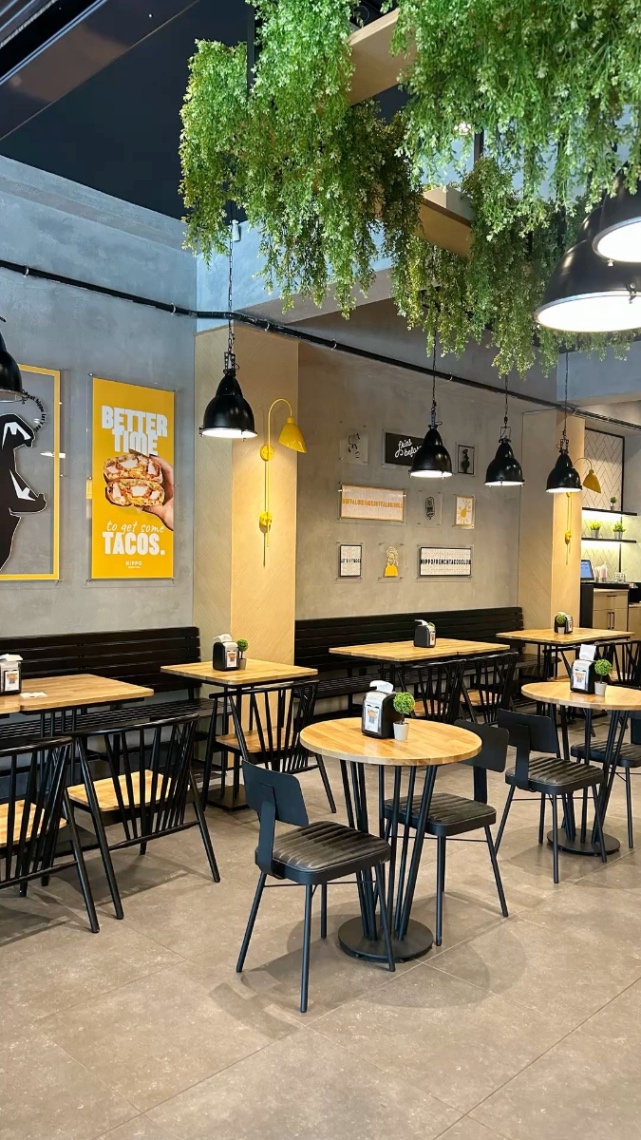
Restaurants and quick-service restaurants (QSRs) have a mixed electrical profile. Refrigerators may cycle throughout the day, extraction fans run when cooking is underway, air-conditioning follows customer occupancy, and point-of-sale systems need stable power during service. Electric grills, fryers and induction cookers can add substantial demand if the kitchen uses them.
A solar installation should therefore be designed around the restaurant’s actual menu, equipment, opening hours and service priorities—not a generic “restaurant package.” The numerical examples in this guide are hypothetical planning illustrations, not a Nigerian industry benchmark, quotation or completed Zookie Solar installation.
Why restaurant loads need to be separated
The first step is to distinguish equipment that must remain on from loads that can be limited during an outage. This helps the operator decide whether the system should support the whole operation, selected circuits, or only critical services.
Priority 1: food preservation and essential safety
Identify the refrigerators and freezers that protect ingredients, record their measured energy use, and confirm the acceptable temperature range for the stored food. Include essential extraction or ventilation where required for safe operation of the installed cooking equipment. Do not assume every refrigerator has the same duty cycle or that its nameplate wattage equals its average consumption.
Priority 2: customer service and transactions
Point-of-sale terminals, routers, order screens, essential lighting and security equipment often consume less power than kitchen machinery but can directly affect the ability to accept orders and complete sales.
Priority 3: comfort and flexible loads
Dining-area air-conditioning, decorative lighting and selected non-essential sockets may be managed separately if the owner approves the operating plan. Any automatic load-shedding arrangement must be designed so it does not interrupt safety-critical equipment.
Priority 4: high-power cooking and heating equipment
Electric fryers, griddles, ovens, induction cookers, kettles and water heaters can dominate a restaurant’s peak demand. Their nameplate ratings, thermostat duty cycles and possible simultaneous operation must be assessed individually. They are not included in the illustrative energy table below, so that table must not be interpreted as a complete electric-kitchen design.
Illustrative daily energy schedule for a small QSR
The following hypothetical schedule describes selected refrigeration, ventilation, comfort and support loads. Average inputs and operating hours are assumptions for demonstrating the calculation method; they are not measurements of a real restaurant.
| Load | Illustrative input and use | Daily energy |
|---|---|---|
| Refrigeration/display units | 0.80 kW average × 12 h | 9.6 kWh |
| Undercounter refrigerator/freezer | 0.35 kW average × 12 h | 4.2 kWh |
| Kitchen extraction fans | 1.50 kW × 8 h | 12.0 kWh |
| Dining-area air-conditioning | 2.40 kW average × 8 h | 19.2 kWh |
| Kitchen lighting | 0.45 kW × 12 h | 5.4 kWh |
| Dining/external lighting | 0.60 kW × 8 h | 4.8 kWh |
| POS, router and CCTV | 0.25 kW × 12 h | 3.0 kWh |
| Small preparation appliances | 1.20 kW average × 4 equivalent h | 4.8 kWh |
| Water pump | 0.75 kW × 2 h | 1.5 kWh |
| Dishwashing/sanitation equipment | 1.00 kW × 2 h | 2.0 kWh |
| TOTAL | Sum of assumptions | 66.5 kWh/day |
The total is 9.6 + 4.2 + 12.0 + 19.2 + 5.4 + 4.8 + 3.0 + 4.8 + 1.5 + 2.0 = 66.5 kWh/day. Actual consumption could be materially higher or lower. The table excludes electric fryers, griddles, ovens, induction cookers and other high-power cooking loads; add them from the actual equipment schedule before preparing a proposal.
A preliminary solar-array estimate
For an energy-only illustration, assume 4.5 equivalent peak-sun-hours per day and a combined system performance factor of 0.75. These are calculation assumptions, not a site-specific Nigerian solar forecast.
PV estimate = daily energy ÷ (peak-sun-hours × performance factor).
66.5 ÷ (4.5 × 0.75) ≈ 19.7 kWp.
A provisional 20% planning allowance would give about 23.6 kWp. This is only a preliminary energy estimate. The final array must be checked against the restaurant’s location, seasonal solar resource, shading, usable roof or ground area, PV-input limits, daytime load coincidence, and any energy required to recharge batteries.
A restaurant that cooks with gas may have a different electrical profile from one using electric cooking equipment. The designer should not silently omit electric heating loads or assume they can all operate from the proposed inverter.
Size the battery around the required service
Battery capacity should be based on the loads that must operate when solar generation is insufficient—not automatically on the entire daily energy total. For this hypothetical example, consider a 12-hour low-solar period with the following selected loads:
| Critical load | Illustrative schedule | Energy |
|---|---|---|
| Refrigeration | 1.15 kW average × 12 h | 13.8 kWh |
| Essential extraction/ventilation | 1.50 kW × 4 h | 6.0 kWh |
| POS/network/security | 0.25 kW × 12 h | 3.0 kWh |
| Essential lighting | 0.25 kW × 6 h | 1.5 kWh |
| TOTAL | Sum of assumptions | 24.3 kWh AC |
Using assumed conversion efficiency of 90% and usable nominal battery capacity of 80%, the energy-only estimate is 24.3 ÷ (0.90 × 0.80) ≈ 33.8 kWh nominal. A provisional 20% reserve raises the illustrative figure to about 40.5 kWh nominal.
This is not a battery recommendation. The final design must also verify battery discharge power, inverter continuous and surge capacity, temperature, depth-of-discharge limits, ageing, required autonomy, recharge time and how the system behaves during a longer outage. If the owner does not need every listed load backed up, the critical-load list should be revised before storage is selected.
Do not size the inverter from daily kWh
Daily energy in kWh describes energy consumed over time. Inverter capacity in kW or kVA describes the power the system must supply at a particular moment. A restaurant can have moderate daily energy but high peak demand if several cooking appliances, compressors, extraction fans and air-conditioners operate together.
A qualified designer should verify each machine’s nameplate, phase, power factor, starting behaviour and manufacturer requirements, then assess the highest credible simultaneous load. Where the site has three-phase equipment, confirm that the proposed power-conversion equipment is compatible. Do not assume a single-phase inverter can operate a three-phase machine.
A load-management plan may help separate flexible loads from essential ones, but it must reflect the way staff actually work. Avoid a design that depends on workers remembering to switch off equipment in a precise sequence unless that procedure is practical, trained and monitored.
What recent Nigerian examples tell restaurant operators
A solar installer, BetaPawa, published a vendor-reported case study describing an 88.8 kWp PV array, an 80 kW hybrid inverter and 160 kWh of battery storage for a Chicken Republic quick-service restaurant operation in Lekki, Lagos, with a stated completion date of February 2026. These are claims on the installer’s project page, not independently audited results, and they are not a template for other restaurants. The page’s URL slug does not match the displayed Chicken Republic project title, so readers should treat the published details as vendor-reported information and request formal project documentation before relying on them.
Consistent Energy also published a LinkedIn post describing a 6 kVA solar installation for a Lagos restaurant. Its fuel and payback outcomes are the provider’s reported claims, not independently verified performance data.
On 5 April 2026, Nigerian Tribune reported that small businesses in parts of the FCT and Nasarawa were struggling with high operating costs and generator-fuel expense, including a café owner discussing the effect of power costs on business. This is wider small-business context, not a survey of Nigerian restaurants.
These sources indicate commercial interest in solar for food-service operations, but they do not establish reliable Google keyword volumes or a representative public-community consensus. Restaurant operators should evaluate their own measured loads and operating costs.
Prepare this information before requesting a proposal
- A list of all equipment with make, model, nameplate input, voltage, phase and operating schedule.
- Measured electricity use over representative trading days, where possible.
- Whether cooking is electric, gas-fired or mixed, with every heater and high-power appliance identified.
- Which refrigeration units, ventilation systems, POS devices, lighting and other loads must remain on during an outage.
- The busiest service period and the equipment likely to operate simultaneously.
- The required battery autonomy, acceptable interruption duration and any existing grid, generator or UPS arrangement.
- Available PV installation area, shading, site conditions and planned business expansion.
Ask the installer to state the design assumptions, PV capacity, inverter kW/kVA and phase, nominal and usable battery capacity, critical circuits, source-transfer arrangement, protection, monitoring, commissioning tests, maintenance plan and exclusions. Require the proposed system to be checked against the real equipment schedule rather than a generic package label.
Plan for service continuity—not just a headline system size
Solar can support a restaurant’s electrical operation, but the right design depends on cooking technology, refrigeration, ventilation, customer comfort, opening hours and the service the owner expects during an outage. Separate critical loads from flexible loads, measure actual energy use, and verify peak demand before selecting the inverter and battery.
Zookie Solar Ltd provides solar-system design, equipment supply, installation and technical consultation for Nigerian businesses. Request a site-specific assessment based on your menu, machinery, operating schedule and continuity requirements.
Zookie Solar Ltd — Built on Power. Driven by Excellence.
Email: admin@zookiesolar.com
Sources and further reading
- Zookie Solar Ltd — Official website: https://www.zookiesolar.com/
- Zookie Solar Ltd — Blog & Guides archive: https://www.zookiesolar.com/blogs