Solar Power for Gyms and Fitness Centres in Nigeria: Treadmill Loads, Air-Conditioning and Peak-Demand Planning
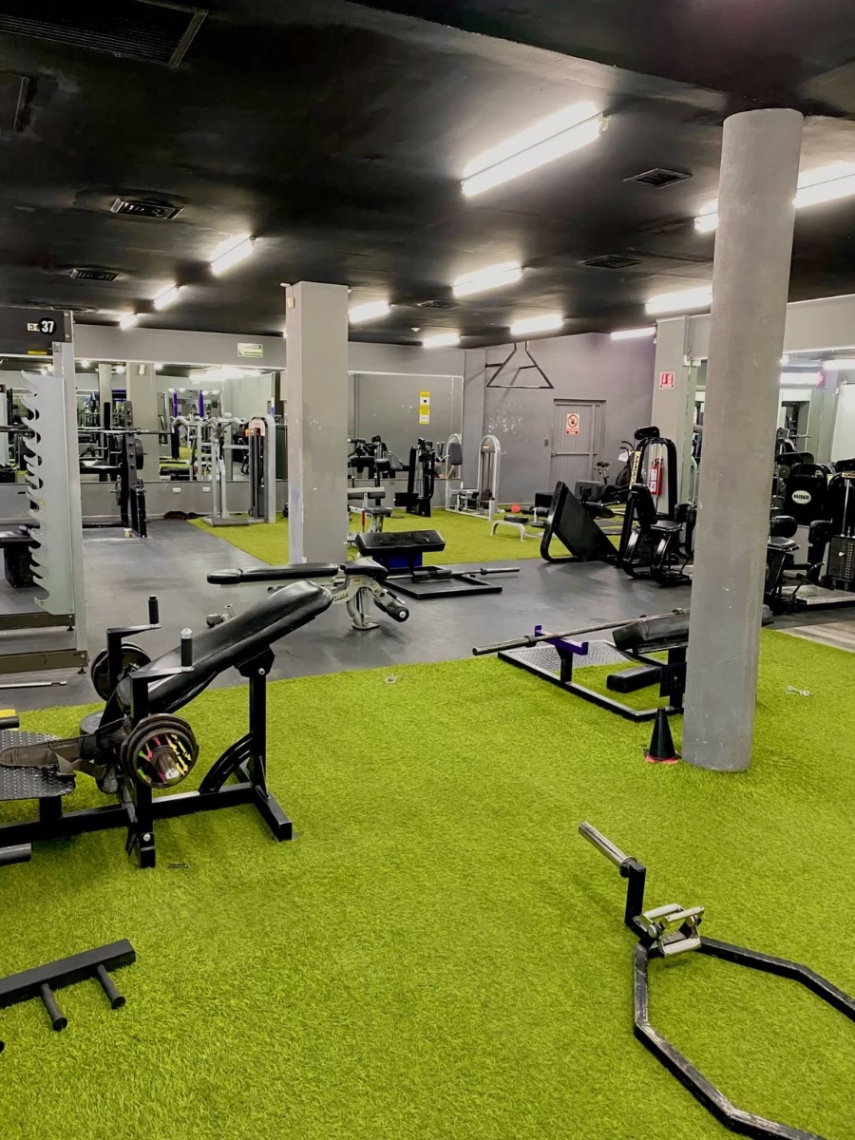
A gym needs more than lights and fans. Treadmills, cardio machines, air-conditioning, ventilation and long opening hours can create a power profile that changes sharply between quiet periods and peak training sessions. Solar and battery storage can support a fitness centre in Nigeria, but the system should be designed around the equipment actually installed, the hours it runs and the loads that must remain available during an outage.
The worked figures in this guide are illustrative engineering assumptions—not a typical Nigerian gym benchmark, a quotation or a Zookie Solar installation. Replace them with equipment nameplates, manufacturer instructions and measured site data before selecting equipment.
Why a gym needs a different solar assessment
A small studio with fans, lighting and a few electronically controlled machines has a very different requirement from a large, air-conditioned fitness club with several treadmills, spin bikes, free-weight areas, showers and extended opening hours. Four factors deserve special attention:
- Treadmills and cardio equipment. Record each machine’s electrical input, voltage, phase and manufacturer requirements. Do not size from horsepower alone or assume that every model draws the same power.
- Air-conditioning and ventilation. Cooling demand depends on equipment efficiency, room heat gain, occupancy, setpoint, maintenance and how long the gym operates. AC may be one of the largest energy uses.
- Long operating hours. Many gyms open before normal office hours and remain open into the evening. Daytime solar production may cover some demand directly, while the battery requirement depends on the energy needed when solar production is low.
- Optional high-power services. Saunas, steam rooms, electric showers, water heaters and other heating equipment can materially change the design. They are not included in the example below and should be assessed separately.
Start with an equipment and operating-hours audit
Before requesting a solar quotation, prepare a schedule of the loads that could operate together. For each machine or circuit, record:
- Make and model, nameplate input power, voltage, current and single-phase or three-phase requirement.
- Expected hours of operation and whether the equipment runs continuously, intermittently or only during classes.
- The number of treadmills, AC units and other machines likely to run at the same time during the busiest period.
- Manufacturer information about drive electronics, start-up behaviour, allowable supply conditions and protection.
- Which services are essential during an outage and which can be temporarily reduced or left on another source.
Where practical, use a properly installed energy meter or power analyser to log representative busy and quiet periods. A nameplate schedule is a useful starting point, but measured energy and simultaneous demand can expose differences between rated capacity and real operating behaviour. The U.S. Department of Energy’s energy-management guidance also recommends listing major equipment and developing an energy balance; this is a planning method, not a substitute for Nigerian requirements or site-specific engineering.
Illustrative daily energy calculation for a medium-sized gym
The table below demonstrates how operating hours affect energy use. The assumed average inputs are hypothetical; they are not equipment specifications. In particular, treadmill and AC input must be checked against the actual models.
| Load | Illustrative operating assumption | Daily energy |
|---|---|---|
| 4 treadmills | 1.0 kW average each × 4 h each | 16.0 kWh |
| 2 air conditioners | 1.2 kW average each × 8 h | 19.2 kWh |
| LED gym lighting | 1.0 kW × 10 h | 10.0 kWh |
| Fans | 0.6 kW total × 10 h | 6.0 kWh |
| Other cardio machines | 0.5 kW total × 5 h | 2.5 kWh |
| Music, TVs and router | 0.25 kW × 12 h | 3.0 kWh |
| Reception equipment | 0.35 kW × 10 h | 3.5 kWh |
| Water dispenser | 0.3 kW × 6 h | 1.8 kWh |
| TOTAL | Sum of the illustrative assumptions | 62.0 kWh/day |
Calculation: 16.0 + 19.2 + 10.0 + 6.0 + 2.5 + 3.0 + 3.5 + 1.8 = 62.0 kWh/day. This total is useful for demonstrating the method only. A real gym may use substantially more or less energy, especially if it has more treadmills, larger AC units, showers, a sauna, a steam room or a different operating schedule.
Daily energy is not the same as inverter capacity
The 62.0 kWh/day estimate describes energy over time. It does not tell you the exact inverter rating. Adding the assumed operating inputs in the table gives 9.4 kW if every listed load coincides, but that arithmetic is not a final inverter recommendation: the assumed averages may differ from nameplate demand, and actual peak conditions can include compressor or motor transients.
The designer should verify the highest credible simultaneous demand in kW and kVA, power factor, phase arrangement, inverter continuous rating, overload capability and the manufacturer’s limits. Starting behaviour varies by equipment. For example, Schneider Electric’s technical guidance describes compressor starting current around three to four times rated motor current in a particular application context; that figure must not be applied as a blanket multiplier to every treadmill or air conditioner. Use the exact equipment documentation and, where needed, measurements.
Preliminary solar-panel estimate: an example, not a promise
For a simple first-pass illustration, assume 4.5 equivalent peak-sun-hours per day and a combined performance factor of 0.75. These are calculation assumptions, not a guaranteed yield for any Nigerian city or season.
Estimated PV capacity = daily energy ÷ (peak-sun-hours × performance factor)
62.0 ÷ (4.5 × 0.75) ≈ 18.4 kWp
Adding a provisional 20% planning allowance would bring this simplified starting estimate to about 22.0 kWp. That is not a final array design. A qualified designer must account for the gym’s location, seasonal solar resource, roof or ground area, shading, module temperature, inverter and charge-controller limits, battery-charging losses, and how much demand can be supplied directly while the sun is available. The assumed performance factor may not represent every system or operating condition.
How much battery storage does a gym need?
Do not automatically size the battery to supply all 62.0 kWh of the illustrative daily energy. Battery capacity should reflect the energy that must be supplied when solar production is unavailable or insufficient, the required autonomy period and the operator’s acceptable load-shedding plan.
For illustration, suppose 30% of the example’s daily energy must come from the battery during evening or low-solar periods: 62.0 × 0.30 = 18.6 kWh of AC energy. If the design assumes 90% conversion efficiency and 80% usable nominal battery capacity, the energy-only estimate is:
18.6 ÷ (0.90 × 0.80) ≈ 25.8 kWh nominal
A provisional 20% reserve would raise this example to about 31 kWh nominal. This is only an energy calculation. The selected battery must also support the required discharge power and current, the inverter’s DC requirements, manufacturer limits, temperature conditions, ageing allowance and the planned recharge window. A battery with enough stored energy may still be unable to support the required peak load if its power rating is too low.
Manage peak demand without compromising the workout
- Stagger avoidable start-ups. Where members and operating procedures allow, avoid switching on every high-demand machine at exactly the same time.
- Use the solar window deliberately. If practical, schedule some equipment cleaning, maintenance or non-urgent high-energy activity during stronger solar-production hours.
- Separate priorities in the design. The engineer and gym manager should agree which circuits must remain on and which loads may be managed when battery reserve is low. Any circuit separation must be designed and installed by a competent professional.
- Treat cooling as a measured load. Record actual AC input and duty cycle rather than relying only on horsepower or a generic appliance estimate. Keep filters and equipment maintained, and avoid unrealistic assumptions about how long compressors will run.
- Measure after commissioning. Compare actual PV generation, battery state of charge, inverter loading and grid/generator contribution with the design assumptions, then adjust operating settings within manufacturer limits.
Safety and compliance are part of the design
A gym is a public commercial premises, and some facilities include changing rooms, showers or other wet areas. The installation should use correctly selected circuit protection, earthing and bonding, suitable enclosures, appropriate cable routes, clear isolation and labels, and a safe arrangement for grid, inverter and generator sources where applicable. Do not improvise a connection to the distribution board or bypass equipment protections.
The Nigerian Electricity Management Services Agency (NEMSA) states that its remit includes enforcing technical standards, verifying competence and inspecting electrical installations, including renewable-energy installations. Engage appropriately qualified personnel and confirm the applicable inspection and certification requirements for the specific project. IEC 60364-7-712:2025 is an international reference for electrical installations incorporating photovoltaic power systems; it does not replace applicable Nigerian laws, regulations or project requirements.
What to prepare before requesting a gym solar quotation
- A list of all treadmills, cardio machines, AC units, fans, lighting and ancillary equipment, with make/model and nameplate details.
- Opening hours, class timetable and the busiest expected simultaneous-use period.
- Measured daily energy and peak-demand data where available.
- A clear definition of the backup objective: selected services, all exercise equipment, cooling, or a managed combination.
- Details of the existing grid, generator and distribution-board arrangement.
- Available roof or ground area, shading, equipment-room conditions and any planned expansion.
- A request for the proposal to state PV capacity, inverter kW/kVA and phase, battery nominal and usable kWh, autonomy assumptions, protection, commissioning tests, monitoring, maintenance and exclusions.
Conclusion: size the system around real training hours
Solar can support a Nigerian gym or fitness centre, but a reliable design begins with the actual treadmills, cardio equipment, cooling systems and operating schedule—not a generic inverter package. Daily energy, peak power and battery autonomy are different design questions. Measure the loads, verify starting behaviour, decide which services must remain available, and then design the PV array, inverter and storage as one coordinated system.
Zookie Solar Ltd provides solar-system design, equipment supply, installation and technical consultation for Nigerian homes and businesses. Contact the team for a site-specific assessment before purchasing equipment or assuming that a particular inverter can run every machine simultaneously.
Zookie Solar Ltd — Built on Power. Driven by Excellence.
Email: admin@zookiesolar.com