
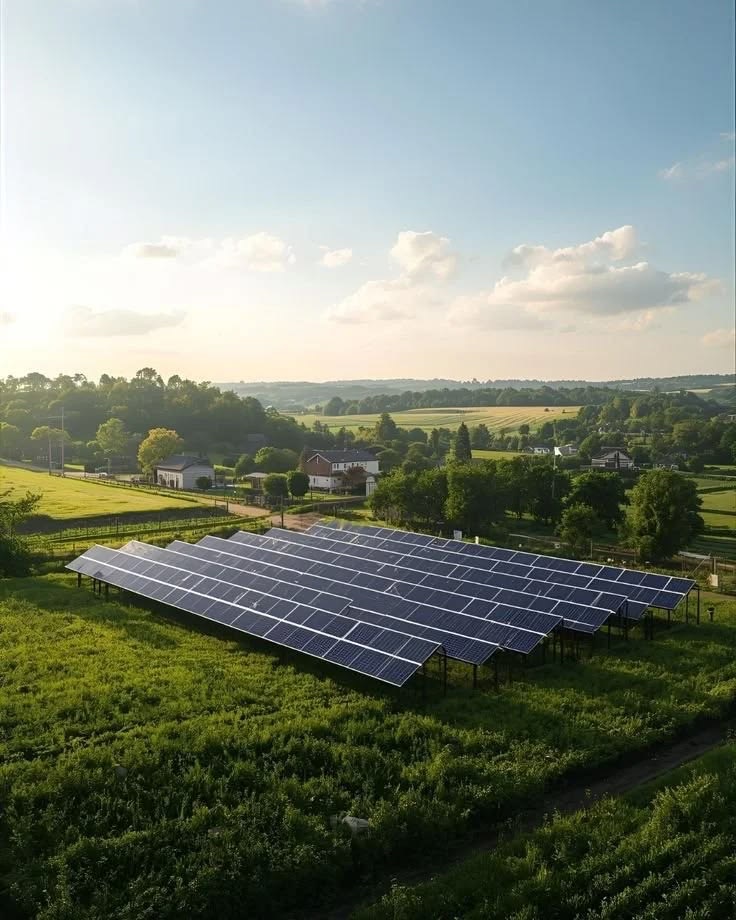
If you are planning to install solar in Nigeria, one of the first questions you will probably ask is: "How many solar panels do I need to power my home?" The honest answer is: it depends.
A small apartment running lights, fans, a television, refrigerator and internet router will not need the same solar array as a large home running several air conditioners, freezers, water pumps and other heavy appliances. The right number of panels depends on your electricity consumption, the wattage of the panels, available sunlight, inverter limits, battery capacity, system losses, roof space and the level of backup you want. This guide explains how to estimate your solar-panel requirement in a practical Nigerian context, including worked examples and common mistakes to avoid.
1. Start With Your Energy Needs, Not the Number of Panels
Solar design should begin with your load. Before asking "How many panels do I need?", ask:
- What appliances do I want to power?
- How many hours will I use them each day?
- Which appliances must work during the day?
- Which appliances will run at night from the battery?
- Do I want to power air conditioners?
- Do I want the system to run during periods of poor weather?
- How much grid or generator support am I willing to use?
The amount of electricity you consume is measured in kilowatt-hours (kWh). A simple appliance calculation is:
Energy (kWh) = Power (W) × Hours of use ÷ 1,000
For example, a 100W television used for 5 hours consumes 100 × 5 ÷ 1,000 = 0.5kWh. Repeat this calculation for the major appliances in the home.
2. A Simple Example of a Nigerian Home
Consider a home with approximately:
| Appliance | Calculation | Daily Energy |
|---|---|---|
| 10 LED lights at 10W each, 6 hours | 100W × 6h | 0.60kWh |
| 4 fans at 60W each, 10 hours | 240W × 10h | 2.40kWh |
| TV at 100W, 5 hours | 100W × 5h | 0.50kWh |
| Refrigerator averaging 150W, 24 hours | 150W × 24h | 3.60kWh |
| Router at 20W, 24 hours | 20W × 24h | 0.48kWh |
| Laptop at 60W, 6 hours | 60W × 6h | 0.36kWh |
| Estimated daily consumption | 7.94kWh |
This is an illustration, not a universal consumption figure. Real refrigerator duty cycles, fan speeds, appliance efficiency and user behaviour can change the result. That distinction matters because a professional solar design should be based on the client's actual load rather than assumptions.
3. Understanding Solar Panel Wattage
Solar panels come in different power ratings. Depending on the market and product, you may encounter panels around 450W, 550W, 620W, 700W or 720W. For example:
- 4 × 550W = 2.20kW of panel capacity
- 6 × 550W = 3.30kW
- 8 × 550W = 4.40kW
- 10 × 550W = 5.50kW
- 6 × 620W = 3.72kW
- 8 × 620W = 4.96kW
A higher-wattage panel can produce more rated power from each module, but that does not automatically mean it is the best choice. The installer must also check physical dimensions, voltage, current, MPPT operating range, roof space and compatibility with the inverter.
4. How Many Panels Does a Home Actually Need?
A useful preliminary planning equation is:
Panel count ≈ Daily energy requirement ÷ (Panel power × effective sun hours × overall system efficiency)
Suppose a home needs approximately 9kWh per day. Assume a 550W panel (0.55kW), 5 effective peak-sun hours as a planning assumption, and a 75% overall system efficiency allowance. Then:
9 ÷ (0.55 × 5 × 0.75) ≈ 4.36 panels
Because solar panels cannot be purchased as fractions, the preliminary result would be rounded up to 5 panels. However, this does not mean every 9kWh home should automatically install five 550W panels. A professional design should verify the site's solar resource, orientation, shading, inverter specifications, battery charging requirement and desired energy margin.
5. Why You Should Not Size Panels From Inverter Size Alone
A common mistake is saying: "I have a 5kVA inverter, so I need X number of panels." That is incomplete. A 5kVA inverter tells you about the inverter's apparent-power capability. It does not tell you how much energy your home consumes every day.
Two homes can use the same 5kVA inverter and require very different solar arrays.
Home A has efficient lighting, fans, a TV, a refrigerator, a router and low daily consumption.
Home B has several fans, a refrigerator and freezer, a washing machine, a water pump, multiple TVs, an air conditioner and higher daily consumption.
Both may use a 5kVA inverter, but Home B may need considerably more solar generation and battery capacity.
6. What About a 5kVA Solar System?
A 5kVA system is popular for Nigerian homes because it can support a substantial range of household loads when properly designed. But the panel count depends on the inverter's PV input specifications and the energy target. For illustration:
- 6 × 550W = 3.3kW solar array
- 8 × 550W = 4.4kW
- 10 × 550W = 5.5kW
Which option is appropriate depends on the particular inverter. You should never connect panels simply because the total wattage "looks right." Check maximum PV power, maximum PV voltage, MPPT voltage range, maximum PV current, number of MPPT trackers, maximum short-circuit current and the recommended panel configuration.
7. What About a 10kVA System?
Larger systems often need substantially more solar generation, especially when the objective is to recharge a large battery bank and support heavy loads. For example:
- 8 × 620W = 4.96kW
- 10 × 620W = 6.20kW
- 12 × 620W = 7.44kW
- 14 × 620W = 8.68kW
Again, these are examples of array capacities, not automatic recommendations. The inverter manufacturer's PV limits and the client's energy profile must determine the final design.
8. Your Battery Also Changes the Solar Requirement
Panels do more than power appliances while the sun is available. In a hybrid solar system, surplus solar energy can recharge the battery for use later. This means a home with a large battery bank may need enough solar generation to:
- Supply daytime loads.
- Replace energy removed from the battery overnight.
- Provide enough charging margin during available sunlight.
For example, if a household uses most of its energy at night, simply installing enough panels to cover daytime appliances may leave the battery undercharged. The solar array must be designed around the complete daily energy cycle.
9. If Most of Your Power Use Is at Night
This is especially important for many Nigerian homes. A family may leave for work and school in the morning and return around 6–8pm. Their major electricity use may therefore occur at night. In that situation:
Solar panels → generate energy during the day → battery stores energy → inverter supplies the home at night
If the battery is large but the solar array is too small, the system may struggle to fully recharge the battery. This is why solar design is a system, not simply a panel-count exercise.
10. Roof Space Matters
Even if the electrical calculation says you need a certain number of panels, your roof must physically accommodate them. Before installation, an installer should consider available roof area, roof orientation, roof pitch, shading from trees and buildings, structural condition, access for maintenance, cable routing, safe mounting and wind exposure. Two houses with identical energy requirements may have different installation costs because their roofs are different.
11. Shading Can Reduce Real-World Output
Solar panels need sunlight. A tree, neighbouring building, water tank, antenna or other obstruction can cast shade over part of an array. Even partial shading can affect the performance of a string depending on the module and inverter architecture. This is why a proper site survey is valuable before finalising a quotation. Don't let someone sell you a panel count without considering the roof.
12. Series vs Parallel: Why the Connection Matters
The number of panels is only part of the design. Panels can be connected in series and/or parallel to achieve the required voltage and current.
In series: voltage adds, current remains approximately the same.
In parallel: current adds, voltage remains approximately the same.
The correct arrangement must remain within the inverter's MPPT voltage and current limits. This is particularly important with modern high-wattage panels because their operating voltage and current can be significantly different from older panels. Never copy another installation's panel arrangement without checking the electrical specifications.
13. Why "More Panels" Is Not Always Better
It may sound logical to simply add as many panels as possible. But more is not automatically better. If the array exceeds the inverter's permitted PV voltage or current, the installation can become unsafe or operate outside its intended design. There can also be higher installation cost, more mounting materials, more cable, more roof-space requirements and unnecessary excess generation.
The goal is not to buy the maximum number of panels. The goal is to design the right solar array for the client's energy needs and equipment.
14. Common Panel-Sizing Mistakes in Nigeria
Mistake #1: Choosing panels based only on price. The cheapest panel is not necessarily the cheapest system over its useful life.
Mistake #2: Sizing from inverter kVA alone. Inverter capacity and daily energy consumption are different design considerations.
Mistake #3: Ignoring the battery. A large battery without sufficient solar generation may take too long to recharge.
Mistake #4: Ignoring shading. A beautiful roof is not necessarily a good solar roof.
Mistake #5: Mixing incompatible panels. Different electrical characteristics can complicate string design and reduce performance.
Mistake #6: Ignoring the inverter's PV limits. Always verify voltage, current, MPPT range and maximum PV power.
Mistake #7: Assuming a fixed number works for every home. Every properly designed solar system should respond to the client's actual load profile.
15. Quick Reference: Example Panel Counts
These examples are for understanding panel capacity, not fixed installation prescriptions.
| Panel Wattage | 4 Panels | 6 Panels | 8 Panels | 10 Panels | 12 Panels |
|---|---|---|---|---|---|
| 550W | 2.2kW | 3.3kW | 4.4kW | 5.5kW | 6.6kW |
| 620W | 2.48kW | 3.72kW | 4.96kW | 6.2kW | 7.44kW |
| 720W | 2.88kW | 4.32kW | 5.76kW | 7.2kW | 8.64kW |
The final design must still be checked against the inverter and site conditions.
16. So, How Many Panels Do You Need?
For a rough estimate, start with your daily energy consumption. Then consider:
- Daily kWh requirement
- Panel wattage
- Available peak-sun hours
- System efficiency
- Battery capacity
- Inverter PV limits
- Roof space
- Shading
- Desired backup margin
- Future loads
This is why a professional solar assessment is more valuable than simply asking for "the price of six panels." The correct question is: "What solar system will reliably meet my energy needs?"
17. When You Should Consider More Panels
Adding more panel capacity can make sense when your battery is regularly undercharged, you have significant daytime loads, you want faster battery recovery, your household energy consumption is increasing, you plan to add an air conditioner or freezer or pump, or you want more generation margin during less favourable weather. However, additional panels should be added only after checking the inverter and electrical configuration.
18. The Zookie Solar Approach
At Zookie Solar, we believe solar should be designed around the client, not around a one-size-fits-all package. A good solar system should answer four questions: what do you want to power, when do you use the power, how long do you need backup, and what level of future expansion do you expect?
From there, the installer can determine the appropriate combination of solar panels, inverter, lithium or other suitable battery technology, protection devices, mounting system, DC/AC cabling, and earthing and safety components. That approach helps avoid both under-sizing and unnecessary spending. If you want us to run these numbers for your specific home, book a free load assessment and we will size it properly.
19. Final Takeaway
There is no universal answer to "How many solar panels do I need?" A small home may need only a few panels, while a larger home or business can require a much larger array. The right number depends on your energy consumption, panel wattage, solar resource, inverter specifications, battery requirements, roof conditions and desired level of energy independence.
If you are planning a solar installation, don't start by counting panels. Start by understanding your energy needs. Then size the complete system around those needs. That is how you get a solar system that performs reliably, rather than simply a roof full of panels.
Frequently Asked Questions
Q1. How many 550W solar panels do I need for a home?
There is no fixed number. It depends on your daily energy consumption, inverter limits, battery size, sunlight availability and the level of backup required. A load assessment should come before the final panel count.
Q2. Can I use more solar panels than my inverter's kVA rating?
Sometimes an inverter can accept a PV array whose rated DC capacity is higher than its AC output rating, but the manufacturer's maximum PV power, voltage and current limits must be respected. Do not assume that a larger array is automatically compatible.
Q3. How many panels do I need for a 5kVA inverter?
There is no universal number. A 5kVA inverter may support different PV configurations depending on its model. Check its MPPT voltage range, maximum PV voltage, current and recommended PV power before choosing the number of panels.
Q4. Do solar panels work during cloudy weather?
Yes. Panels can still generate electricity under cloud cover, but output is generally lower than under strong direct sunlight. System design should account for real operating conditions rather than assuming peak output all day.
Q5. Can I add more panels later?
In some systems, yes. But expansion must be planned around the inverter's remaining PV capacity, MPPT configuration, cable sizing, mounting space and the electrical characteristics of the new panels.
Q6. Should I buy fewer high-wattage panels or more low-wattage panels?
It depends on the project. High-wattage panels can reduce the number of modules required for a given array capacity, but dimensions, voltage, current, roof space, availability and inverter compatibility should all be considered.
Q7. Why does my solar installer need to inspect my home?
A site assessment helps identify your actual load, roof space, shading, cable routes, installation conditions and future energy requirements. This information makes the final design more reliable.
Conclusion
Solar power is not a "one-size-fits-all" product. The right solar-panel count should come from engineering calculations and your lifestyle, not from a random package someone recommends.
If you want to know exactly how many panels, how much battery capacity and what inverter size your home needs, start with a proper load assessment. Zookie Solar can help you evaluate your energy needs and design a system around how you actually use electricity.
Built on power. Driven by excellence.
