The Hidden Cost of Generator Fumes: Why Solar is a Health Investment, Not Just a Utility Expense
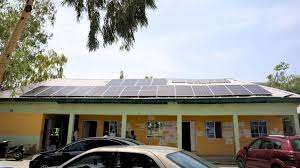
Every night, millions of Nigerian families trade their health for power, breathing in silent toxins that shorten lifespans. Beyond the fuel queue and the noise, generator fumes are quietly damaging lungs, brains, and wallets. This is why switching to solar isn't just about escaping darkness, it's about protecting the people you love.
For the average Nigerian household, the sound of a generator kicking on at dusk feels like victory. The lights flicker, the TV hums back to life, and the kids can finish their homework. But there is a silent price attached to that victory, one that doesn't show up on a fuel receipt.
It hangs in the air. Invisible. Odorless in small doses. And over time, deadly.
We have normalized the smell of exhaust fumes. We tell ourselves it's "just for a few hours." We sit metres away from an idling generator while eating dinner, while a newborn sleeps in the next room, while an elderly parent struggles to breathe. We have been conditioned to believe that this is the price of modern living in Nigeria.
But what if the price is far higher than we ever calculated?
The Chemistry of Suffering
The typical petrol or diesel generator emits a chemical cocktail that no human lung was designed to process. Carbon monoxide, nitrogen dioxide, formaldehyde, and a cloud of particulate matter so fine that it slips past your body's natural defences and lodges deep inside your bloodstream.
The World Health Organization has classified diesel engine exhaust as a Group 1 carcinogen. That is the same category as asbestos and plutonium. Yet every evening, we voluntarily stand downwind of this danger because the alternative—sitting in the dark—feels worse.
A 2021 study on indoor air pollution in Lagos found that homes using generators for more than four hours daily had particulate matter levels five times higher than the WHO's safe limits. Five times. And those particles don't magically disappear when you switch off the engine. They settle on furniture, on food, into the lungs of everyone in the house.
The Children Pay First
Children are not small adults. Their lungs are still developing, their respiratory rates are faster, and they breathe closer to the ground where heavy fumes accumulate. Pediatricians across major Nigerian cities are now reporting a disturbing trend: asthma and chronic bronchitis in children as young as five, with no family history of respiratory disease.
The culprit? Long-term exposure to generator emissions in enclosed or semi-enclosed spaces.
We worry about malaria. We worry about typhoid. We vaccinate against everything. But we leave the back door open every night and invite a slow poison into our living rooms because we have convinced ourselves that there is no alternative.
There is an alternative.
- What "Generator Economics" Really Costs
- Let's do the math that nobody wants to do.
A 3KVA generator consumes roughly 1.2 litres of petrol per hour. At current pump prices averaging ₦700 per litre, running that generator for 10 hours a day costs ₦8,400 daily. Multiply by 30 days, and you are spending over ₦250,000 per month on fuel alone. That does not include engine oil changes, spark plugs, carburettor cleaning, or the inevitable breakdown six months after the warranty expires.
Over two years, you will spend well over ₦6 million keeping that generator alive. That is not backup power. That is a subscription service with rising premiums and zero equity.
A properly sized solar system with battery storage costs roughly the same amount upfront. But after installation, your running costs drop to near zero. No fuel queues. No midnight runs to the filling station. No mechanic calling you at 2am. No fumes.
The difference is that one investment delivers returns for fifteen to twenty years. The other burns money and your health simultaneously.
When the Pharmacy Becomes the New Utility Bill
Here is the part of the conversation we never have: the medical bills.
The family with a chronically asthmatic child is not just buying inhalers. They are losing school days, work days, and sleep. They are making emergency trips to the hospital at 3am. They are watching their child struggle to breathe and feeling completely helpless because they cannot afford to stop running the generator and they cannot afford to keep running it either.
That is not a power problem. That is a trap.
Every week, I speak to homeowners who tell me, "I never realised the generator was making my wife's migraines worse," or "My daughter's cough disappeared two weeks after we installed solar." These are not anecdotes. They are evidence of what happens when you remove a constant source of toxic exposure from a living environment.
The Commercial Case: Businesses Are Losing Staff
For small business owners, the calculation is even more brutal. A boutique, a restaurant, a salon, a cold room. You run the generator for ten to twelve hours daily because customers expect lights, fans, and functioning equipment. Your staff breathe those fumes for their entire shift. Day after day.
What happens? Higher absenteeism. Lower productivity. Faster staff turnover. The quiet employee who keeps taking sick days isn't lazy. They are likely suffering from carbon monoxide headaches, eye irritation, and respiratory fatigue.
Switching to solar in a commercial setting often pays for itself within eighteen months purely through fuel savings. But the hidden return comes from having healthier staff who show up, stay focused, and stick around.
Breaking the Addiction Without Breaking the Bank
The objection I hear most from clients is honest: "I know the generator is harmful, but I cannot afford a full solar installation right now."
That is a fair concern. But the solution does not have to be all-or-nothing.
Many homeowners start with a hybrid approach: a smaller solar system that runs essential loads like lights, fans, televisions, and phone charging during the day. They keep the generator for heavy appliances like air conditioners, deep freezers, and washing machines. Over time, as the budget allows, they expand the solar capacity and retire the generator piece by piece.
The key is to start. One conversation. One assessment. One small step away from complete dependence on combustion engines that were never designed to operate metres away from human beings.
Your Home Was Never Meant to Be an Exhaust Pipe
We have normalised the abnormal. We have accepted fumes as the price of keeping a freezer running. We have convinced ourselves that there is no other way.
But there is another way. It is quieter. It is cleaner. It requires no fuel. It produces no smoke. And after the initial investment, it pays for itself repeatedly in fuel savings, medical savings, and quality of life.
You do not need to wait for the government to fix the grid. You do not need to wait for petrol prices to drop. You only need to decide that your family's lungs are worth more than the convenience of buying fuel every three days.
The generator outside your window is not just loud. It is slowly billing you in ways that do not appear on any invoice.
It is time to disconnect!!
Want to calculate exactly how much you are spending on generator fuel right now? Try our solar calculator and see how quickly a solar system pays for itself without the fumes.