Solar Panels in Rainy Season: What Actually Happens?
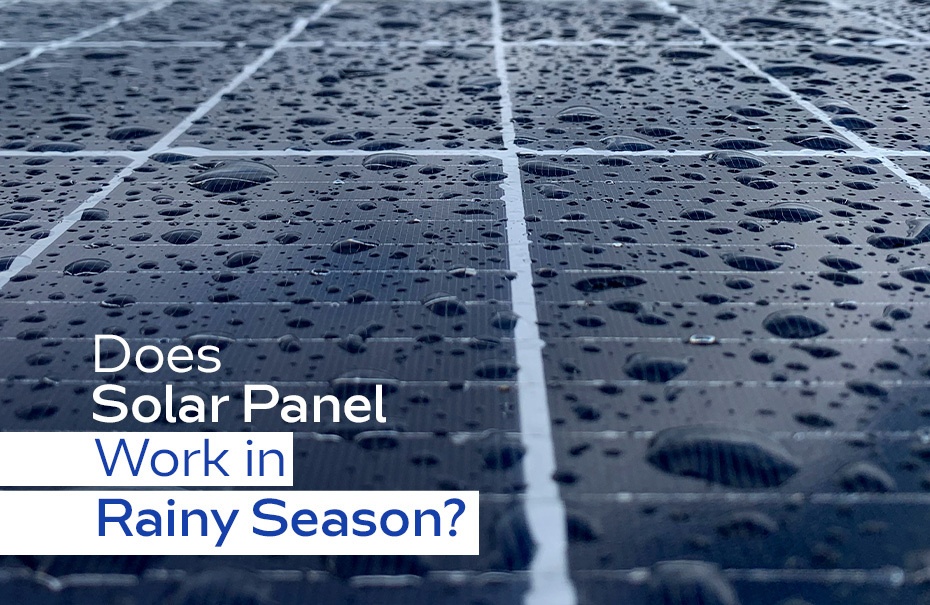
Your system won't die when clouds roll in. Here is what real performance looks like during Nigeria's rainy months.
Every first-time solar buyer asks the same question: "What happens when rainy season comes?"
The assumption is understandable. Solar panels need sunlight. Rainy season means clouds. Clouds mean less sunlight. Less sunlight means no power, right?
Not exactly.
Let me explain what actually happens to your solar system when the skies open up.
The Short Answer
Your system still works. Just less.
Solar panels produce electricity from any light, not just direct sunlight. On a heavily overcast day, a good panel still generates roughly 10 to 25 percent of its rated output.
If you have a 5kW solar array, you are still making 500 to 1,250 watts during the cloudiest hours. That is enough to run lights, fans, televisions, phones, and your internet router.
Your batteries will charge slower. Your generator may need to run occasionally to top up storage. You will need to be more strategic about heavy loads like washing machines and pressing irons.
But you will not sit in darkness.
What Actually Changes
Morning power shifts later. Instead of strong generation starting by 8am, you may not see meaningful output until 10am or 11am on very cloudy days.
Peak hours are shorter. Instead of five to six hours of strong generation, rainy season gives you three to four hours of moderate generation.
Evening generation disappears earlier. By 5pm, output drops significantly compared to dry season when you would still harvest until 6:30pm.
The result is not zero power. The result is less power within a narrower window. A properly sized battery bank handles this easily.
Why Bigger Batteries Matter More Than More Panels
During dry season, your batteries charge fully and drain slowly. You barely touch your reserve capacity.
During rainy season, your batteries may charge only 60 to 70 percent on bad days. Then you drain deeper into that reserve overnight.
This is why oversizing batteries slightly is smarter than oversizing panels.
Extra panels without extra storage give you nothing on cloudy days. Your panels already produce less than your battery can absorb. Adding more panels does not help.
But extra batteries let you store more during sunny gaps between rain showers, giving you more cushion when multiple cloudy days hit in a row.
Real Numbers from Real Installations
I have monitored dozens of systems through rainy seasons in Lagos, Abuja, and Port Harcourt.
A typical 3.5kW solar array with 10kWh of lithium storage performs like this:
Dry season:
Daily generation: 18 to 22kWh
Battery charges fully by 1pm
Generator runs: near zero
Rainy season:
Daily generation: 7 to 12kWh
Battery charges to 60 to 85 percent
Generator runs: 30 to 60 minutes every 2 to 3 days
That generator runtime is minimal. Your fuel bill during rainy season might be ₦10,000 to ₦20,000 per month instead of zero. Compare that to pre-solar fuel costs of ₦200,000 monthly.
Rainy season with solar is still dramatically cheaper than life before solar.
The Harmattan Problem Is Worse Than Rain
Here is something most people do not expect.
Harmattan dust coating your panels reduces output more than clouds do. A dusty panel can lose 30 to 40 percent of its efficiency before you even notice the dust is there.
Rain actually helps. Rain washes dust away.
During dry season, clean your panels every two weeks. Soft cloth, soapy water, no abrasive materials. The difference in output will shock you.
Should You Build Extra Capacity for Rainy Season?
If you are designing a system today, factor rainy season into your calculations.
A good rule of thumb: Size your solar array and battery bank to meet your needs on a 30 percent generation day, not a 100 percent generation day.
This means:
Add 20 to 30 percent more battery capacity than your dry season calculations suggest
Keep panel sizing based on daily consumption, not peak generation
Keep your generator as a seasonal backup, not a daily crutch
Oversizing for the worst three months of the year means having excess capacity for the other nine months. That excess is not waste. It is insurance.
The Bottom Line
Rainy season does not kill solar. Rainy season just asks your system to work a little harder.
With proper battery sizing, realistic expectations, and occasional generator support during the worst weeks, your solar system will carry you through every season Nigeria throws at it.
The lights stay on. The freezer keeps freezing. The fans keep spinning.
The only thing that stops working is your fuel budget.